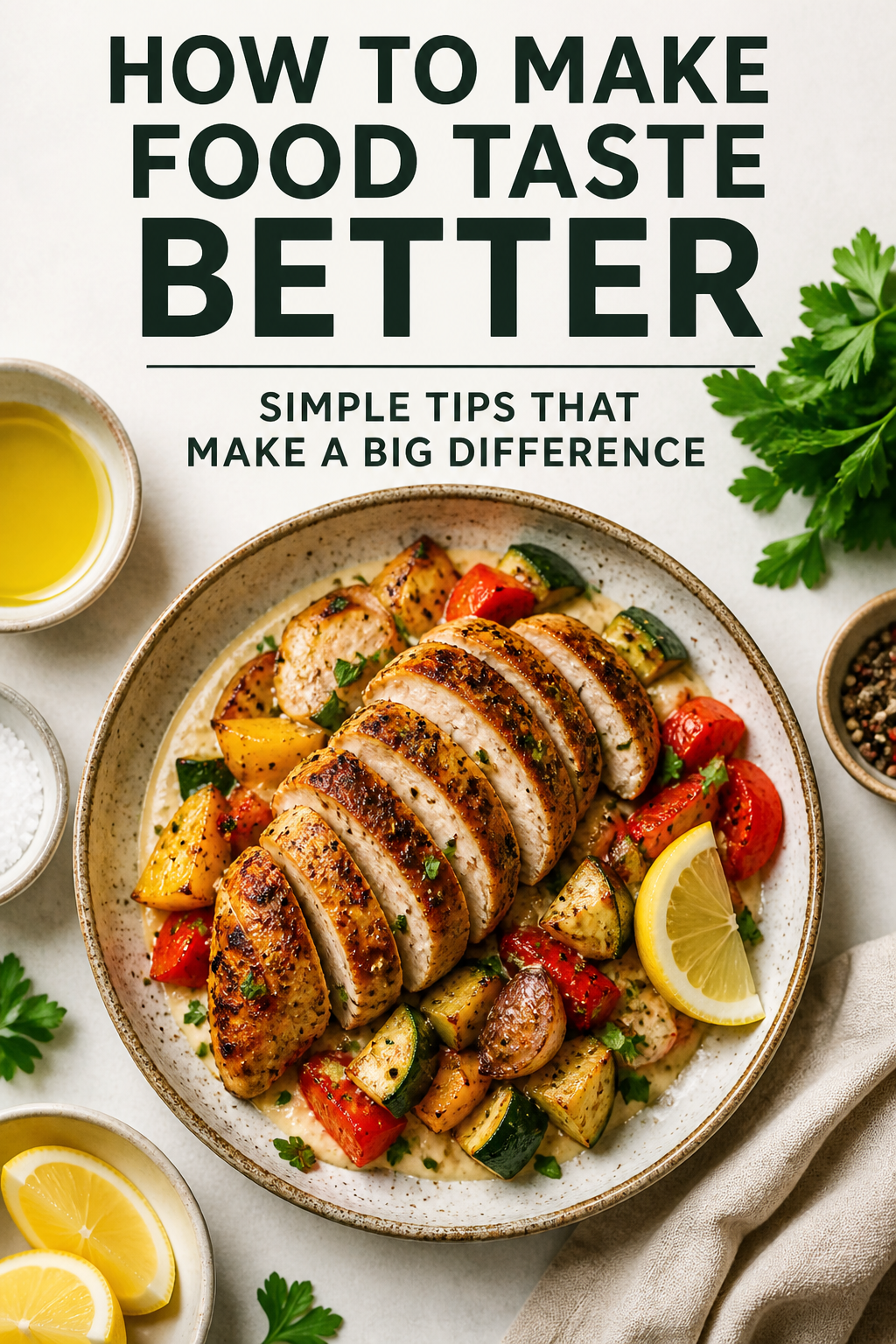
If your food tastes… just okay, you’re not alone.
Most of the time, it’s not the recipe.
It’s small things that don’t seem important—but make a huge difference.
I used to follow recipes exactly and still end up with food that tasted flat. Once I started paying attention to things like seasoning, timing, and balance, everything changed.
This guide is based on real cooking experience, not just theory—simple things that actually improve flavor without making cooking harder.
Start With Salt (But Use It Properly)
Undersalted food is the #1 reason meals taste bland.
But it’s not just how much salt you use—it’s when you use it.
What works better:
- season during cooking, not just at the end
- taste as you go
- add small amounts gradually
Too little salt = flat
Too much salt = ruined
The goal is balance, not intensity.
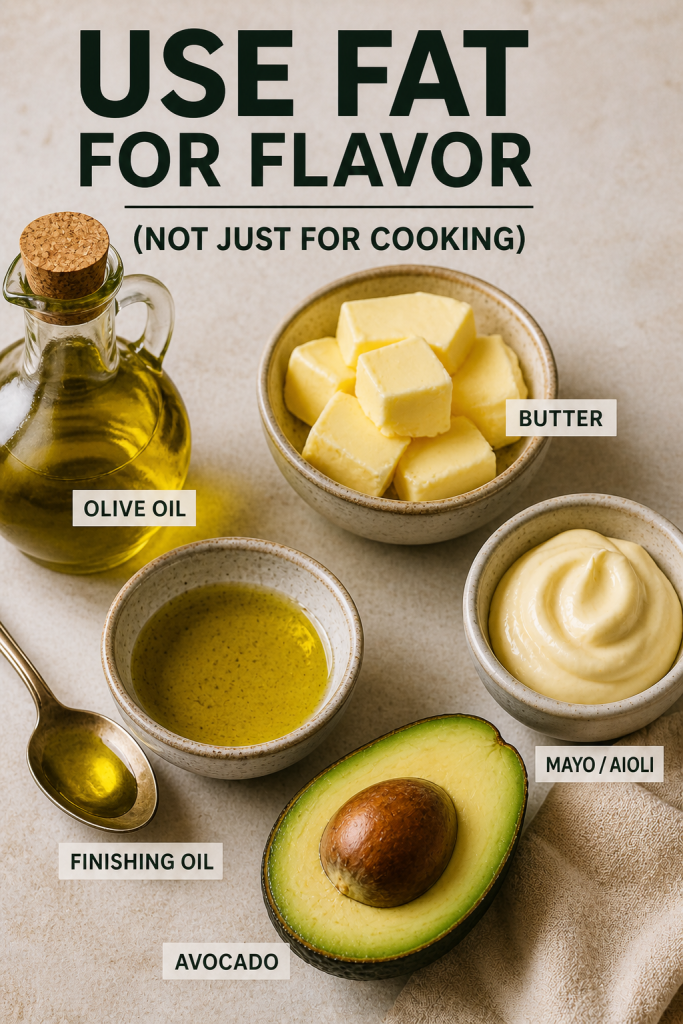
Use Fat for Flavor (Not Just for Cooking)
Fat makes food taste richer and more satisfying.
This can be:
- butter
- olive oil
- a creamy sauce
One thing that made a big difference for me:
Adding a small amount of fat at the end can completely change the flavor.
Fat is a carrier of flavor—it helps bring everything together.
It’s not about making food greasy, just adding a small amount to make it taste more complete.
If your food tastes “meh”, it often needs acidity.
A small splash of:
- lemon juice
- vinegar
- lime
can instantly bring everything to life.
This is especially noticeable with:
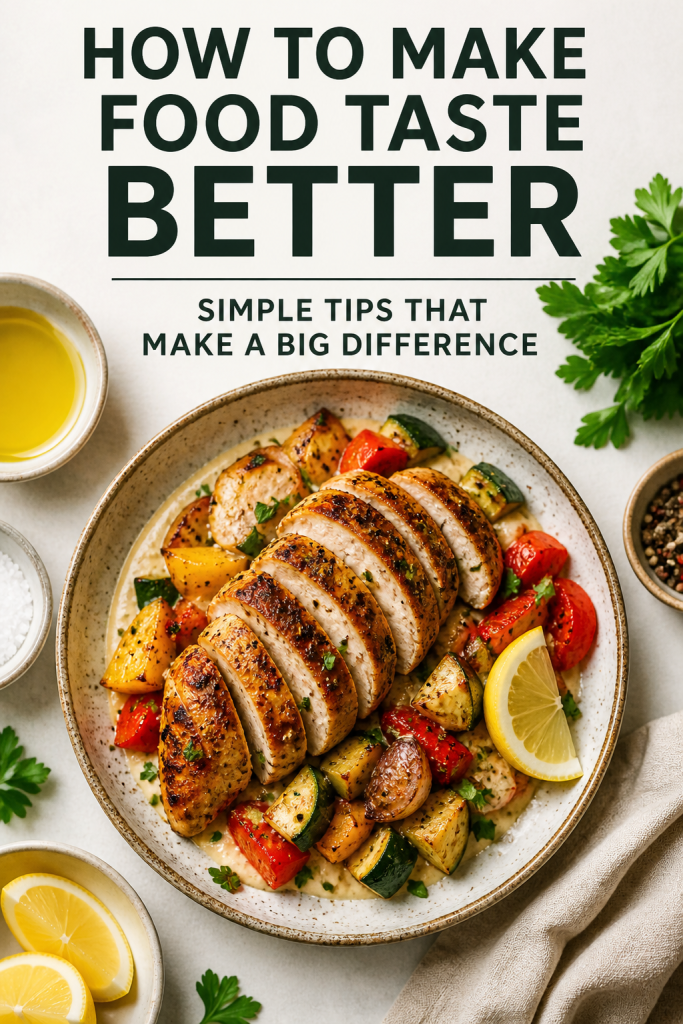
- chicken
- meat
- roasted vegetables
After cooking, these foods can taste a bit heavy or flat.
Adding something acidic helps cut through that richness and balance the flavor.
What I’ve noticed in practice:
Even a well-seasoned dish can feel “off” without a bit of acidity at the end.
This is one of the simplest and most underrated ways to fix flavor.
Balance Is What Makes Food Taste Better
Good food isn’t about one strong flavor—it’s about balance.
- salt → brings out flavor
- fat → adds richness
- acid → adds freshness and brightness
When one of these is missing, food often tastes “off” or incomplete—even if everything else seems right.
What I’ve noticed over time is that most dishes don’t need more ingredients—
they just need better balance.
Sometimes:
- it’s not salty enough
- or it feels too heavy
- or it’s missing that “fresh” element
When one of these is missing, food often tastes “off” or incomplete—even if everything else seems right.
Once you start thinking in terms of balance instead of just ingredients, it becomes much easier to fix your food qui
Use Heat and Texture to Boost Flavor
Flavor isn’t just about ingredients—it’s also about how food is cooked.
One of the biggest differences I noticed over time was this:
The same ingredients can taste completely different depending on how you cook them.
What makes a real difference:
- Browning (caramelization)
Letting food get that golden color adds depth and richness.
Pale food almost always tastes flat. - Crispy texture
A bit of crispiness makes food more satisfying and flavorful—even simple things like potatoes or chicken. - High heat when needed
Cooking at the right temperature helps develop flavor faster instead of just drying food out.
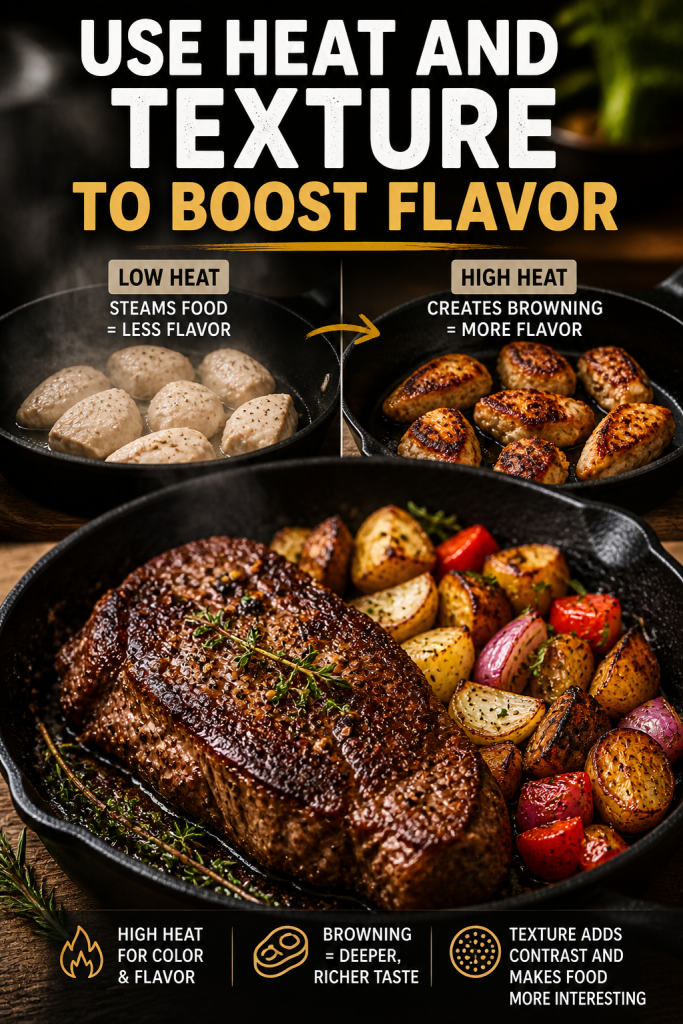
What this looks like in real cooking:
- chicken → better when properly seared, not just cooked through
- vegetables → taste completely different when roasted instead of boiled
- potatoes → crispy outside = much more flavor
Small change in technique = big change in taste.
Let Food Rest Before Serving
This is something a lot of people skip—but it matters more than it seems.
After cooking:
- meat
- chicken
- even some roasted dishes
letting them sit for a few minutes helps juices redistribute.
Result:
- better texture
- more flavor in every bite
If you cut into food too early, a lot of that flavor is lost.
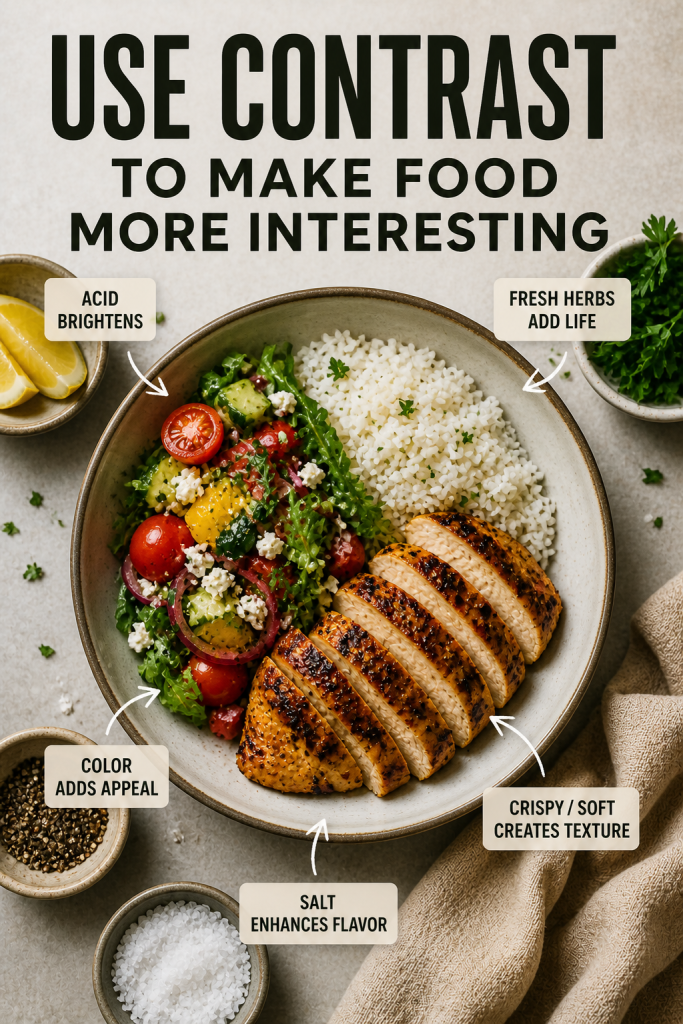
Use Contrast to Make Food More Interesting
Good food isn’t just one texture or one taste.
what makes dishes feel better:
- something crispy + something soft
- something rich + something fresh
- something warm + something slightly acidic
Example:
- crispy chicken + fresh herbs
- creamy dip + crunchy chips
- roasted vegetables + lemon juice
contrast makes food feel more “complete” and satisfying.
Season in Layers
Instead of adding everything at once:
build flavor step by step
- season ingredients first
- adjust during cooking
- finish at the end
This creates depth—not just one flat taste.
Want to make cooking easier and get better results?
- Essential kitchen tools that actually make a difference
- How to freeze soup without ruining the taste
- How to choose the right air fryer for everyday cooking
Use Better Ingredients (Simple Upgrades That Matter)
You don’t need expensive ingredients—but some swaps make a real difference.
noticeable upgrades:
- fresh garlic instead of powder
- real butter instead of substitutes
- fresh herbs when possible
Small changes = noticeably better flavor.
Where This Makes the Biggest Difference
You’ll notice these tips the most in:
- chicken (easy to overcook or under-season)
- vegetables (can taste bland without balance)
- quick meals and snacks
Sometimes it’s not what you add—it’s what you do wrong that kills flavor.
The most common mistakes I see (and used to make):
- Overcrowding the pan
Food steams instead of browns → less flavor. - Adding all seasoning at the end
You miss the chance to build flavor during cooking. - Cooking at the wrong heat
Too low = no browning, too high = burned outside, raw inside. - Overcooking simple ingredients
Especially vegetables—they lose both texture and taste. - Burning garlic or spices
Once they burn, the whole dish can taste bitter.
Fixing just one of these can noticeably improve your food.
Quick Flavor Check (Before You Serve)
Before you finish cooking, take a few seconds to taste and adjust.
Ask yourself:
- Does it need a bit more salt?
- Does it need something fresh or acidic?
- Would a small amount of fat improve it?
- Does it have enough color and texture?
In most cases, one small adjustment here can make a noticeable difference.
Final Thoughts
Making food taste better isn’t about complicated recipes.
It’s about:
- balance
- timing
- small adjustments
Once you start paying attention to these, your cooking improves faster than you’d expect.
What made the biggest difference for me wasn’t changing what I cook—
just how I cook it.
And that’s the key.
You don’t need new recipes.
You just need a few simple habits that make everything taste better.
If you’re using an air fryer, check out my guide on how to use an air fryer for the first time to get better results from the start.
Leave a Reply