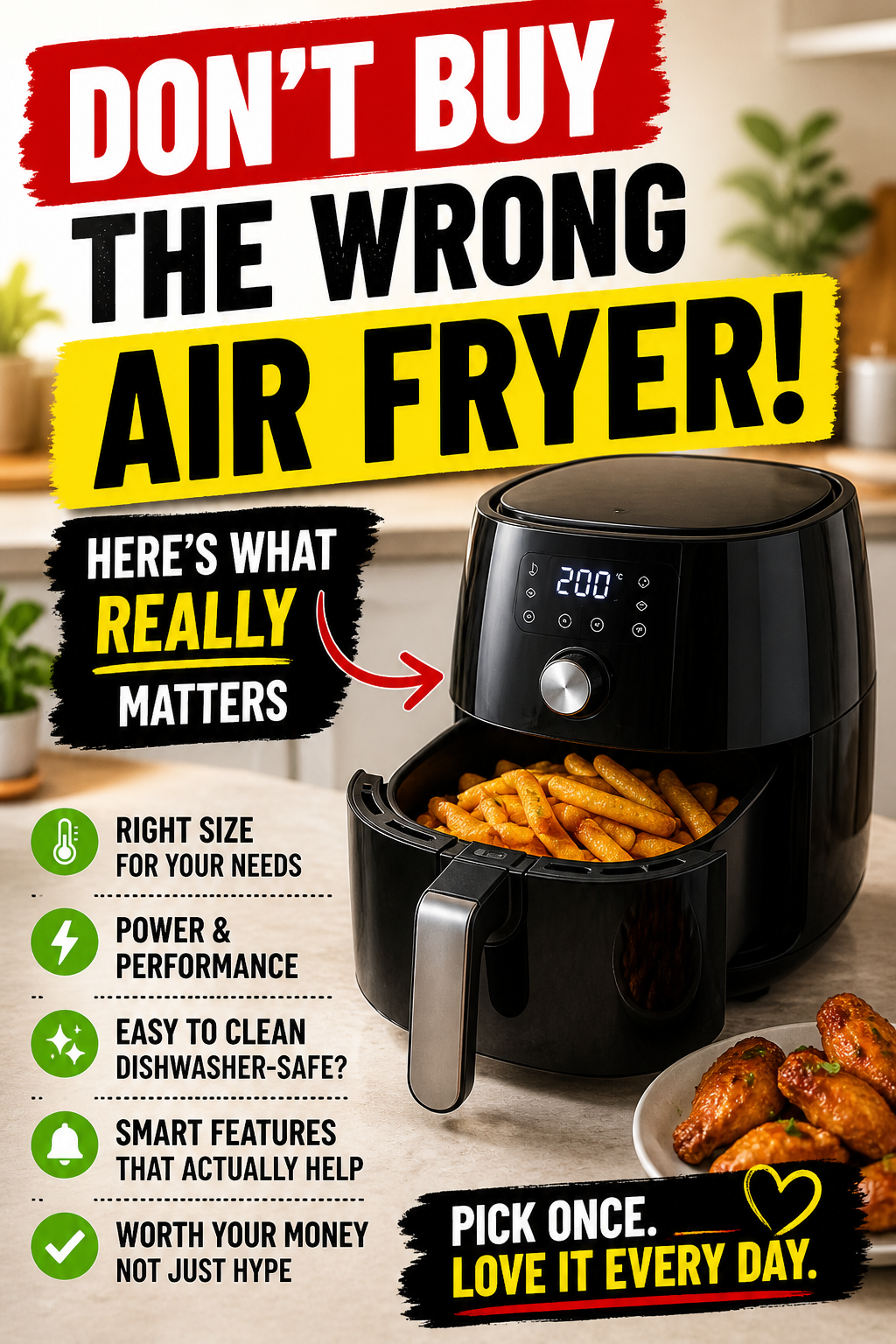
Air fryers look simple… until you actually try to choose one.
Different sizes, basket vs oven, a long list of features—and suddenly you’re comparing 20 models with no idea which one actually makes sense.
I’ve used a few different air fryers over the years (small, larger, basic and more advanced), and honestly? Most people overthink this.
This guide breaks it down in a practical way—based on real use, not just specs—so you can choose an air fryer that actually becomes one of your favorite kitchen tools, not another gadget you forget about.
What Is an Air Fryer (and Why People Love It)
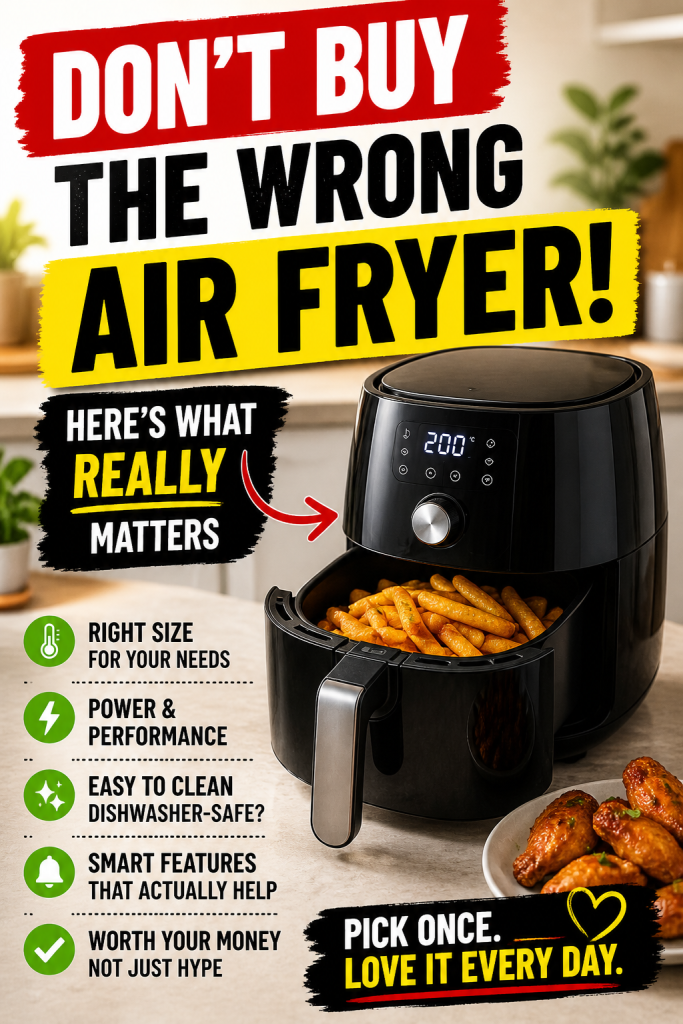
An air fryer is essentially a compact convection oven. It circulates hot air around food to cook it quickly and create a crispy, oven-baked texture—often with little or no oil.
Why it’s popular:
- faster than a traditional oven
- easy to use (set temp + time)
- great for crispy food
- more energy-efficient (can help lower your electricity bills)
- minimal cleanup
If you cook at home regularly, it quickly becomes one of the most used appliances in the kitchen.
Types of Air Fryers: Basket vs Oven Style
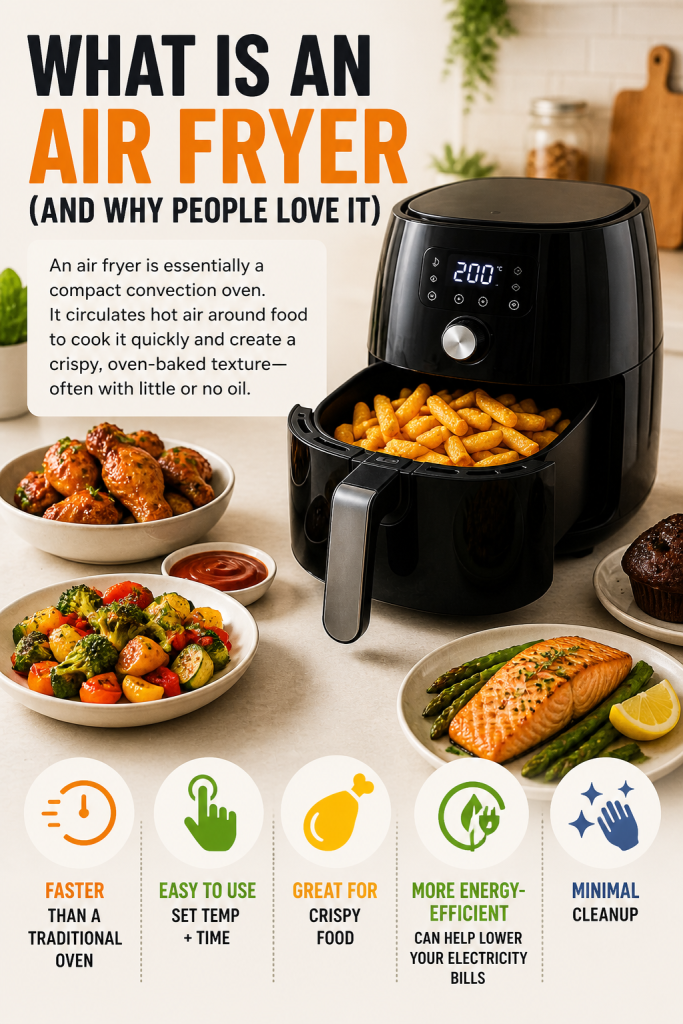
Basket Air Fryer (Most Common)
This is the classic model with a pull-out drawer.
Best for:
- beginners
- quick everyday meals
- smaller kitchens
Pros:
- heats up quickly
- produces crispier results (especially fries and chicken)
- simple to operate
- usually more affordable
Cons:
- limited capacity
- you may need to cook in batches
From experience: this is the most practical choice for most people starting out.
Oven-Style Air Fryer
A larger unit with a door and multiple trays.
Best for:
- families
- cooking multiple items at once
Pros:
- larger capacity
- more cooking functions
- more flexible for different meals
Cons:
- slower preheating
- slightly less crisp texture in some cases
- more parts to clean
Better if you already know you’ll use it often—not always ideal as a first air fryer.
What Size Air Fryer Do You Actually Need?
This is one of the most common mistakes.
Quick size guide:
- 1–2 people: 2–4 qt (≈ 2–3.8 L)
- 3–4 people: 4–6 qt (≈ 3.8–5.7 L)
- Family / batch cooking: 6+ qt (≈ 5.7+ L)
Real-life insight:
I started with a smaller model—and ended up upgrading. Cooking in batches sounds fine at first, but it gets frustrating fast if you use the air fryer often.
On the other hand, very large models take more space and aren’t always as efficient for small portions.
The most practical choice for most people:
4–6 qt ≈ 3.8–5.7 L
Got your air fryer? Start here:
Features That Actually Matter (and What You Can Ignore)
Many air fryers come with long feature lists—but only a few things really impact how well they work in everyday use.
What actually matters:
- Temperature control
- Timer with auto shut-off
- Non-stick basket (easy cleaning)
- Dishwasher-safe parts (this makes a big difference over time)
- Power (around 1700–2200W for consistent results)
Nice to have (optional):
- Reminder beep to shake/flip food halfway through (surprisingly useful)
- Dual basket (if you cook different things at once)
What you can usually skip:
- overly complex touchscreens
- 10+ cooking modes
- “smart” app features
- viewing windows (they sound nice, but are often harder to clean and not that useful in practice)
In practice, simpler models are easier to use, easier to clean, and just as effective.
How I Evaluate an Air Fryer (Real Use Criteria)
Instead of focusing on marketing features, I pay attention to:
- how quickly it heats up
- how evenly it cooks
- how crispy the results are
- how easy it is to clean
- noise level during use
- capacity (can it actually fit what I want to cook without overcrowding?)
- overall size (does it fit my kitchen without taking up too much counter space?)
These factors matter much more in everyday cooking than extra features—especially since counter space is limited, and you still need room to prep your meals comfortably.
How Much Should You Spend?
You don’t need to overspend to get a good air fryer.
- Budget ($50–80): good for basic use
- Mid-range ($80–150): best balance of quality and performance ✅
- Premium ($150+): only worth it if you cook frequently or want specific features
Most people will be happiest in the mid-range category.
Common Mistakes When Buying an Air Fryer
These are the most common issues people run into:
- choosing a model that’s too small
- focusing only on price
- ignoring how easy it is to clean
- buying a complicated model they don’t use
- expecting it to replace all other appliances
Practical > fancy. Always.
Is an Air Fryer Actually Worth It?
For most people—yes.
Pros:
- faster cooking
- less oil
- great texture
- convenient for everyday meals
Cons:
- limited capacity
- not ideal for every type of dish
- takes up counter space
If you cook regularly and like simple meals, it’s one of the most useful tools you can have.
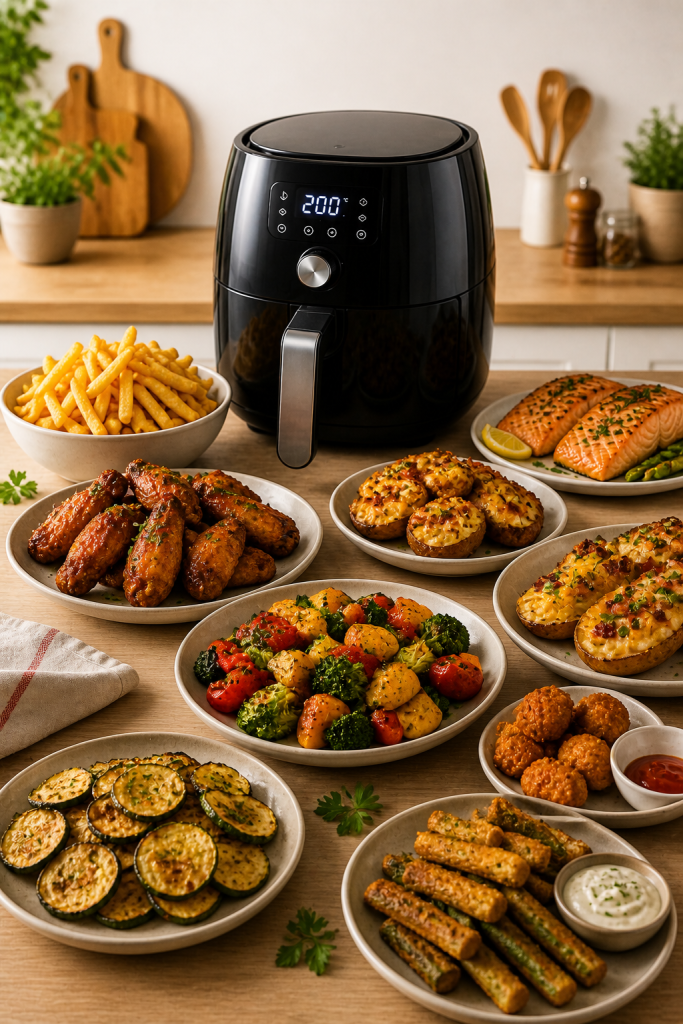
What Can You Cook in an Air Fryer?
Air fryers work best for foods that benefit from a crispy texture.
You can make:
- fries and potatoes
- chicken (wings, breast, tenders)
- roasted vegetables
- quick snacks and appetizers
New to air fryers? Don’t miss this: how to use an air fryer for the first time—the small things that actually change your results.
Final Verdict: What Should You Actually Buy?
If you’re just starting out:
Choose a basket air fryer
Go for 4–6 qt size
Stay in the mid-range budget
Keep it simple
It’s the most practical setup—and the one you’ll actually use.
FAQ
Can you cook raw meat in an air fryer?
Yes. Chicken, beef, and even fish cook well in an air fryer—as long as you follow proper cooking times and temperatures.
Do air fryers use a lot of electricity?
No. In most cases, they use less energy than a traditional oven because they cook faster and preheat quickly.
Is an air fryer healthy?
It can be. It allows you to use less oil while still getting a crispy texture, which can reduce overall calorie intake.
Leave a Reply