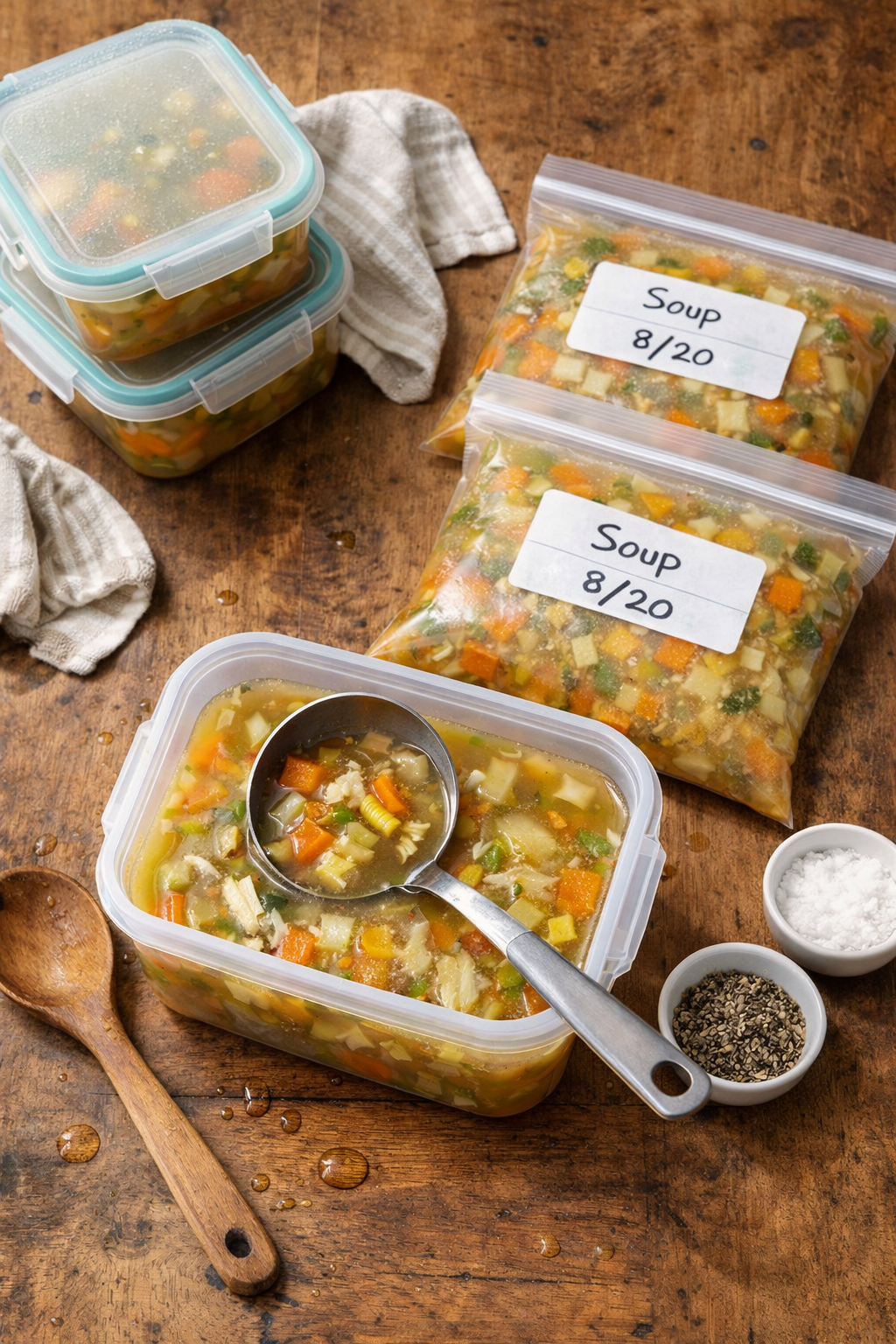
Most soups freeze really well — that’s not the problem.
The problem is what happens after.
You take it out, reheat it… and suddenly it tastes off.
A bit watery, slightly grainy, not as good as before.
And it’s not bad luck.
It usually comes down to a few small things: how you cool it, what’s in it, and how you freeze it.
Get those right, and your soup will taste almost the same as the day you made it.
How to Freeze Soup (The Way That Actually Works)
Let the soup cool completely before freezing.
Not warm. Not “almost there”. Completely.
Hot soup creates steam → steam turns into ice crystals → and that’s what messes up the texture later.
Divide it into smaller portions.
Freezing one big container sounds easier, but smaller portions:
- freeze faster
- reheat better
- and save you from defrosting way too much
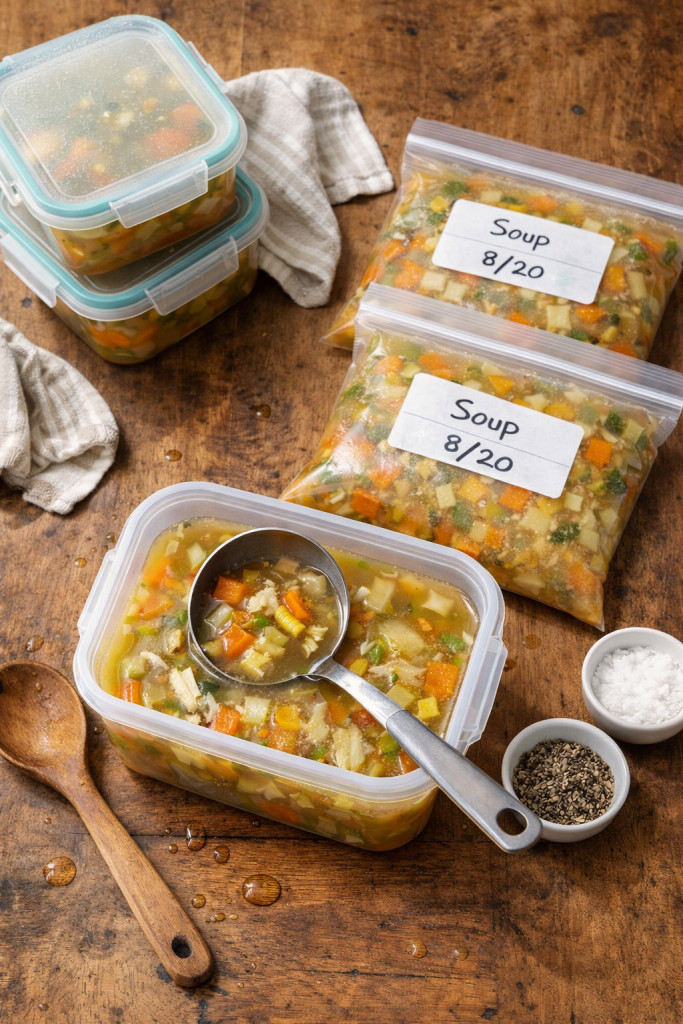
Use freezer-safe containers or bags.
Both work.
Just don’t fill them all the way.
Don’t fill the container all the way — soup expands a bit when it freezes, and that’s when things start spilling or popping open.
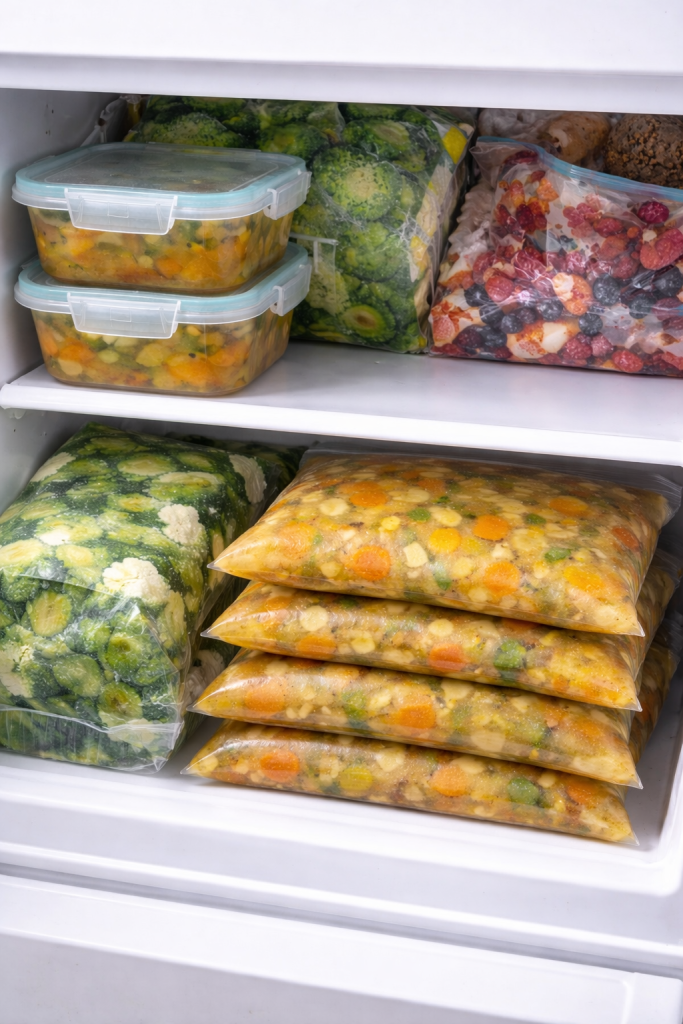
If you’re using freezer bags → lay them flat.
They stack nicely and thaw much faster later (this is one of those small tricks that actually helps a lot).
Label it.
Even if it feels unnecessary.
After two weeks, every frozen thing looks exactly the same 😅
What Freezes Well (and What Usually Goes Wrong)
Freezes really well:
- broth-based soups
- vegetable soups
- lentil or bean soups
- chicken soup
Needs a bit of strategy:
- creamy soups → can split or turn grainy
- pasta or rice → gets soft and mushy
- potatoes → texture changes (sometimes slightly gritty)
easiest fix: freeze the base, and add these ingredients fresh when reheating
Struggling with cooking results? Start here:
- The kitchen tools that actually make a difference
- The most common cooking mistakes and how to fix them
- Choosing the right air fryer for easier cooking
How to Reheat Without Ruining It
If you have time → thaw it in the fridge overnight
(best texture, no shortcuts here)
If not → heat it slowly on the stove
Not high heat.
This is where soups break, separate, or lose texture.
Stir occasionally and add a splash of water or broth if it looks too thick.
That’s normal after freezing.
Taste at the end.
Freezing slightly dulls flavors, so a pinch of salt or spices at the end makes a big difference.
A Small Thing That Makes a Big Difference
If you already know you made too much soup…
Set some aside before adding cream, milk, or cheese.
Freeze that part as your base.
Then when you reheat it later, just add those ingredients fresh —
and it’ll taste way better.
Leave a Reply