If you’ve ever tried to eat healthier, lose weight, or just feel more in control of your eating, you’ve probably heard the same advice: “Eat more protein.” It sounds simple. Almost too simple — and that’s exactly why it doesn’t always work.
Because in theory, eating more protein is easy. You choose better foods, add some protein to your meals, and you’re done. But in real life, it usually looks different.
You start motivated, try to eat better, maybe even plan your meals for a few days — and then the motivation drops. You grab something quick, eat what’s available, skip proper meals, and go back to what’s easy — not because you don’t care, but because the plan wasn’t realistic enough to stick.
That’s where most people get stuck. It’s not a lack of discipline, and it’s not even a lack of knowledge — it’s that something that seems simple in theory is harder to apply consistently in real life. And if your meals don’t keep you full, nothing else really works.
Why High-Protein Foods Make Such a Big Difference
Protein isn’t just about muscle or fitness — it directly changes how your meals work in real life.
It affects how long you stay full, how stable your energy is, and how often you think about food throughout the day.
What low-protein meals feel like:
- quick fullness
- fast hunger
- cravings
- constant snacking
What high-protein meals feel like:
- longer satiety
- more stable energy
- fewer cravings
- better control
The reason is simple: protein slows digestion and keeps food in your system longer, so your body doesn’t send hunger signals as quickly.
That’s why increasing protein often feels like everything suddenly gets easier — not because you’re trying harder, but because your meals finally start working with you instead of against you.
What Is Protein (Simple, Practical Explanation)
Protein is one of the three main macronutrients your body needs, alongside carbs and fats. But instead of thinking about it in technical terms, it’s easier to think about what it actually does in real life.
Protein is what makes meals satisfying. Carbs give you quick energy, fats add flavor and richness, but protein is what makes the meal “stick,” so you don’t feel hungry again shortly after eating. That’s why two meals with similar calories can feel completely different — one keeps you full for hours, while the other leaves you reaching for snacks soon after.
It also supports functions like muscle repair, recovery, and overall body maintenance, but for most people, the most noticeable benefit is simple: you stay full longer, and eating starts to feel more stable instead of constant.
Want to improve your meals even more?
- Add more fibre-rich foods for better digestion
- Learn how to make healthy food taste better
- See which kitchen tools actually make cooking easier
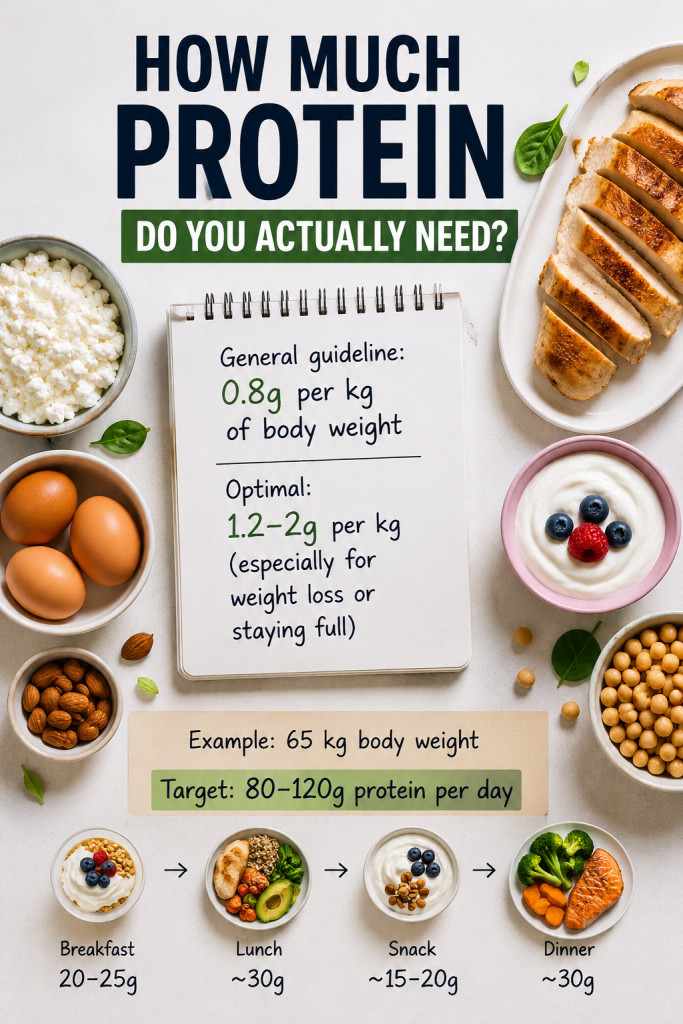
How Much Protein Do You Actually Need?
You don’t need to track every gram — but you do need a rough idea of what “enough” actually looks like. Most people underestimate their intake, because typical meals are built around carbs, not protein.
General guideline: minimum: 0.8g per kg of body weight; optimal (especially for weight loss or staying full): 1.2–2g per kg.
What that looks like in real life: let’s say someone weighs 65 kg — the target is roughly 80–120g of protein per day. Instead of thinking about it as one big number, it’s much easier to break it down across the day: breakfast → ~20–25g, lunch → ~30g, snack → ~15–20g, dinner → ~30g.
That’s a full day of eating without extremes or complicated tracking — just a simple structure that makes hitting your protein goal much more realistic.
Complete High-Protein Foods List
Instead of one long, confusing list, let’s break it down in a way that actually helps you choose.
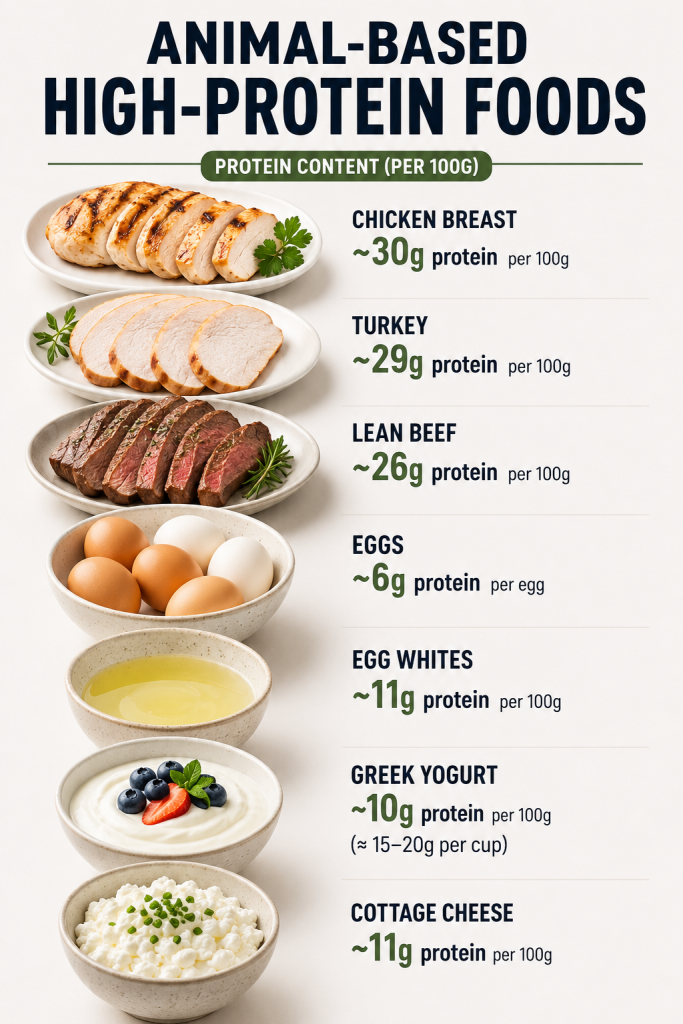
Animal-Based High-Protein Foods
These are some of the most efficient and easiest sources of protein, especially if your goal is staying full and hitting your daily target without overthinking.
- chicken breast — ~30g protein per 100g
- turkey — ~29g per 100g
- lean beef — ~26g per 100g
- eggs — ~6g per egg
- egg whites — ~11g per 100g
- Greek yogurt — ~10g per 100g (≈ 15–20g per cup)
- cottage cheese — ~11g per 100g
- tuna — ~25g per 100g
- salmon — ~22g per 100g
- shrimp — ~24g per 100g
- milk (high-protein options) — ~8–13g per cup
If your main goal is simplicity and staying full, this is the easiest place to start.
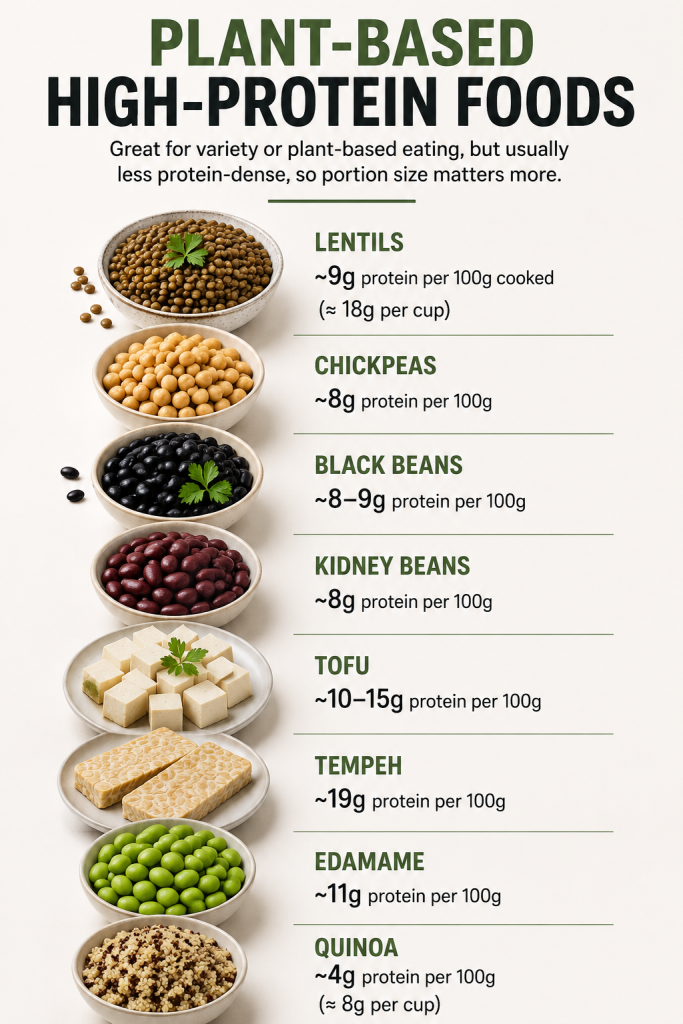
Plant-Based High-Protein Foods
Great for variety or plant-based eating, but usually less protein-dense, so portion size matters more.
- lentils — ~9g per 100g cooked (≈ 18g per cup)
- chickpeas — ~8g per 100g
- black beans — ~8–9g per 100g
- kidney beans — ~8g per 100g
- tofu — ~10–15g per 100g
- tempeh — ~19g per 100g
- edamame — ~11g per 100g
- quinoa — ~4g per 100g (≈ 8g per cup)
- oats — ~13g per 100g (≈ 5g per ½ cup dry)
- nuts — ~15–25g per 100g (varies)
- seeds — ~18–25g per 100g
These also provide fiber, which helps with digestion and makes meals more satisfying.
High-Protein, Low-Calorie Foods
If your goal is weight loss, this category matters most because it allows you to stay full without eating too many calories.
- chicken breast — high protein, low fat
- turkey — lean and filling
- egg whites — pure protein, very low calorie
- tuna in water — high protein, very low fat
- shrimp — low calorie, high protein
- low-fat Greek yogurt — high protein, lighter option
- cottage cheese — filling and relatively low calorie
- tofu — balanced plant-based option
These options are popular for weight loss because they give you a lot of protein without adding too many calories.
Easy High-Protein Add-Ons
This is where most people can improve their diet instantly without changing everything. Instead of starting from scratch, it’s often enough to upgrade what you already eat.
- switch regular yogurt → Greek yogurt
- add eggs to breakfast
- choose higher-protein bread or pasta
- add cottage cheese as a snack
- include protein shakes when needed
These small changes work because they increase protein without adding complexity. You’re not creating a new diet — you’re making your current one more effective.
Small upgrades often make a bigger difference because they’re easier to stick to and fit naturally into real life — and they don’t come with the pressure that the word “diet” often brings.
Best Sources of Protein (What Actually Works in Real Life)
People often ask what the “best” protein source is, but in real life, the answer is much simpler: the best one is the one you’ll actually eat consistently.
Different foods work better in different situations, which is why it helps to think in terms of use, not perfection.
Best for satiety:
- chicken
- eggs
- beef
Best for convenience:
- yogurt
- cottage cheese
- protein shakes
Best plant-based:
- tofu
- lentils
- beans
You don’t need the perfect source — you need options that fit naturally into your day, because small changes are much easier to stick to than trying to force big ones.
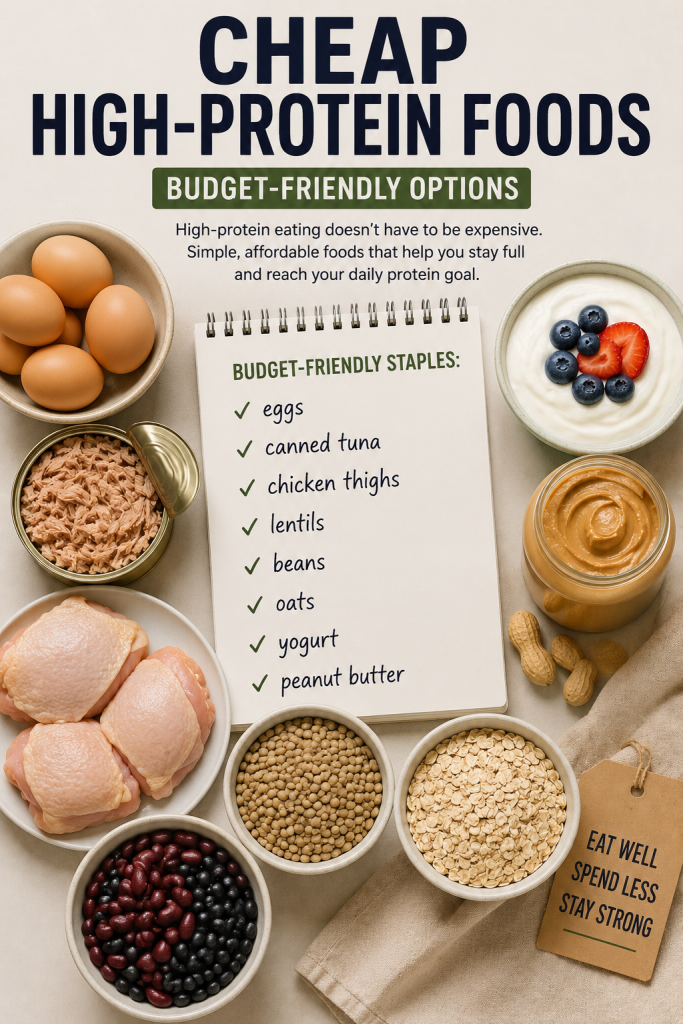
Cheap High-Protein Foods (Budget-Friendly Options)
High-protein eating doesn’t have to be expensive. In fact, some of the most reliable protein sources are also the simplest and most affordable.
Budget-friendly staples:
- eggs
- canned tuna
- chicken thighs
- lentils
- beans
- oats
- yogurt
- peanut butter
These foods work not just because they’re cheap, but because they’re easy to use.
The mistake most people make is relying on expensive “high-protein” products instead of building meals around basic foods that do the job just as well.
High-Protein Foods for Weight Loss
Protein is one of the most effective tools for weight loss — not because it’s magic, but because it changes how you eat.
When your meals include enough protein:
- you stay full longer
- you snack less
- you naturally eat fewer calories
Instead of constantly thinking about what to eat next, meals start to feel more complete and satisfying.
A simple rule that works: build your meal around protein first, then add everything else. Instead of asking “What should I eat?”, think “What’s my protein here?” — this one shift makes decisions much easier.
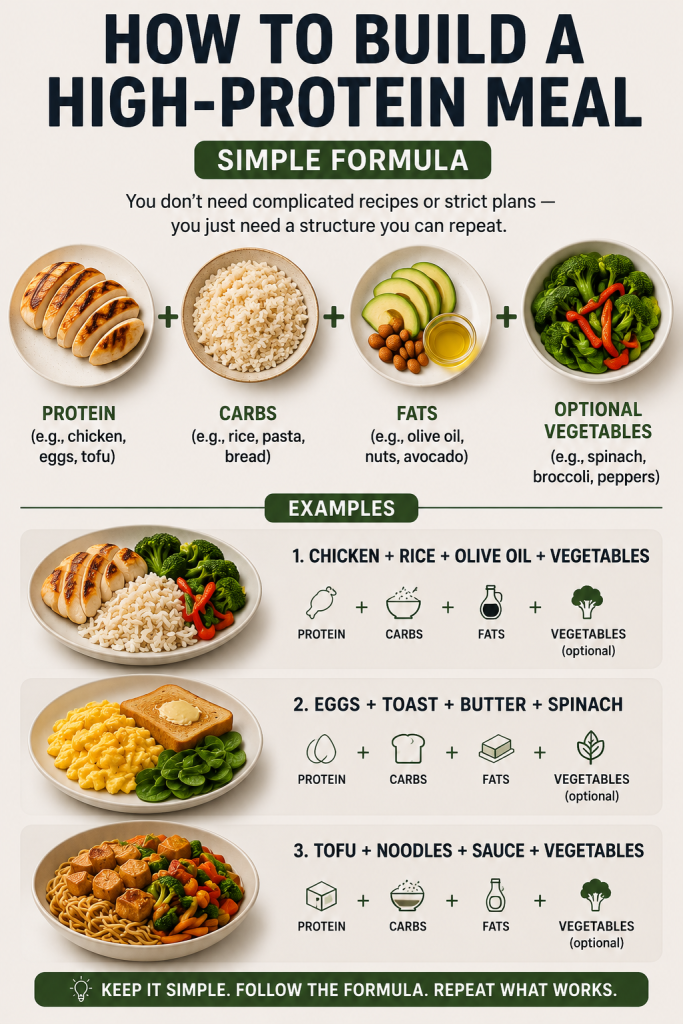
How to Build a High-Protein Meal (Simple Formula)
You don’t need complicated recipes or strict plans — you just need a structure you can repeat.
Use this formula: protein + carbs + fats (+ optional vegetables).
Examples:
- chicken + rice + olive oil + vegetables
- eggs + toast + butter + spinach
- tofu + noodles + sauce + vegetables
- salmon + potatoes + salad
This works because each part plays a different role: protein gives the meal structure, carbs provide energy, and fats make it more enjoyable and satisfying. When meals are more balanced, they’re easier to repeat — and consistency becomes much more natural.
High-Protein Meal Ideas (Simple and Repeatable)
You don’t need dozens of recipes — you just need a few meals you can repeat without overthinking.
Breakfast
Most breakfasts are too low in protein, which is why people feel hungry quickly after eating. Starting your day with protein helps stabilize your appetite for the rest of the day.
- eggs + toast
- protein oats
- smoothie with protein
Lunch and Dinner
Keep meals simple and built around a protein source.
- chicken bowls
- tuna wraps
- rice + meat + vegetables
- tofu stir fry
- high-protein pasta
You don’t need variety every day — a few reliable meals you actually enjoy will take you much further.
Snacks
Snacks should support your meals, not work against them.
Instead of low-protein options, choose:
- yogurt
- cottage cheese
- boiled eggs
- protein shake
- cheese
Protein-based snacks make it easier to stay consistent between meals.
No-Cook / Low-Effort Options
For busy or low-energy days:
- Greek yogurt + fruit
- protein shake
- canned tuna + bread
- boiled eggs
- cottage cheese
These are the meals that keep you on track when motivation drops.
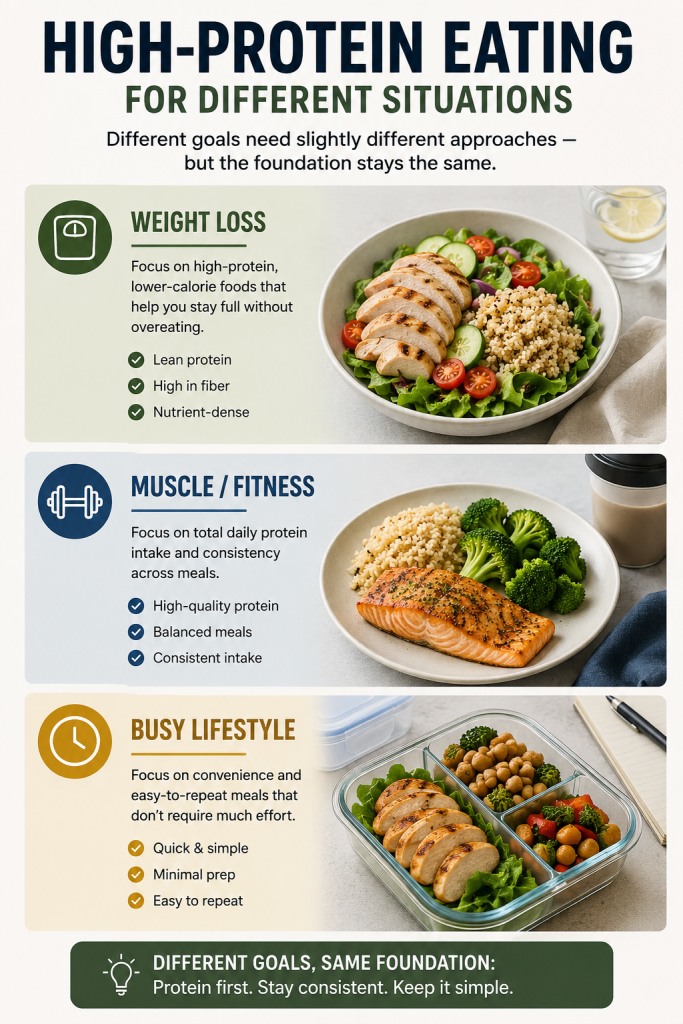
High-Protein Eating for Different Situations
Different goals need slightly different approaches — but the foundation stays the same.
Weight loss
Focus on high-protein, lower-calorie foods that help you stay full without overeating.
Muscle / fitness
Focus on total daily protein intake and consistency across meals.
Busy lifestyle
Focus on convenience and easy-to-repeat meals that don’t require much effort.
You don’t need one perfect plan — you need one that fits your life.
Real-Life Problems (And What’s Actually Causing Them)
“I’m always hungry”
Meals low in protein are digested faster, which means your body runs out of energy quickly and signals hunger again.
“I snack constantly”
When meals aren’t filling enough, your body looks for more food shortly after eating — even if you’ve already had enough.
“I eat healthy but nothing changes”
Many “healthy” meals are low in protein, which makes them less satisfying and easier to overeat later.
Fix: build your meals around protein first — everything else becomes easier.
Common Mistakes (That Slow You Down)
“Healthy” but low-protein meals
Meals can look healthy but still lack enough protein to be satisfying. Without it, they often don’t keep you full for long, which makes it easier to overeat later.
Not getting enough fiber
When increasing protein, many people forget about fiber — and that’s where problems usually start. Meals that are too low in fiber often feel less balanced and harder to maintain over time.
Overcomplicating everything
Trying to follow complex plans or constantly changing what you eat makes consistency harder. Simple, repeatable meals are much easier to maintain over time.
How to Increase Protein Without Changing Your Whole Diet
You don’t need a full reset to eat more protein — small adjustments are often enough.
- switch regular yogurt to Greek yogurt
- add eggs to breakfast
- include a protein-based snack
- slightly upgrade meals you already eat
These changes work because they fit into your current routine instead of replacing it. That’s why they’re easier to stick to and more likely to last long-term.
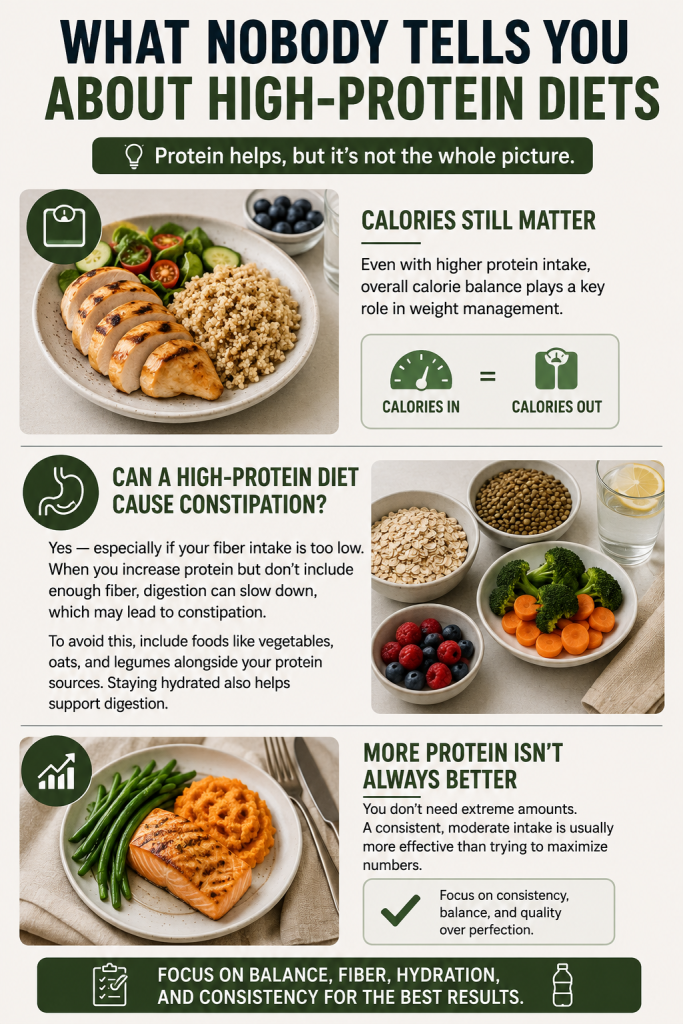
What Nobody Tells You About High-Protein Diets
Protein helps, but it’s not the whole picture.
Calories still matter
Even with higher protein intake, overall calorie balance plays a key role in weight management.
Can a high-protein diet cause constipation?
Yes — especially if your fiber intake is too low. When you increase protein but don’t include enough fiber, digestion can slow down, which may lead to constipation.
To avoid this, include foods like vegetables, oats, and legumes alongside your protein sources. Staying hydrated also helps support digestion.
More protein isn’t always better
You don’t need extreme amounts. A consistent, moderate intake is usually more effective than trying to maximize numbers.
Protein Powder (Do You Need It?)
Short answer: no — you don’t need it.
But it can be useful if you’re busy or find it difficult to hit your protein target through food alone. In that case, it’s a convenient option that can make things easier.
Think of it as a tool, not a foundation.
Quick FAQ
Can you eat too much protein?
For most people, moderate to higher protein intake is safe, but extremely high amounts aren’t necessary. Consistency matters more than pushing numbers as high as possible.
What are the easiest high-protein foods to start with?
Eggs, Greek yogurt, chicken, cottage cheese, and canned tuna are some of the simplest and most practical options.
Is plant-based protein enough?
Yes, but it usually requires slightly larger portions or combining different sources to reach the same protein intake as animal-based foods.
Do you need protein at every meal?
Not strictly, but including it in most meals makes it much easier to stay full and reach your daily target without overthinking.
Final Thoughts
You don’t need a perfect diet, strict rules, or complicated plans.
What actually works is much simpler: including protein in your meals, keeping your food choices structured, and repeating what fits your lifestyle.
Most people struggle not because they don’t know what to do, but because what they try isn’t easy to repeat.
When your meals are simple, filling, and built around what you already eat, consistency becomes much more natural — and that’s what makes the biggest difference long-term.
And remember — balance and common sense matter more than perfection. And if you’re unsure what works best for you, it’s worth speaking with a nutrition professional.
Leave a Reply