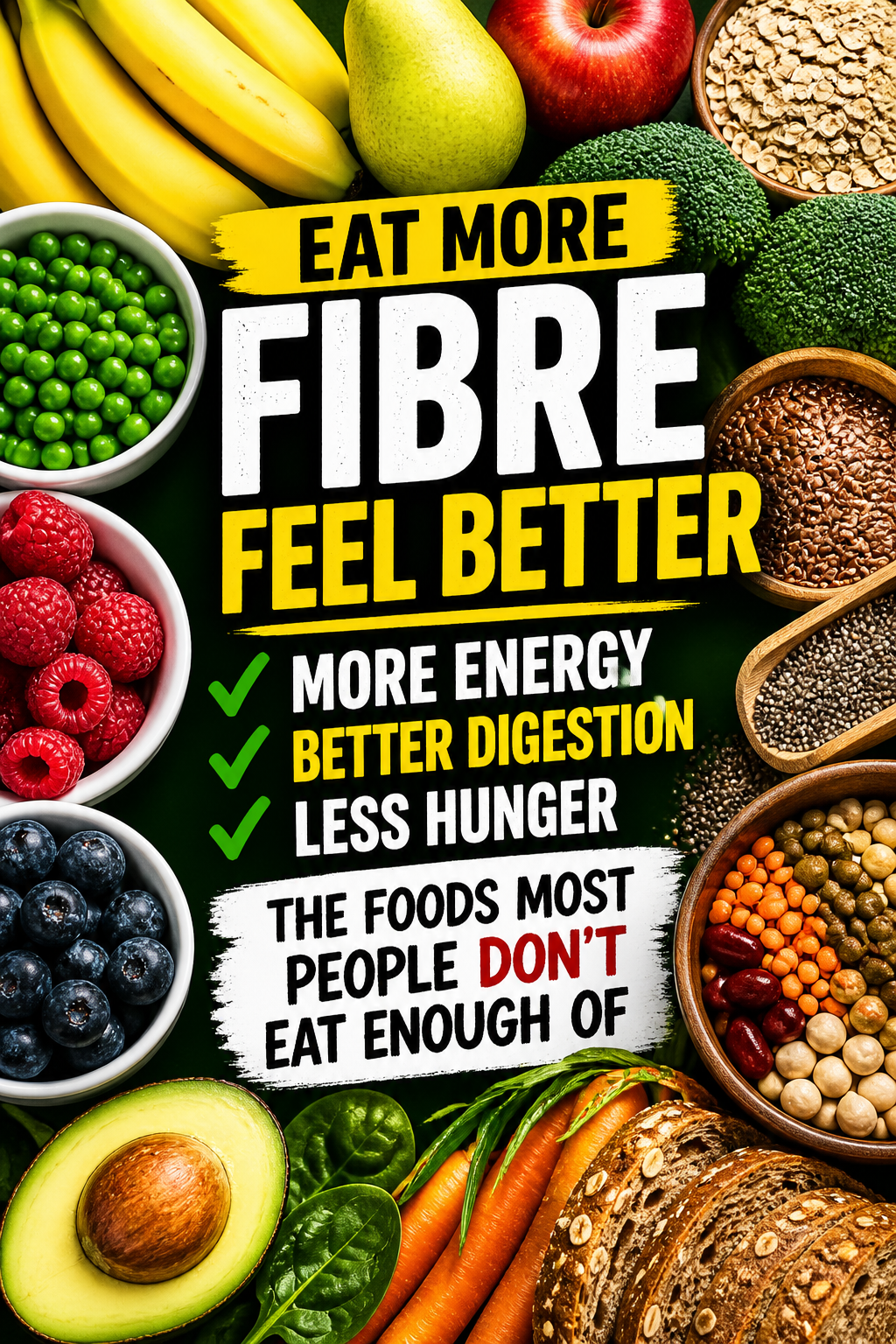
If you’re always hungry, low on energy, or your digestion feels off — there’s a high chance you’re not eating enough fibre.
And no, this isn’t about doing something extreme.
It’s not about cutting foods out.
It’s about adding the right ones back in.
Because when fibre is missing, things don’t feel quite right:
- meals don’t keep you full
- you snack more than you want to
- digestion feels inconsistent
- energy goes up and down
And most people don’t even realize fibre is the reason.
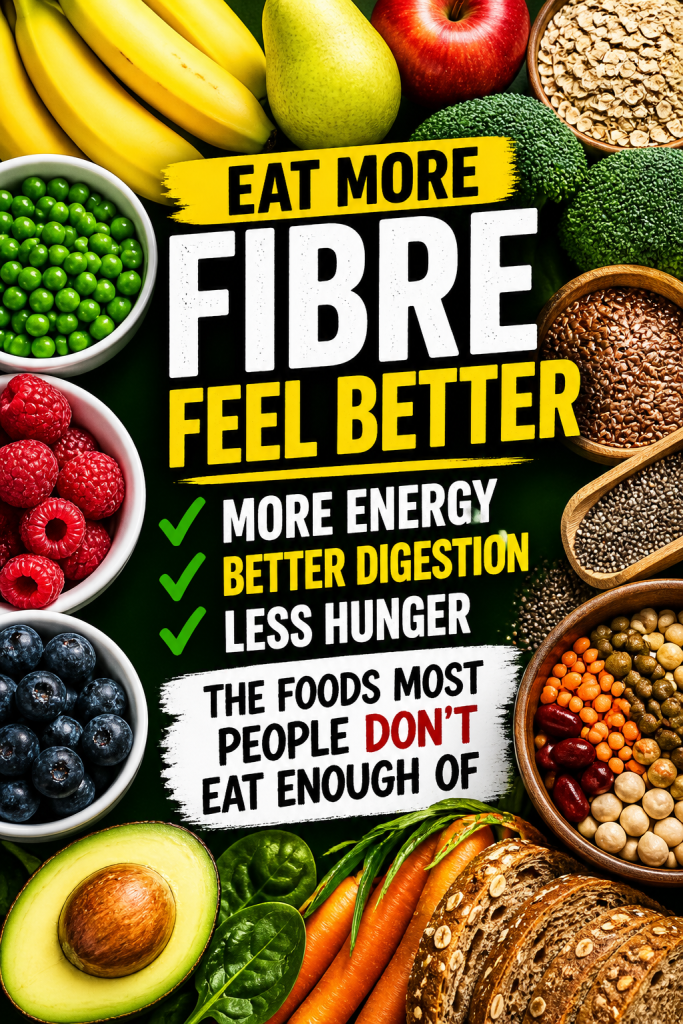
How to Add More Fibre (Quick Fix)
If you want a simple starting point, this is it:
- add chia seeds or oats to breakfast
- switch white bread/rice → whole grain
- eat at least 1 fruit daily
- add beans or lentils 2–3 times per week
- include one extra serving of vegetables in meals
Small habit changes like this can double your fibre intake — without overhauling your entire diet.
You may also like:
- High-protein foods for staying full longer
- Simple ways to make healthy food taste better
- How to choose the right air fryer
Why Fibre Became Important (And Why It Still Matters Today)
Fibre wasn’t always something people had to think about.
Most traditional diets naturally included:
- whole grains
- legumes
- vegetables
- minimally processed foods
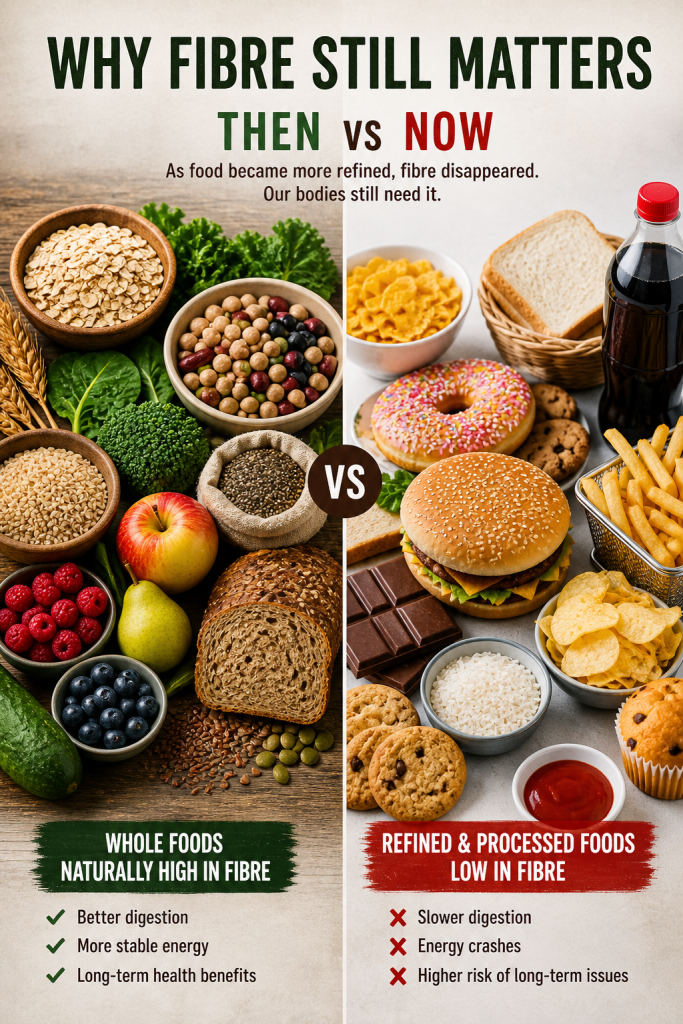
As food became more refined*, fibre slowly disappeared. White flour replaced whole grains, and convenient, processed foods replaced real meals.
Over time, researchers noticed something consistent:
people eating more fibre had better digestion, more stable energy, and fewer long-term health issues.
Fibre has always been essential for how our bodies function. The difference is that we used to get it naturally from whole foods — today, with so many refined and highly processed foods, we have to be more intentional about including it in our diet.
What Fibre Actually Does in Your Body
Fibre changes how your body handles food — in ways you feel daily.
It slows digestion just enough to keep you full longer, which means meals actually satisfy you instead of leaving you hungry an hour later.
It also helps keep blood sugar more stable, which prevents the spikes and crashes that lead to cravings. That’s one of the main reasons people feel less hungry and snack less throughout the day.
Another key role is gut health. Certain types of fibre act as prebiotics, feeding beneficial bacteria in your gut. This affects digestion, but also how your body processes food overall.
And on a basic level, fibre adds structure to digestion. It helps things move naturally, instead of feeling slow, heavy, or unpredictable.
That’s one of the reasons digestion starts to feel more regular and comfortable.
How Much Fibre Do You Actually Need Per Day?
General recommendations:
- Women (19–50): ~25g/day
- Men (19–50): ~30–38g/day
Most people get around 10–15g per day.
That gap is exactly why so many people feel constantly hungry or off.
What Foods Have a Lot of Fibre (And Which Ones Actually Make a Difference)
Not all fibre-rich foods are equal. Some make a much bigger impact than others — and those are the ones worth focusing on.
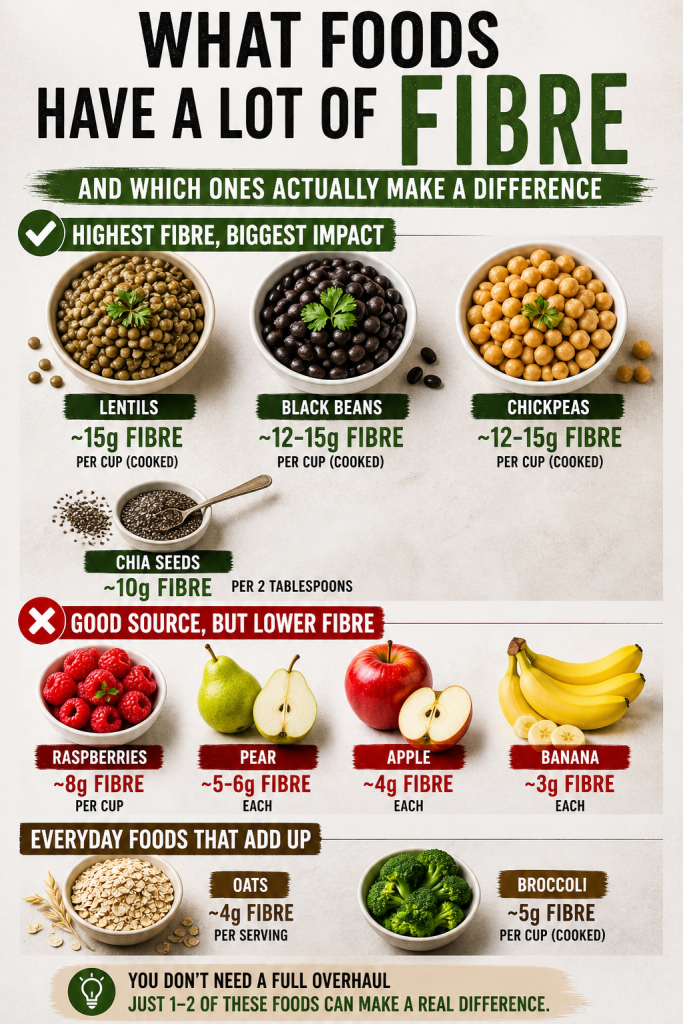
Lentils are one of the strongest options, with around 15g of fibre per cup, which is already over half of your daily needs. Beans like black beans or chickpeas are close behind, providing roughly 12–15g per cup, while chia seeds deliver about 10g in just 2 tablespoons, making them one of the easiest ways to boost fibre without changing your meals much.
Fruits can help too, but they vary more. Raspberries stand out with around 8g per cup, while pears offer about 5–6g each and apples around 4g. Bananas contain roughly 3g, which makes them useful — but not enough on their own.
Other everyday foods like oats (~4g per serving) and broccoli (~5g per cup) might seem moderate individually, but they add up quickly when eaten consistently.
When you look at it side by side, the difference becomes clear. Lentils, beans, and seeds provide significantly more fibre per serving than most fruits.
You don’t need a full overhaul — just one or two of these foods can make a real difference.
Fruits and Vegetables That Add Up Naturally
Fruits and vegetables don’t always seem high in fibre individually, but together they make a big difference.
Apples and pears are some of the easiest ways to add fibre daily, especially when eaten with the skin. Berries — particularly raspberries and blackberries — are some of the most fibre-dense fruits available.
Bananas they work best when combined with stronger sources like oats or seeds.
Vegetables contribute differently. Foods like broccoli, carrots, peas, Brussels sprouts, and sweet potatoes add both fibre and volume to meals. This combination helps you feel full without needing large portions.
Prebiotic Fibre Foods (For Gut Health)
Some fibre does more than support digestion — it feeds your gut.
Prebiotic fibre is found in foods like garlic, onions, leeks, asparagus, oats, and slightly unripe bananas.
These foods help support beneficial gut bacteria, which plays a role in digestion, nutrient absorption, and overall balance.
Including them regularly helps your system work more efficiently.
Bran — One of the Fastest Fibre Boosts
Bran is essentially concentrated fibre.
Wheat bran is very high in insoluble fibre, which supports regular digestion. Oat bran is slightly gentler and also supports cholesterol levels.
Just 1–2 tablespoons can make a noticeable difference in your daily fibre intake.
Psyllium Husk — A Simple Add-On That Works
Psyllium works differently than most fibre sources.
It absorbs water and forms a gel-like consistency, which slows digestion and improves regularity. It’s often used as a targeted support tool rather than a main source of fibre.
Always take it with enough water — that’s what makes it effective.
High Fibre Foods for Constipation (What Actually Helps)
Fibre supports digestion in two key ways: it adds bulk and helps retain water.
This makes digestion smoother and more regular.
Foods that work especially well include prunes, pears, oats, chia seeds, flaxseeds, lentils, and vegetables.
The key detail most people miss: fibre only works properly with enough water. Without it, symptoms can actually get worse.
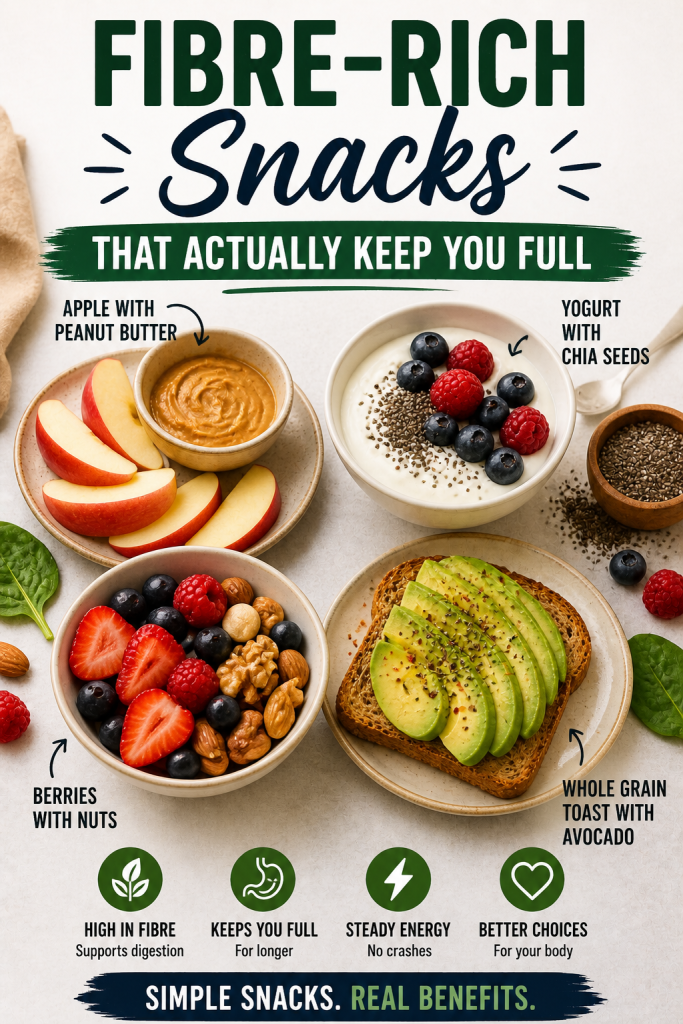
Best Fibre-Rich Snacks That Actually Keep You Full
Instead of reaching for quick, low-fibre foods, simple combinations work much better.
An apple with peanut butter, yogurt with chia seeds, berries with nuts, or whole grain toast with avocado all provide fibre and help you stay full longer.
These snacks don’t just “fill time” — they actually support your energy.
Fibre-Rich Foods for Weight Loss (Without Dieting)
Fibre naturally reduces how much you eat — without forcing restriction.
Meals with fibre digest more slowly, which keeps you full longer and reduces the need for constant snacking. Blood sugar stays more stable, which means fewer cravings.
Foods like oats, lentils, beans, vegetables, apples, and seeds are especially effective because they combine fibre with volume or protein.
Fibre-Rich Foods for Toddlers (Simple and Gentle Options)
For toddlers, fibre should be introduced gradually.
Simple options like oatmeal, mashed avocado, bananas, soft pears, cooked carrots, peas, and small amounts of whole grain bread work well.
The goal is balance — not too much at once, and always with enough fluids. If you’re unsure what’s right for your child, it’s always a good idea to check with your pediatrician.
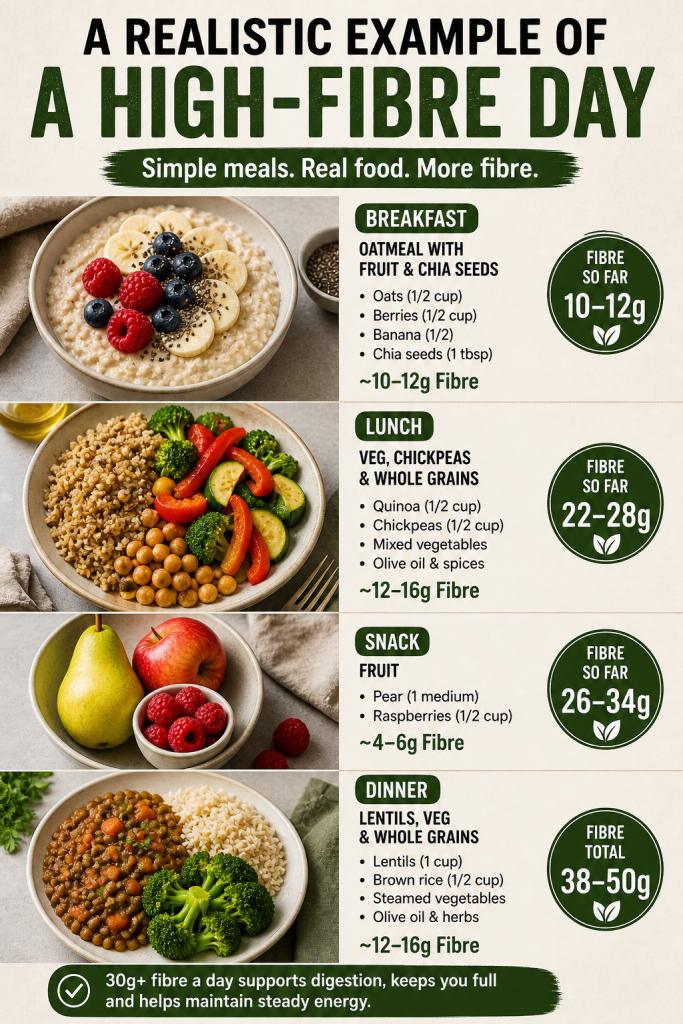
A Realistic Example of a High-Fibre Day
A typical day doesn’t need to be complicated.
Breakfast can include oatmeal with fruit and chia seeds, which already provides a strong fibre base. Lunch might be a meal with vegetables and whole grains, while a fruit-based snack fills the gap between meals.
Dinner can include lentils or vegetables combined with grains, bringing the total close to daily needs without strict planning.
One Mistake That Can Ruin the Benefits
The biggest mistake is increasing fibre too quickly without adjusting anything else.
Without enough water, fibre can feel heavy instead of helpful.
The solution is simple: increase gradually and drink more water.
Bottom Line
You don’t need a complicated diet to feel better.
If you fix just one thing — make it this.
Add more fibre through real foods, keep it consistent, and let it do its job.
Because once fibre is in place…
everything else gets easier.



Leave a Reply