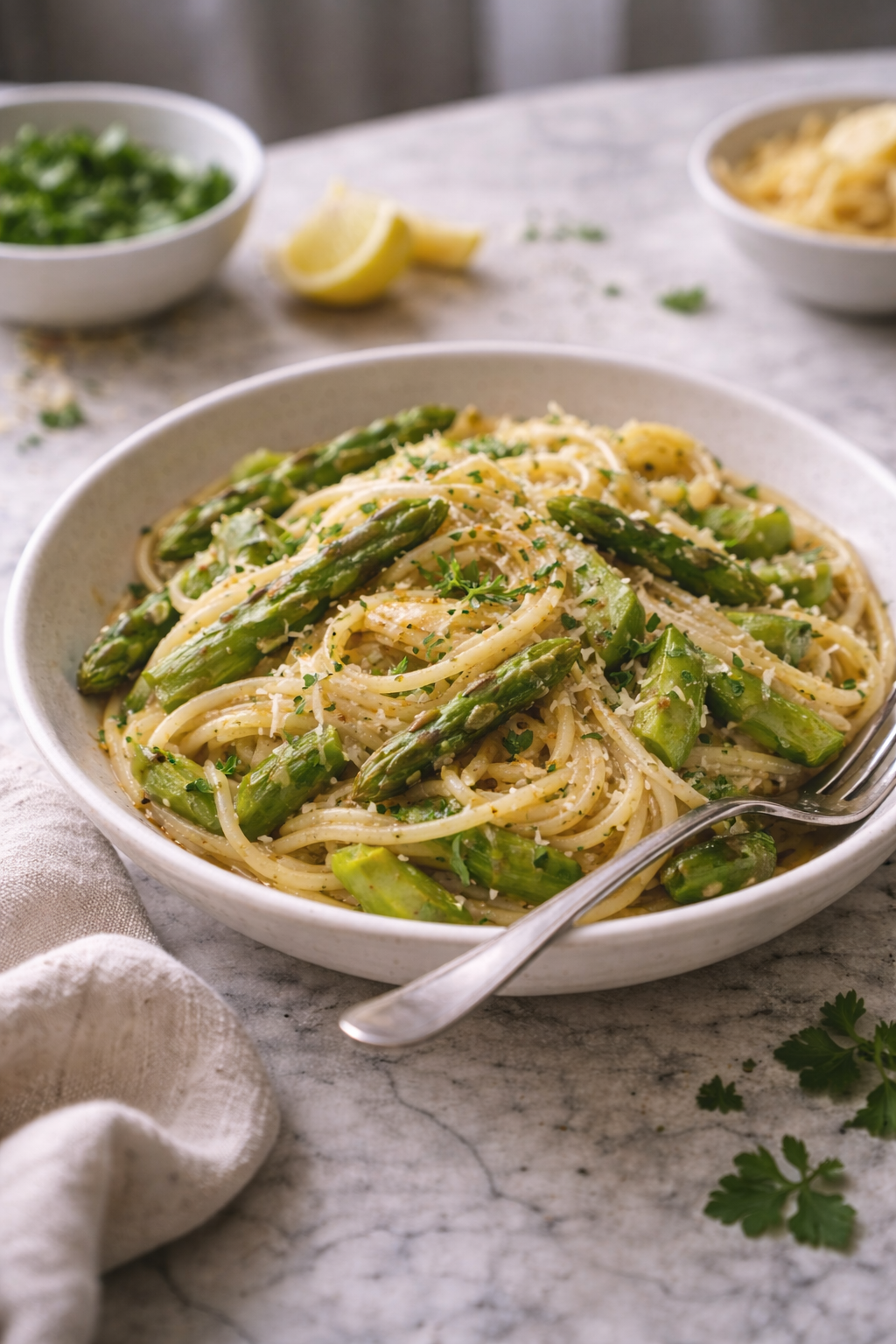
This is the kind of pasta that feels effortless but still thoughtful. It’s warm without being heavy, fresh without being sharp, and everything comes together in a way that feels balanced from the first bite. The asparagus stays bright, the lemon lifts the dish gently, and the sauce coats the pasta without weighing it down. It’s simple, but it’s exactly what you want when you need something light and satisfying.
Ingredients Overview
This dish is built around freshness and control. Spaghetti forms the base, while asparagus adds texture and a clean, green flavor. Olive oil creates a light coating, and lemon brings brightness without overpowering. Shallot and garlic build a gentle background, and a small amount of cheese ties everything together.
Ingredient Notes & Substitutions
- Spaghetti: Works best for light sauces, but other long pasta can be used
- Asparagus: Fresh and firm gives the best texture—separate tips from stems
- Olive oil: Key for coating, not frying—use good-quality
- Shallot/onion: Shallot is milder and blends better
- Garlic: Use sparingly and don’t brown it
- Lemon zest & juice: Zest adds depth, juice adds brightness—balance both
- Cheese: Adds subtle richness, not heaviness
- Herbs: Fresh herbs lift the final flavor
Why This Recipe Works
The sauce is built lightly, using pasta water to create a silky coating instead of a heavy base. Lemon is added at the end to keep it fresh and controlled. Asparagus is cooked in stages to keep texture intact. The result is a dish that feels cohesive without becoming dense.
Why You’ll Love This Recipe
Perfect for warm days or lighter meals
Light, fresh, and balanced flavor
Quick and simple to prepare
Ingredients
- 250 g / 9 oz spaghetti
- 1 bunch green asparagus
- 3 tbsp olive oil
- 1 small shallot or mild onion, finely sliced
- 1 garlic clove, finely grated
- Zest of 1 unwaxed lemon
- Juice of ½ lemon (plus more to taste)
- Salt
- Freshly ground black pepper
- A small handful of grated hard cheese (Parmesan-style or similar)
To finish
- A splash of pasta cooking water
- Fresh herbs (parsley, chives, or basil)
Instructions
- Start with the asparagus, not the pasta.
Snap off the woody ends and cut the spears into bite-sized pieces, keeping the tips separate. - Cook the pasta simply.
Boil spaghetti in well-salted water until just tender. Reserve a cup of the cooking water before draining. - Soften the base.
Heat olive oil in a wide pan. Add shallot and cook gently until translucent. Stir in garlic and cook briefly — no color. - Add the asparagus.
First add the stalk pieces and cook for 2–3 minutes. Add the tips last so they stay bright and tender. - Build lightness.
Add lemon zest and a small splash of pasta water. The sauce should look loose, almost unfinished. - Combine.
Add spaghetti directly to the pan, tossing gently. Add more pasta water if needed to coat the strands lightly. - Finish off the heat.
Remove from heat, add lemon juice, a little cheese, black pepper, and herbs. Taste and adjust gently — sharpness should whisper, not shout. For extra freshness, add a small pinch of lemon zest right before serving.
Common Mistakes to Avoid
- If asparagus is soft and dull: overcooked → cook briefly and add tips last
- If sauce tastes too sharp: too much lemon → balance with pasta water and cheese
- If garlic tastes bitter: browned → cook gently and briefly
- If pasta feels dry: not enough liquid → add more pasta water
Substitutions & Variations
- Add peas or zucchini for more vegetables
- Use whole wheat pasta for a nuttier base
- Add grilled chicken or shrimp for protein
- Swap lemon for a touch of white wine
- Add chili flakes for gentle heat
Storage & Leftovers
- Store in the fridge for up to 2 days
- Reheat gently with a splash of water
- Add fresh herbs after reheating for best flavor
- Avoid overheating to keep texture light
- Best enjoyed fresh
FAQ
How do I keep the sauce light?
Use pasta water instead of extra oil or cream.
Can I make this ahead of time?
It’s best fresh, but can be reheated gently.
What if I don’t have asparagus?
You can use zucchini, green beans, or peas.
How much lemon should I add?
Start small and adjust—balance is key.
Is this dish heavy?
No, it’s designed to stay light and fresh.
Also worth trying: Crispy Asparagus Wrapped in Filo with Lemon and Herbs, Crispy Baked Chicken Fingers with Warm Taco Spices, Lemon & Garlic Chicken with Warm Citrus Notes


Leave a Reply