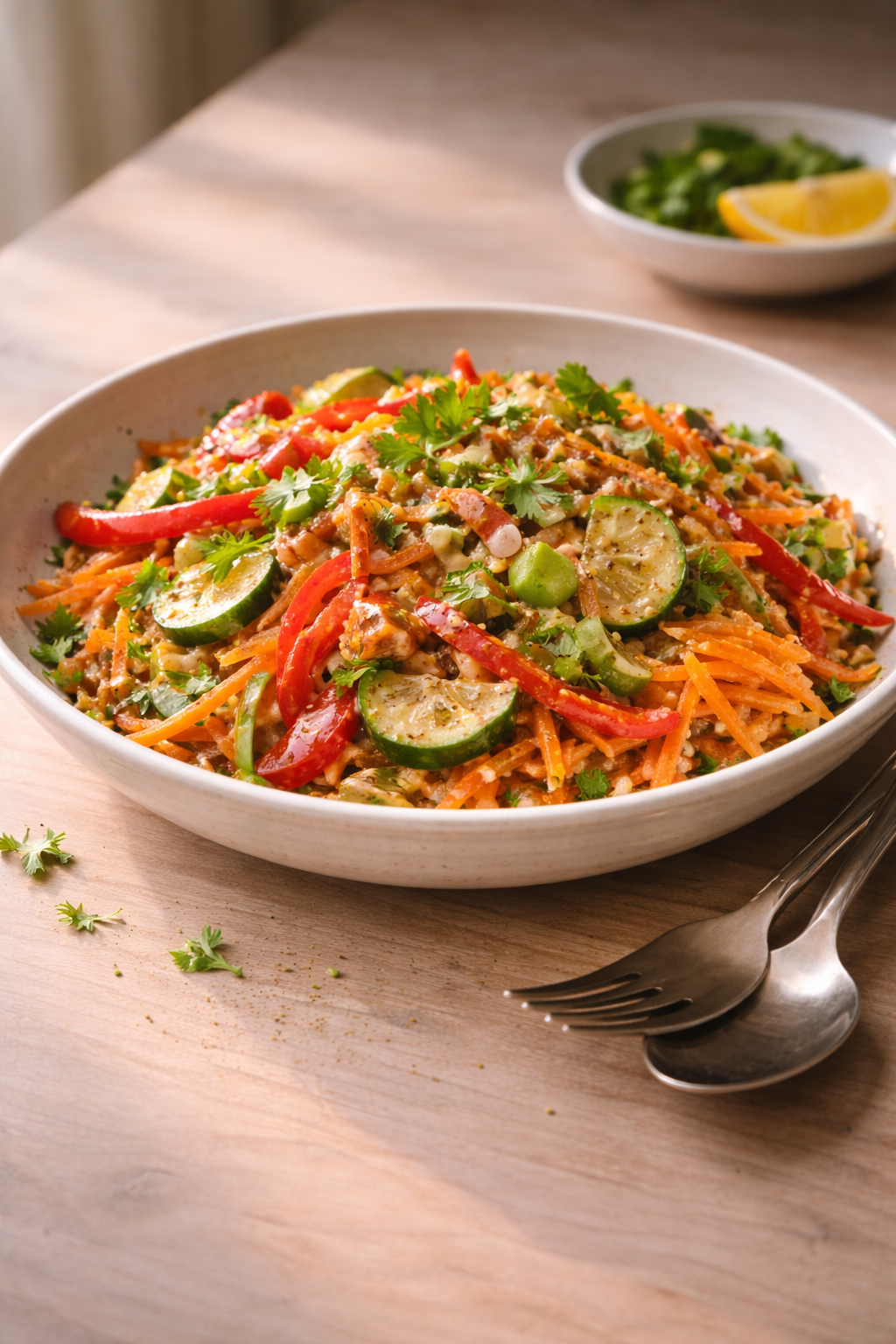
There are days when vegetables feel like something you should eat — this isn’t one of them. This salad is built to actually taste good: crisp, fresh textures with a peanut dressing that’s balanced, not heavy. It coats everything lightly and turns simple ingredients into something you’ll want to finish.
Quick Info
- Difficulty: Easy
- Prep Time: 15 minutes
- Cook Time: 0 minutes
- Total Time: 15 minutes
- Servings: 2–3
Why This Works (Balance + Texture)
This salad depends on contrast. The vegetables are all raw and crisp, but each brings something slightly different — sweetness from carrot, freshness from cucumber, sharpness from onion, and structure from bell pepper.
The dressing is where most of the flavor happens. Peanut butter adds richness, soy sauce brings depth, lime cuts through everything, and honey rounds it out. The key is keeping it fluid enough to coat, not sit heavy at the bottom.
Letting the dressing sit briefly before using it helps the flavors blend and smooth out — a small step, but noticeable.
More ideas: Light Lamb’s Lettuce and Tomato Salad
Easy Harissa Halloumi Couscous Salad
Spinach Salad With Asian Meatballs and Crispy Ham
Ingredients
Ingredient Notes (What Actually Matters)
Peanut butter should be smooth and not too thick. Very dense peanut butter will need more liquid to balance.
Cucumber should be firm — soft or watery cucumber will dilute the dressing quickly.
Carrot should be finely grated so it blends into the salad rather than standing out.
Lime juice should be fresh — bottled versions don’t have the same brightness.
Instructions
- Start with the dressing. In a bowl, combine the peanut butter, soy sauce, lime juice, and honey. Mix until it begins to smooth out — it may look thick at first.
- Add about 1 tablespoon olive oil and continue mixing. The texture should start to loosen and become glossy.
- If the dressing is still too thick, add a small splash of water — just enough to make it pourable. This step is important. A dressing that’s too thick won’t coat the vegetables evenly and will feel heavy.
- Let the dressing sit for a few minutes. This allows the flavors to settle and the texture to stabilize.
- Prepare the vegetables: slice the bell pepper thinly, grate the carrot, slice the cucumber into half-moons, and finely slice the spring onions. Keeping everything relatively thin ensures even coating and better texture in each bite.
- Place all the vegetables into a large bowl. Toss them lightly first — this helps distribute everything before adding the dressing.
- Pour the dressing over the vegetables gradually, not all at once. Start with about two-thirds, toss gently, then add more if needed. The goal is a light coating, not a thick layer.
- Finish with freshly ground black pepper and chopped cilantro just before serving. Adding herbs at the end keeps their flavor bright.
Texture & Balance (What You Want)
- vegetables → crisp, fresh, not watery
- dressing → smooth, lightly coating, not thick
- flavor → nutty, slightly sharp, lightly sweet
If the salad feels heavy, the dressing is likely too thick or overused.
Ingredient Swaps (Detailed & Useful)
- Peanut butter → almond butter
👉 Slightly milder, less intense flavor
👉 May need a bit more salt (less naturally salty) - Soy sauce → tamari
👉 Gluten-free option, slightly deeper flavor - Lime juice → rice vinegar
👉 Less bright, more subtle acidity
👉 Works better if you prefer a softer flavor - Cilantro → parsley
👉 Milder, less citrusy
👉 Good if you don’t like cilantro
Common Mistakes (And How to Avoid Them)
❌ Dressing too thick
👉 Doesn’t coat evenly, feels heavy
✅ Add small amounts of water to loosen it
❌ Adding all dressing at once
👉 Overdresses salad easily
✅ Add gradually and adjust
❌ Wet vegetables
👉 Dilutes dressing and weakens flavor
✅ Keep vegetables dry and fresh
❌ Overmixing
👉 Softens vegetables and reduces crunch
✅ Toss gently, just enough to coat
What Affects the Final Result
- Dressing consistency → key for coating vs heaviness
- Cut size → thinner = better integration
- Timing → dress just before serving for best texture
Flavor Adjustments
- Too salty → add a bit more lime juice or a splash of water
- Too thick → loosen with water or a little extra lime
- Too mild → add a few drops of soy sauce
Make-Ahead & Storage
You can prepare the vegetables and dressing separately in advance.
Combine just before serving — once mixed, the vegetables will slowly release moisture and soften.
Best eaten fresh, but can hold for a few hours in the fridge.
Serving Ideas
Serve as a light meal, a side to grilled dishes, or alongside rice or noodles for a more filling option.
FAQ
Can I add protein?
Yes — grilled chicken, tofu, or shrimp work very well.
Why is my salad watery?
Most likely from cucumber or overdressing.
Can I make it spicy?
Yes — add chili flakes or a bit of chili oil.
Is it good cold?
Yes, but best slightly chilled, not very cold.
Related recipes: Filling Pasta Salad With Meatballs
Simple Couscous Salad With Vegetables


Leave a Reply