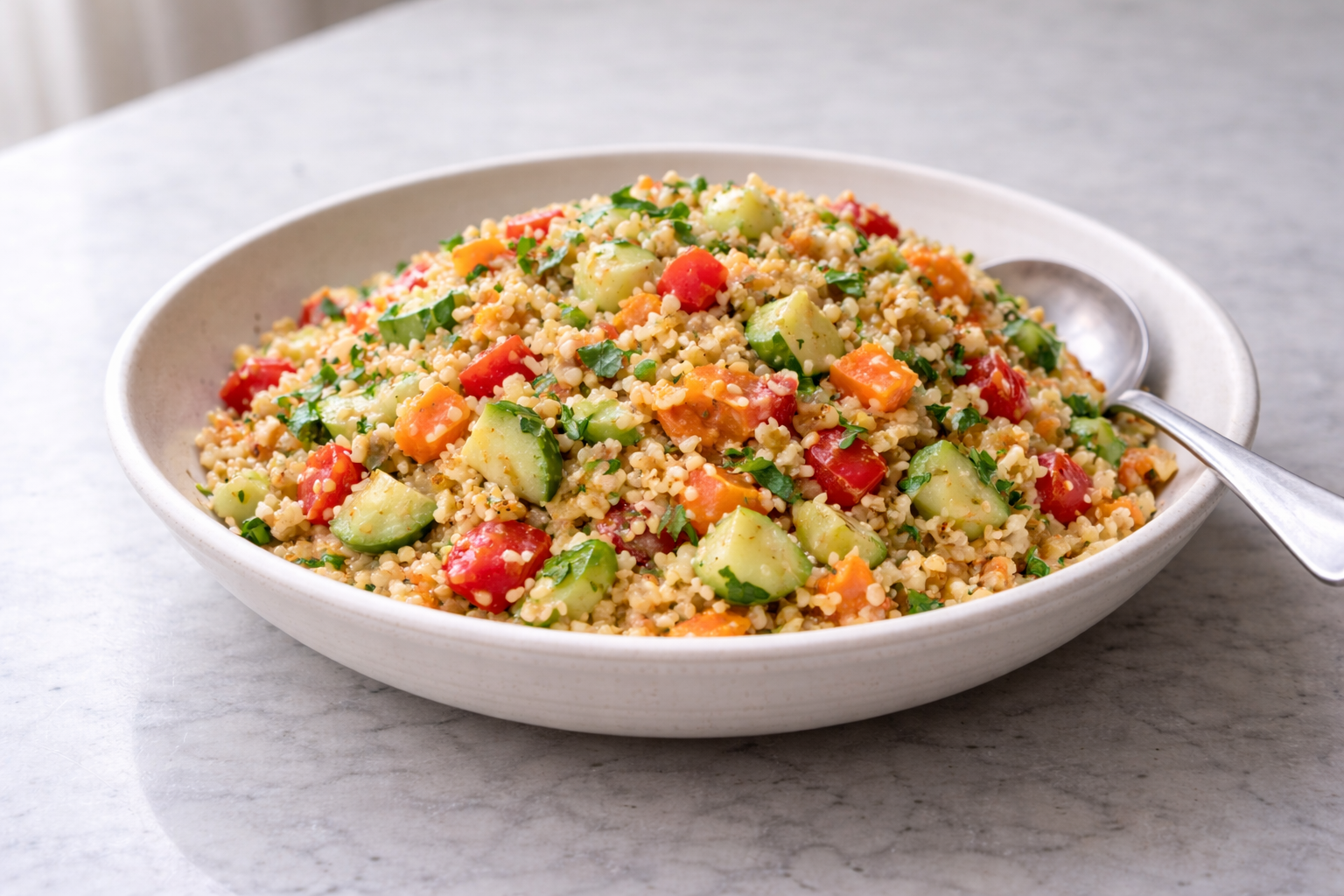
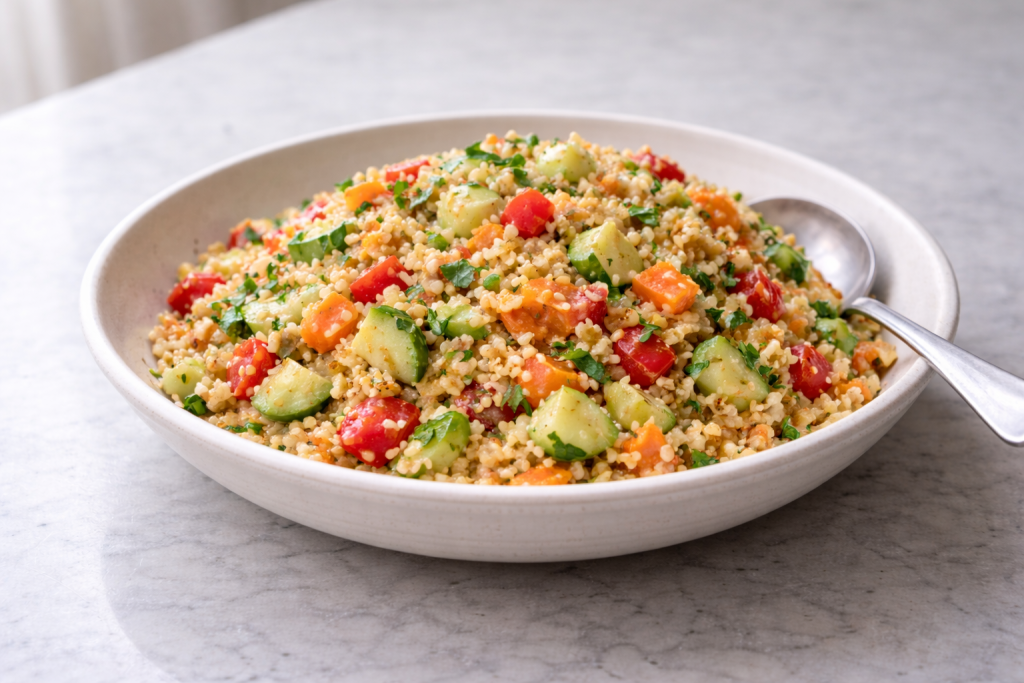
Some days you don’t want to cook — you just want something that comes together quietly and still feels right. This is that kind of dish. Couscous does most of the work, the vegetables keep it fresh, and the whole thing lands somewhere between light and actually satisfying.
Quick Info
- Difficulty: Easy
- Prep Time: 15 minutes
- Cook Time: 5 minutes
- Total Time: 20 minutes
- Servings: 2–3
Why This Simple Salad Works
Couscous is one of the few ingredients that can turn into a full dish with almost no effort — but only if it’s handled correctly. It absorbs water quickly, but also traps steam, which is what softens the grains evenly.
The vegetables here are raw on purpose. They bring contrast: carrot adds slight sweetness, zucchini gives softness without heaviness, and bell pepper brings freshness and crunch.
The dressing is minimal, but it’s doing real work. Lemon adds brightness, olive oil smooths everything out, and salt ties the whole thing together. Because couscous absorbs flavor easily, even a simple dressing becomes effective.
More ideas: Quick Shrimp Salad with Lime Dressing
Easy Crispy Air Fryer Baked Potatoes with Garlic Herb Butter
Easy Potato and Asparagus Salad with Lime Mayo
Ingredients
Ingredient Notes (What Actually Matters)
Couscous should be hydrated, not soaked. Too much water will make it dense and clumpy instead of light.
Carrot should be finely grated so it blends into the salad rather than standing out in chunks.
Zucchini should be firm and fresh — soft zucchini releases too much moisture and weakens the texture.
Bell pepper adds structure, so cutting it evenly helps maintain balance in every bite.
How It Comes Together
- Place the couscous in a large bowl and add about ½ teaspoon of the salt. Pour over the hot water, cover, and let it sit for about 5 minutes. This allows the grains to absorb water evenly without becoming soggy.
- Once the couscous has absorbed the liquid, fluff it thoroughly with a fork. This step is essential — it separates the grains and releases steam, preventing clumping later.
- While the couscous rests, grate the carrot finely. Cut the zucchini and bell pepper into small, even pieces. Keeping the vegetables similar in size helps them distribute evenly and improves the overall texture.
- Add about 1½ tablespoons olive oil and 1½ tablespoons lemon juice to the couscous. Mix gently but thoroughly. Dressing the couscous first ensures it absorbs flavor before adding the vegetables.
- Add the grated carrot, zucchini, and bell pepper. Fold everything together lightly — avoid pressing down, which can compact the couscous.
- Taste and add the remaining salt if needed, along with freshly ground black pepper.
- Finish with chopped parsley just before serving, and drizzle the remaining ½ tablespoon olive oil if the salad needs a bit more smoothness.
Texture & Balance (What You’re Aiming For)
- couscous → light, separate grains
- vegetables → fresh, slightly crisp
- dressing → absorbed, not pooling
If the salad feels heavy, it usually means the couscous wasn’t fluffed properly or had too much water.
Ingredient Swaps (Detailed & Practical)
- Couscous → bulgur
👉 More texture and slightly nutty flavor
👉 Needs a bit more hydration time - Zucchini → cucumber
👉 Fresher, more watery
👉 Add just before serving to avoid sogginess - Bell pepper → cherry tomatoes
👉 Juicier, slightly sweeter
👉 May release more liquid over time - Parsley → mint
👉 Brighter, more aromatic
👉 Changes the profile to a fresher, lighter feel
Common Mistakes (And How to Avoid Them)
❌ Too much water in couscous
👉 Results in clumpy, dense texture
✅ Stick to the ratio and fluff well
❌ Not fluffing after soaking
👉 Grains stick together and feel heavy
✅ Always loosen with a fork
❌ Adding vegetables before dressing
👉 Couscous absorbs less flavor
✅ Dress couscous first, then add vegetables
❌ Cutting vegetables too large
👉 Uneven texture and poor distribution
✅ Keep everything small and consistent
What Affects the Final Result
- Water ratio → controls texture of couscous
- Timing of dressing → affects flavor absorption
- Size of cuts → determines how balanced each bite feels
Flavor Adjustments
- Too bland → add a bit more lemon juice or salt
- Too sharp → balance with a drizzle of olive oil
- Needs depth → a pinch of cumin or chili flakes works well
Make-Ahead & Storage
This salad holds well for several hours and can be made ahead.
If stored, couscous may absorb more dressing — refresh with a little olive oil or lemon juice before serving.
Best consumed within 24 hours.
Serving Ideas
Serve as a light main dish, a side for grilled meat, or part of a larger spread. It works especially well when you need something quick but not boring.
FAQ
Can I use cold water for couscous?
Not recommended — hot water ensures proper hydration.
Why is my couscous sticky?
Too much water or not enough fluffing.
Can I add protein?
Yes — chickpeas or grilled chicken work well.
Is it good cold?
Yes, but best at room temperature for full flavor.
Also worth trying: Pan-Fried Potatoes with Spinach and Feta
Refreshing Colorful Potato Salad with Lemon and Herbs

Leave a Reply