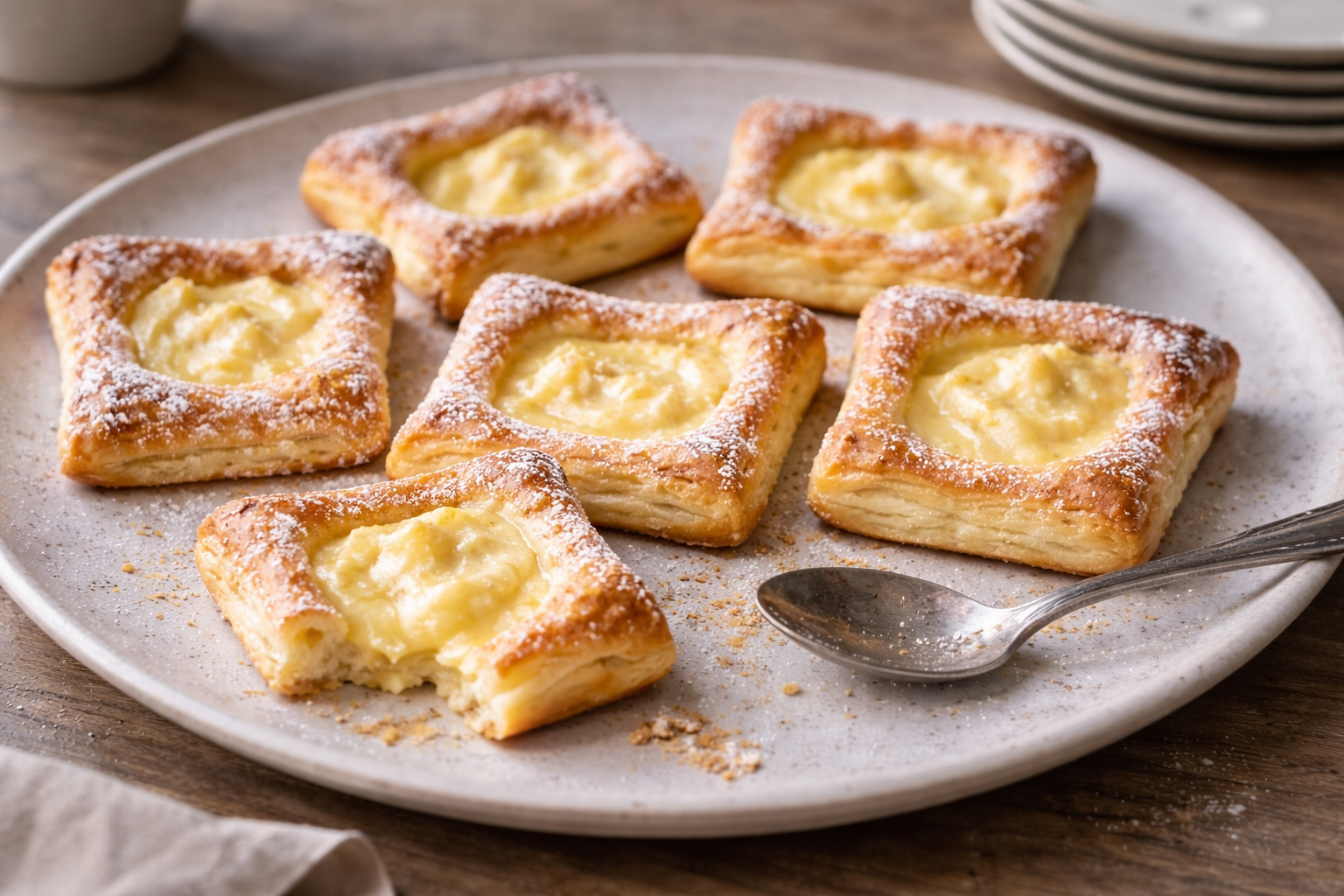
Some desserts happen because you planned them. Others happen because you suddenly want something warm, sweet, and homemade without spending an hour in the kitchen. These custard-filled puff pastry squares fall into the second category — quick to assemble, simple ingredients, and a result that feels much more “bakery” than effort suggests.
The Basics
- Difficulty: Easy
- Prep Time: 10 minutes
- Cook Time: 18 minutes
- Total Time: About 28 minutes
- Servings: 6 pieces
Why This Recipe Works
This recipe is built around contrast and timing.
The custard is cooked just enough to thicken but not fully set before baking. That’s important — if it’s too thick before going into the oven, it won’t spread or settle properly inside the pastry. If it’s too thin, it can leak or soak into the dough.
Puff pastry does the structural work. As it bakes, the layers expand and lift, creating a raised border around the filling. Leaving a margin around the edges gives it space to rise without being weighed down.
Baking at a relatively high temperature helps the pastry puff quickly before the custard overheats. This keeps the layers light and prevents the base from becoming soggy.
More ideas: Air Fryer Sweet Potato Fries That Actually Get Crispy
Quick Air Fryer Corn Dogs for an Easy Snack
Easy Air Fryer Pineapple Upside-Down Tart with Lime and Coconut
Ingredients
Texture & Result
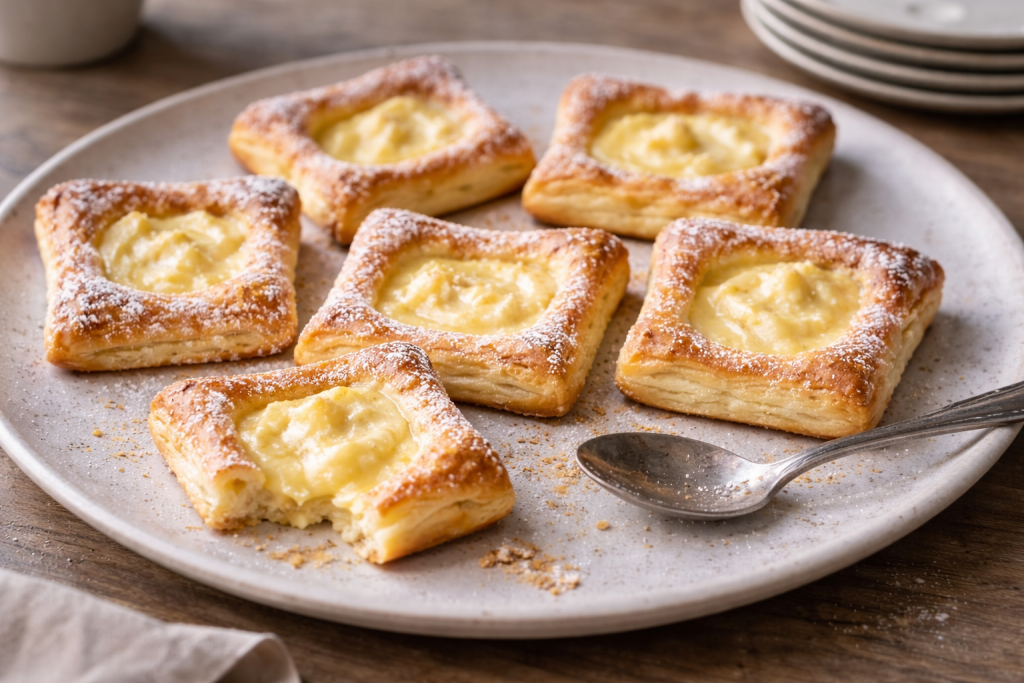
What you should get:
- crisp, flaky pastry layers
- a slightly raised golden border
- smooth, creamy vanilla center
- light sweetness, not heavy
If the base feels soggy, the custard may have been too hot or too thin. If the custard is too firm, it was likely overcooked before baking.
Ingredient Swaps & Variations
- Richer custard
Replace part of the milk (about 100 ml) with cream. This creates a thicker, more dessert-like filling, but keep the balance so it doesn’t become too heavy. - Vanilla variations
Use vanilla bean paste or real vanilla seeds for a deeper flavor. Extract works well, but fresh vanilla adds more aroma. - Fruit addition
Add thin slices of apple, berries, or peaches on top of the custard before baking. Keep them light — too much fruit releases moisture. - Alternative sweeteners
Swap sugar for a mild alternative like maple syrup. Slightly reduce the milk to keep the custard from thinning too much. - Citrus twist
Add lemon or orange zest to the custard for a fresher, brighter finish.
Step-by-Step
- Start with the custard so it has time to cool slightly before assembling. In a small saucepan, whisk together the milk, egg yolk, sugar, cornstarch, and vanilla until completely smooth — no lumps should remain.
- Place the saucepan over medium-low heat and cook gently, stirring constantly. Use a whisk or spatula and keep moving along the bottom to prevent sticking.
- As it heats, the mixture will slowly thicken. You’re looking for a consistency similar to a soft pudding — thick enough to hold shape but still smooth and pourable. Remove from heat as soon as it reaches this stage.
- Let the custard cool for a few minutes. It should still be warm but not hot. Hot custard can soften the pastry too much before baking.
- Unroll the puff pastry on a flat surface. If it feels too soft, chill it briefly — cold pastry puffs better.
- Cut the pastry into equal rectangles. Keep the size consistent so they bake evenly.
- Lightly mark a border around each rectangle (about 1 cm from the edge) without cutting all the way through. This helps the edges rise while keeping the center slightly flatter.
- Spoon the custard into the center of each piece, staying within the border. Avoid overfilling — too much custard can spill during baking.
- Transfer to a lined baking tray, leaving space between pieces.
- Bake at 190°C / 375°F for about 18 minutes. The pastry should puff up and turn golden, while the custard sets gently.
- Remove from the oven and let cool slightly. The custard will firm up a bit more as it rests.
- Dust with powdered sugar just before serving.
Common Mistakes to Avoid
- Cooking custard too thick
If it becomes too dense before baking, it won’t spread properly and can feel heavy inside the pastry. - Not stirring constantly
Custard thickens unevenly if left unattended, leading to lumps or sticking at the bottom. - Adding hot custard to pastry
This softens the dough too early and affects how it puffs in the oven. - Overfilling the centers
Too much filling can spill out and burn, while also weighing down the pastry. - Using warm pastry
Warm dough won’t puff as well. Keep it cool until baking.
Storage & Reheating
- Best fresh:
These are best eaten shortly after baking while the pastry is crisp. - Refrigeration:
Store up to 2 days, but the pastry will soften slightly. - Reheating:
Warm in the oven for a few minutes to bring back some crispness. Avoid microwaving. - Freezing:
Not ideal after baking — the texture of the custard changes. Better to freeze unfilled pastry.
How to Serve
Serve slightly warm or at room temperature.
They work well:
- with coffee or tea
- as a quick dessert
- or as part of a brunch spread
FAQ
Can I make the custard ahead?
Yes, but let it cool and stir before using to restore smoothness.
Why didn’t my pastry puff?
It was likely too warm before baking or weighed down by too much filling.
Can I make them smaller?
Yes — just reduce baking time slightly and keep sizes even.
Do I need to pre-bake the pastry?
No, this method works without blind baking.
You may also like: Easy Mango Ginger Lime Soup
Quick Seafood Pasta for a Simple Weeknight Dinner
Quick Tomato Soup with Pesto for an Easy Weeknight Meal


Leave a Reply