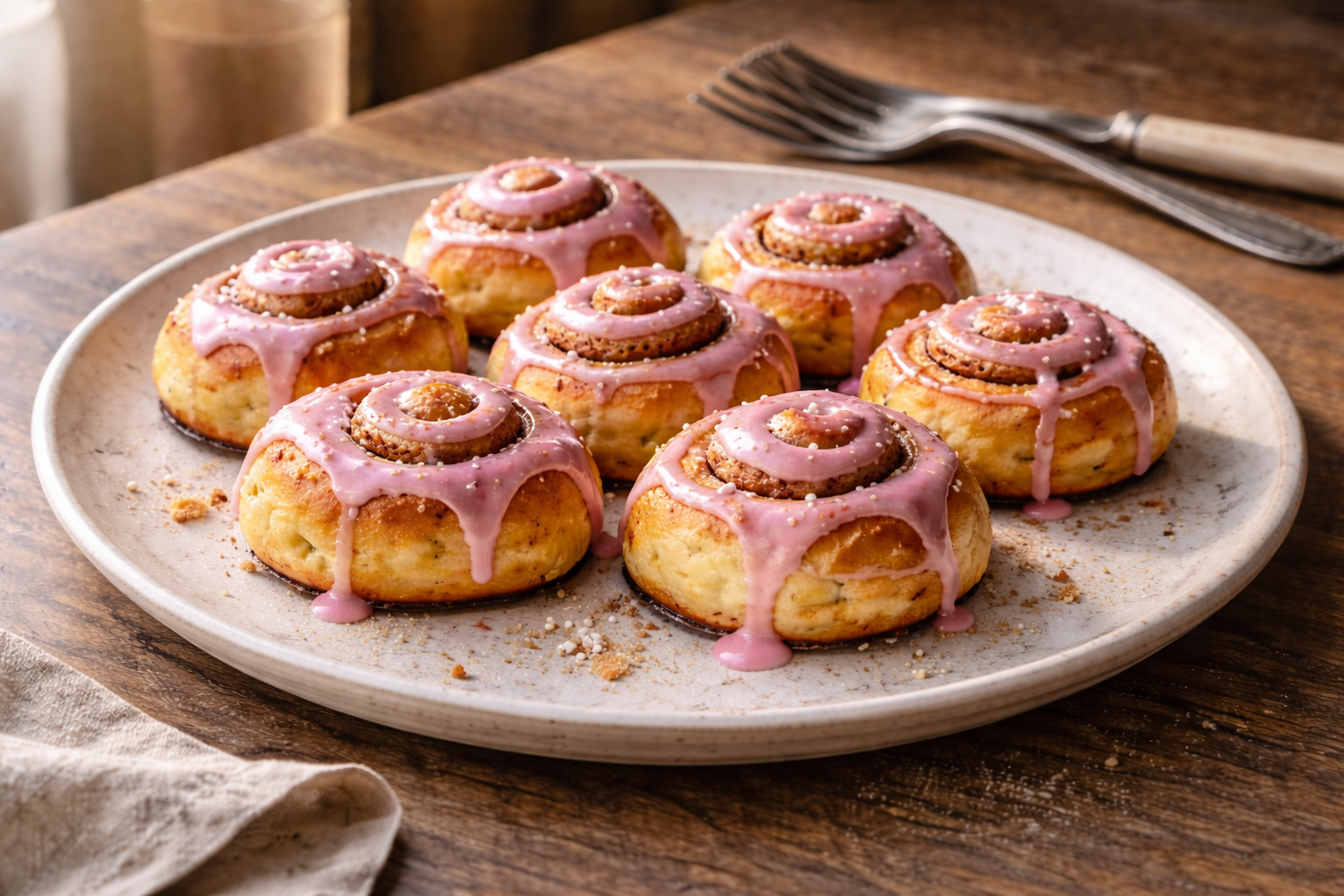
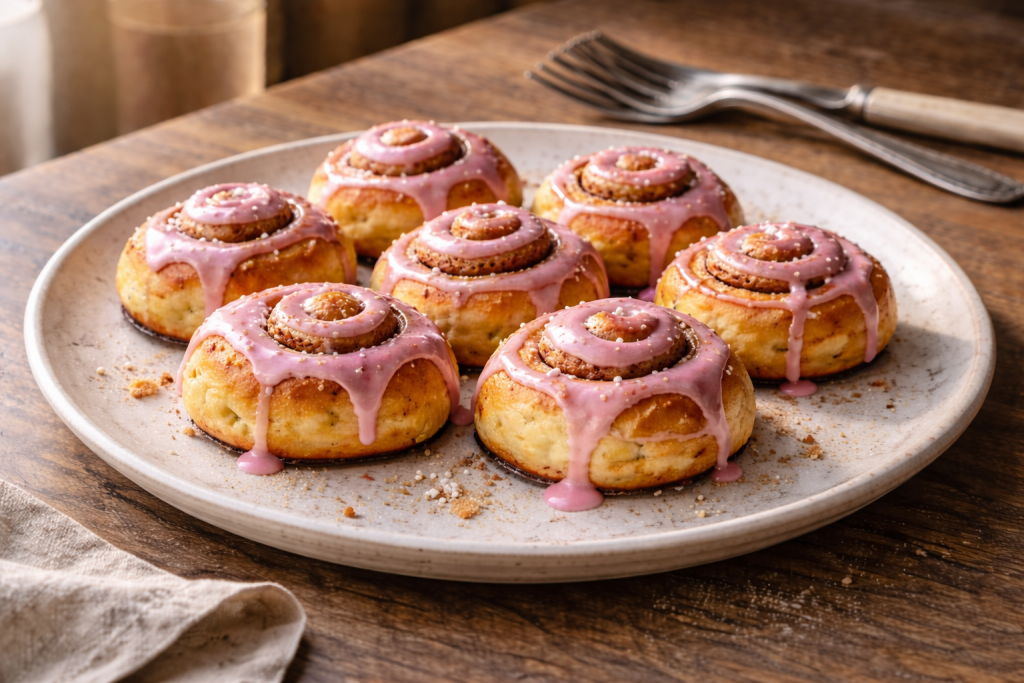
Some bakes are about comfort, others are about how they look on the table. These pink cinnamon rolls do both. You get flaky, buttery layers from puff pastry, a warm cinnamon filling, and a soft pink glaze that makes them feel just a little more special without extra effort.
Quick Overview
- Difficulty: Easy–Medium
- Prep Time: 20 minutes
- Cook Time: 18–20 minutes
- Total Time: About 40 minutes
- Servings: 8 rolls
Why These Rolls Work (Even Without Yeast)
These aren’t traditional cinnamon rolls, and that’s exactly why they’re so quick.
Puff pastry replaces yeast dough, which means no proofing, no waiting, and no risk of dense or under-risen rolls. As it bakes, the layers puff up and create a light, flaky structure instead of a soft bread-like one.
The butter-sugar-cinnamon mixture melts into the pastry as it cooks. This creates a slightly sticky interior while still keeping the outer layers crisp.
The glaze is added while the rolls are still warm. That timing matters — it softens slightly and settles into the layers instead of sitting dry on top.
Related recipes: Grilled Peach Salad with Salty Cheese
Quick Banana Blossom Salad with Lime, Herbs, and Crunch
Ingredients
What Actually Makes the Difference
- Keeping pastry cold helps it puff properly
- Even filling distribution prevents dry spots
- Tight but gentle rolling keeps layers defined
- Glazing while warm improves texture and appearance
Texture & Flavor
These rolls are different from classic cinnamon rolls:
- crisp, flaky outer layers
- soft, slightly sticky interior
- warm cinnamon sweetness
- light vanilla glaze with a soft finish
They should feel light rather than dense. If they seem flat, the pastry may have been too warm before baking.
Ingredient Swaps & Variations
- Different spice blend
Add a pinch of nutmeg or cardamom to the filling. This gives a slightly more complex, bakery-style flavor without changing the structure. - Less sweet version
Reduce the glaze or skip it entirely. The rolls will still have a light sweetness from the filling. - Alternative glaze flavor
Replace vanilla with almond extract or citrus zest for a different finish. Keep the amount small to avoid overpowering. - No food coloring
Skip it or use natural options like a drop of beet juice. The color is visual, not essential. - Add texture inside
Sprinkle chopped nuts or raisins over the filling before rolling. Keep it light — too much filling can affect how the pastry rises.
Instructions
- Take the puff pastry out of the fridge just before using it. It should be cold but flexible — too warm and it becomes harder to handle cleanly.
- In a bowl, mix the softened butter, brown sugar, and cinnamon into a smooth paste. Make sure there are no dry pockets — this helps the filling spread evenly.
- Unroll the puff pastry onto a flat surface. If it feels too soft, give it a minute in the fridge before continuing.
- Spread the filling evenly across the entire surface, going close to the edges. An even layer ensures consistent flavor in every roll.
- Roll the pastry tightly from the longer side into a log. Keep the roll firm but don’t press too hard — you want to keep the layers intact.
- Slice into thick pieces using a sharp knife. Clean cuts help the rolls hold their shape while baking.
- Place the rolls on a baking tray lined with paper, leaving space between them. Puff pastry expands as it bakes, so crowding will affect their shape.
- Bake at 190°C / 375°F for 18–20 minutes. Look for puffed layers and a light golden color — not too dark, as sugar can caramelize quickly.
- While the rolls are baking, mix the powdered sugar, milk, vanilla extract, and pink food coloring. Stir until smooth and slightly fluid — it should pour easily but not be watery.
- Once the rolls are out of the oven and still warm, spoon the glaze over them. It will settle into the layers and slightly melt into the surface.
- Let them sit for a few minutes before serving so the glaze sets lightly.
Common Mistakes to Avoid
- Letting the pastry get too warm
Warm pastry becomes sticky and doesn’t puff as well. If it softens too much, chill it briefly before baking. - Overfilling
Too much filling can leak out during baking and burn on the tray, while also preventing clean layers. - Cutting uneven slices
Smaller pieces bake faster and can dry out before larger ones are done. - Overbaking
Puff pastry can go from golden to too dark quickly. Remove when lightly golden, not deeply browned. - Adding glaze too late
If the rolls cool completely, the glaze will sit on top instead of blending slightly into the layers.
Storage & Reheating
- Room temperature (short term):
Store covered for up to 1 day. Best eaten fresh. - Refrigeration:
Up to 2–3 days, but texture will soften slightly. - Reheating:
Warm briefly in the oven or air fryer to bring back some crispness. Avoid microwaving — it softens the pastry too much. - Freezing:
Best frozen before glazing. Reheat and glaze fresh for better texture.
How to Serve
These work best slightly warm, when the glaze is set but still soft.
Serve them:
- with coffee or tea
- as part of a brunch table
- or as a light dessert
They’re simple, but visually they do a lot of the work.
Try this next: Stuffed Dates with Bacon
Creamy Herb-Stuffed Chicken for a Simple Evening Meal
Quick Chicken Yogurt Wraps for an Easy Dinner
Leave a Reply