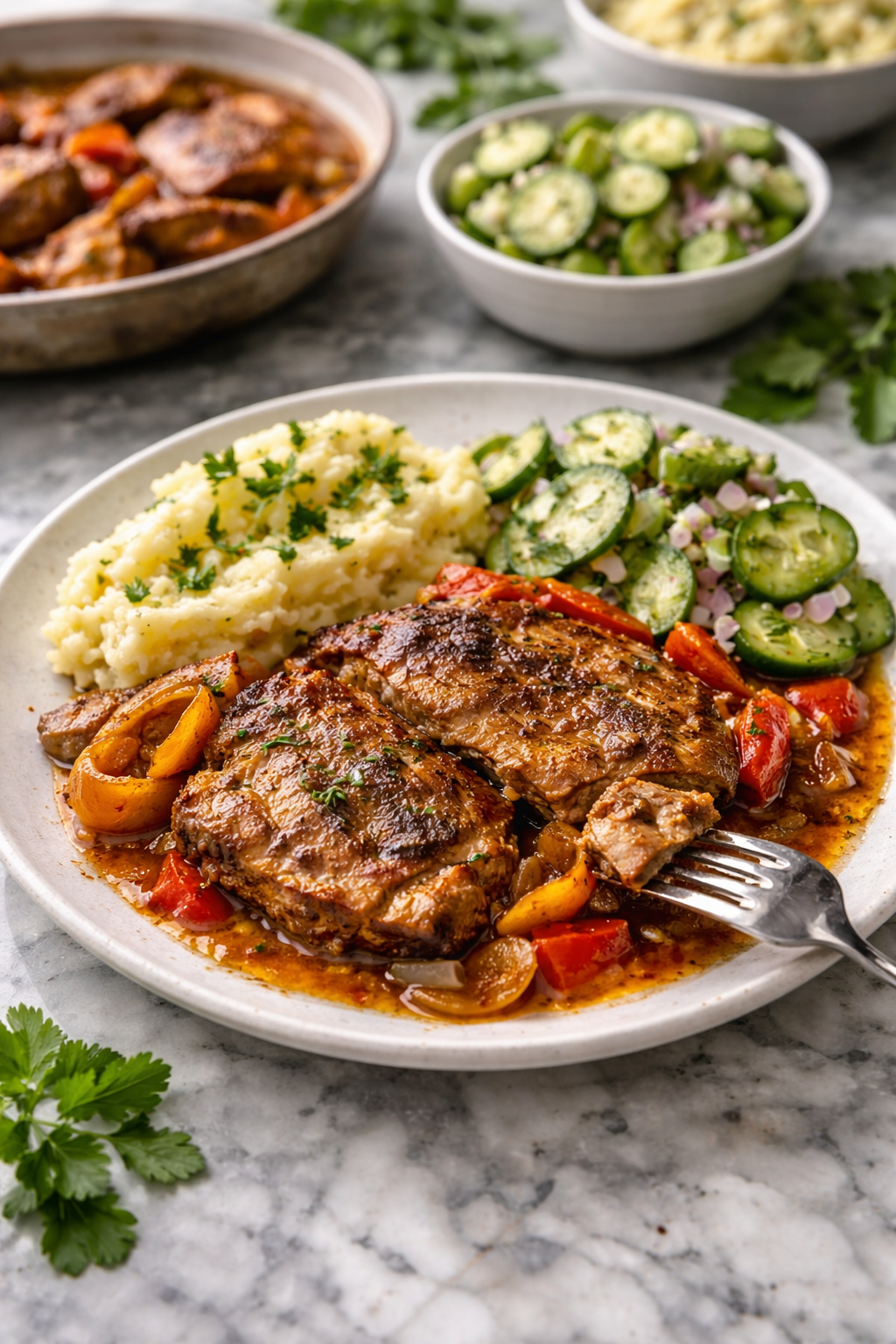
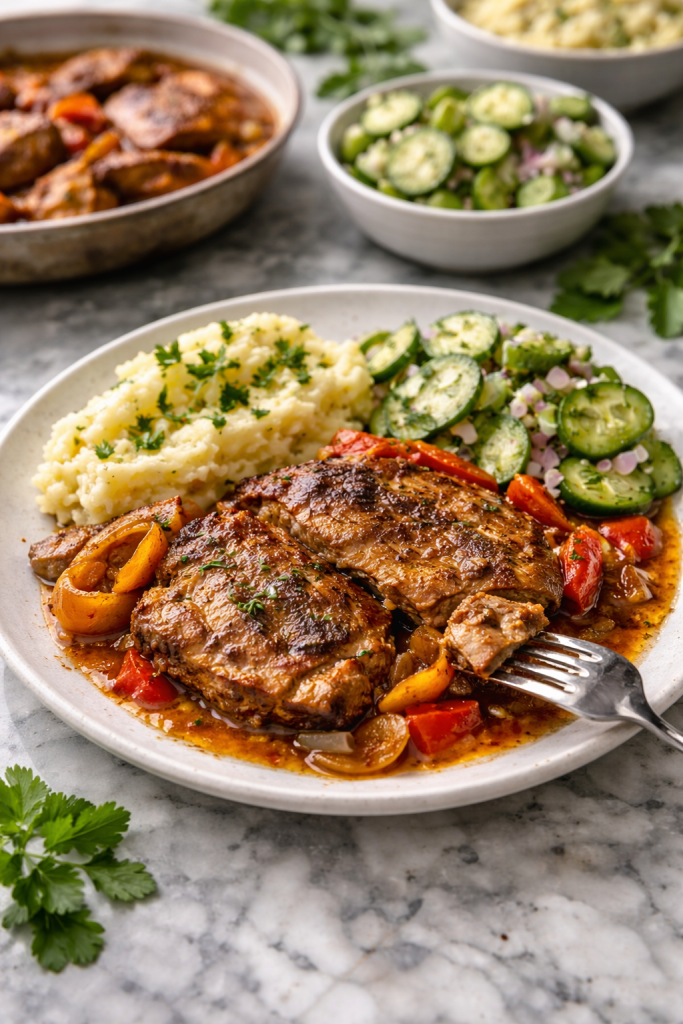
This is the kind of dish that rewards patience without asking for much effort. Once everything is in the pot, it slowly transforms into something deeply tender and full of flavor. The pork softens, the onions melt into the sauce, and the peppers add just enough sweetness to keep everything balanced. It’s the kind of meal that fills the kitchen with warmth and makes the wait feel worth it.
Ingredients Overview
This dish is built around slow cooking and simple layering. Pork neck provides richness and becomes tender over time. Onions form the base of the sauce, breaking down into something soft and naturally sweet. Peppers add color and light sweetness, while spices bring depth without overpowering. A small amount of liquid helps everything cook gently and evenly.
Ingredients
- 1–1.2 kg / 2–2½ lb pork neck, sliced into thick steaks
- Salt and freshly ground black pepper
- 2 tbsp neutral oil
- 2 large onions, sliced into half-moons
- 2 garlic cloves, lightly crushed
- 1 red bell pepper, cut into wide strips
- 1 yellow bell pepper, cut into wide strips
- 1 tsp sweet paprika
- ½ tsp smoked paprika
- ½ tsp ground caraway or cumin
- 1 tbsp tomato paste
- 1 cup hot water or light stock
- 1 bay leaf
Ingredient Notes & Substitutions
- Pork neck: Ideal for braising due to its fat content—becomes very tender over time
- Onions: Use plenty—they form the base of the sauce as they soften
- Bell peppers: Add sweetness and balance the richness of the pork
- Paprika: Sweet paprika builds flavor, smoked adds depth—use both if possible
- Caraway or cumin: Adds warmth and a subtle earthy note
- Tomato paste: Concentrates flavor and deepens the sauce
- Stock or water: Stock adds more depth, but water works if seasoning is balanced
Why This Recipe Works
Slow cooking allows the pork to break down gradually, becoming tender without drying out. Onions cook down into a natural sauce, eliminating the need for heavy thickeners. The spices are added early to bloom in fat, creating a deeper flavor base. Minimal stirring keeps the meat intact and prevents it from becoming tough.
Why You’ll Love This Recipe
- Extremely tender, fork-soft meat
- One-pot meal with deep, comforting flavor
- Minimal hands-on cooking time
Instructions
- Season early, cook later.
Salt and pepper the pork slices generously and let them rest at room temperature for 20 minutes. This small pause helps with tenderness. - Sear for structure, not color alone.
Heat oil in a wide, heavy pot. Brown the pork briefly on both sides, just until the surface tightens. Remove and set aside. - Soften the base.
In the same pot, add onions with a pinch of salt. Cook slowly until collapsed, pale, and sweet. Add garlic and stir gently. - Build depth.
Stir in both paprikas and caraway, followed by tomato paste. Cook until the mixture darkens slightly and smells rounded, not sharp. - Return the meat.
Lay the pork back into the pot, scatter over the peppers, and tuck in the bay leaf. - Braise patiently.
Pour in hot water or stock, cover loosely, and simmer on very low heat for 75–90 minutes. Turn the meat once or twice only. - Finish gently.
Remove the lid for the last 10 minutes if the sauce needs thickening. Taste and adjust seasoning. - Rest before serving.
Let the pot stand off the heat for 10 minutes. The meat relaxes and stays juicy.
Typical Mistakes:
- Cooking on high heat instead of slow simmer
- Skipping the resting time after cooking
- Cutting the pork too thin — it dries instead of softening
- Stirring too often, which breaks the meat fibers
Substitutions & Variations
- Use pork shoulder instead of neck for a similar result
- Add carrots for extra sweetness and body
- Use chicken stock for a slightly lighter flavor
- Add a touch of cream at the end for a softer sauce
- Include a pinch of chili flakes for gentle heat
Storage & Leftovers
- Store in the fridge for up to 3 days
- Reheat gently on low heat to keep meat tender
- Add a splash of water or stock when reheating
- Freezes well for up to 2 months
- Flavor often improves the next day
FAQ
What cut of pork is best for braising?
Pork neck or shoulder works best because of their fat content.
Can I make this in advance?
Yes, it’s even better the next day after flavors develop.
How do I know when the pork is done?
It should be very tender and easy to pull apart with a fork.
Can I cook this in the oven instead?
Yes, braise covered at low temperature (around 160°C / 320°F).
What should I serve it with?
Mashed potatoes, rice, or crusty bread all work well.
You may also like: Oven-Baked Ribs with a Crisp, Crackling Crust, Savory Crepes with Spiced Skillet Filling and Tomato Heat, Lemon & Garlic Chicken with Warm Citrus Notes


Leave a Reply