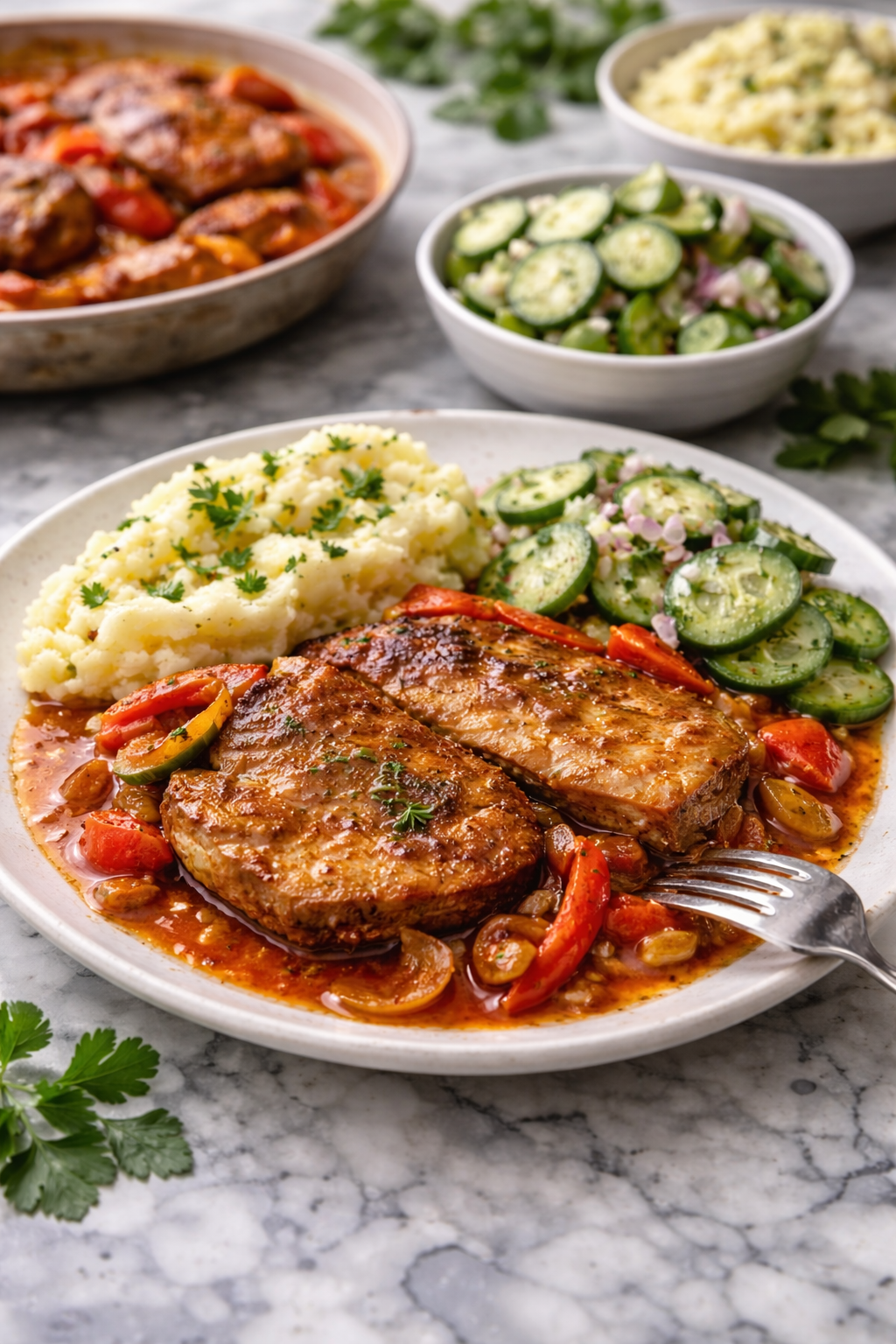
This is the kind of dish that changes your mind about pork loin. Instead of turning dry, it becomes soft and tender, slowly absorbing the flavors around it. The sauce builds quietly, the peppers soften, and everything comes together without rushing. It’s simple, steady cooking that rewards patience with a warm, comforting result.
Ingredients Overview
This recipe is built around gentle braising. Pork loin provides a lean base that becomes tender with slow cooking. Onions create a soft, slightly sweet foundation, while peppers add freshness and color. Paprika defines the flavor, and tomato paste adds depth. A small amount of liquid keeps everything moist and cohesive.
Ingredients
- 800 g / 1¾ lb pork loin, cut into thick slices
- Salt and freshly ground black pepper
- 2 tbsp neutral oil
- 1 large onion, finely sliced
- 2 garlic cloves, minced
- 1 red bell pepper, cut into strips
- 1 green bell pepper, cut into strips
- 1½ tsp sweet paprika
- ½ tsp smoked paprika
- ½ tsp dried marjoram
- 1 tbsp tomato paste
- ¾ cup hot water or light stock
- 1 bay leaf
Ingredient Notes & Substitutions
- Pork loin: Lean cut—needs gentle cooking to stay tender
- Onion: Forms the base of the sauce—cook until soft, not rushed
- Bell peppers: Add sweetness and balance the paprika
- Paprika: Sweet for warmth, smoked for depth
- Marjoram: Classic pairing with pork—subtle but important
- Tomato paste: Adds richness and structure to the sauce
- Stock or water: Stock adds flavor, water keeps it lighter
Why This Recipe Works
The pork is first seared to hold its structure, then cooked slowly in a moist environment. Adding spices off the heat prevents bitterness, keeping the sauce smooth and rounded. Low heat ensures the meat stays tender instead of drying out.
Why You’ll Love This Recipe
- Tender pork without complicated techniques
- Rich, comforting sauce with simple ingredients
- One-pan cooking with minimal effort
Instructions
- Season first, wait second.
Sprinkle the pork generously with salt and pepper. Let it rest for 15 minutes — this short pause helps the meat relax before cooking. - Sear briefly, without pressure.
Heat oil in a wide pan. Brown the pork quickly on both sides, just enough to seal the surface. Remove and keep warm. - Build the sauce slowly.
Lower the heat and add onions to the same pan. Cook until soft and lightly golden. Stir in garlic and cook for a few seconds. - Spices come off the heat.
Take the pan off the burner. Add both paprikas and marjoram, stirring so they bloom gently without burning. - Tomato and structure.
Return to low heat, add tomato paste, then water or stock. Stir until smooth and aromatic. - Return the pork.
Place the meat back into the pan, add peppers and bay leaf. Cover loosely. - Braise with patience.
Simmer on very low heat for 45–55 minutes, turning the pork once. The sauce should barely bubble. - Rest before serving.
Turn off the heat and let the dish stand for 10 minutes. The pork stays moist and tender. For extra depth, let the dish rest covered for 20 minutes before serving.
Related recipes: Lemon & Garlic Chicken with Warm Citrus Notes, Oven-Baked Ribs with a Crisp, Crackling Crust, Slow-Braised Pork Neck with Peppers and Soft-Onion Sauce
Common Mistakes to Avoid
- If pork is dry: heat too high → keep a gentle simmer
- If sauce tastes bitter: paprika burned → always add off heat
- If meat is tough: not cooked long enough → extend braising time
- If flavor is flat: under-seasoned → adjust salt at the end
Substitutions & Variations
- Use pork shoulder for an even more tender result
- Add mushrooms for extra depth
- Include a splash of cream at the end for a softer sauce
- Add chili flakes for mild heat
- Use different herbs like thyme if needed
Storage & Leftovers
- Store in the fridge for up to 3 days
- Reheat gently on low heat
- Add a splash of water or stock when reheating
- Freezes well for up to 2 months
- Flavor improves after resting overnight
FAQ
Can pork loin really be tender?
Yes, if cooked slowly with enough moisture.
Can I make this ahead of time?
Yes, it often tastes better the next day.
What’s the best way to reheat it?
Low heat with a bit of added liquid.
Can I use a different cut of pork?
Yes, shoulder works very well.
Why add spices off the heat?
To prevent bitterness and keep flavor smooth.


Leave a Reply