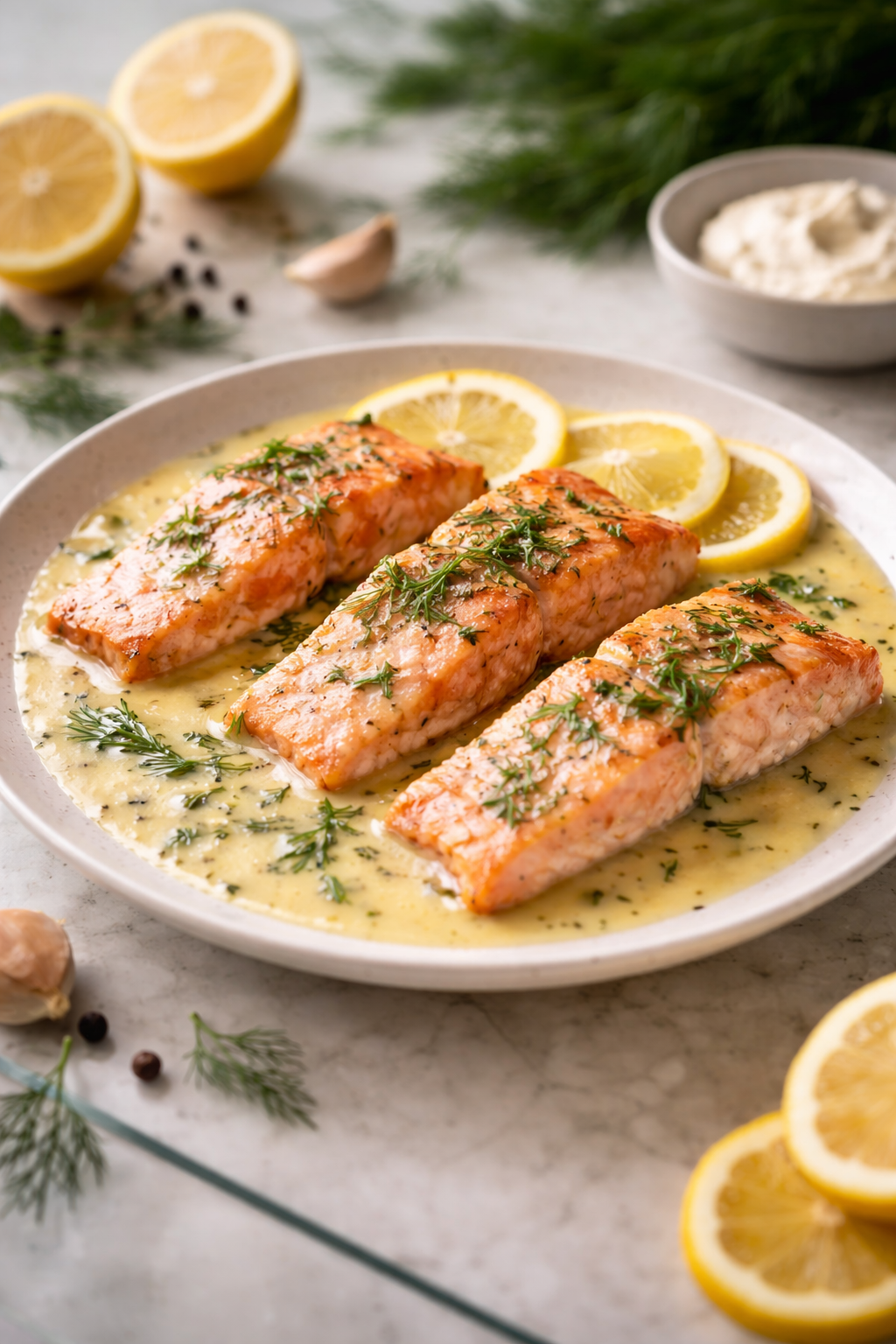
Cooking salmon well is often about restraint more than effort. With gentle heat and a simple sauce, the fish stays soft and naturally flavorful. The lemon doesn’t dominate here — it lifts everything just enough, while the cream keeps the texture smooth and balanced.
Why You’ll Love This Recipe
Quick and reliable
Simple steps with consistent results every time.
Light but comforting
Cream adds softness without making the dish heavy.
Balanced lemon flavor
Bright but not sharp, keeping the dish smooth and easy to eat.
Difficulty – Easy
Prep Time – 10 minutes
Cook Time – 15–18 minutes
Total Time – 25–30 minutes
Servings – 2 servings
Ingredients
- Fresh salmon fillets
- Salt and freshly ground black pepper
- Olive oil or butter
- 1 small shallot or mild onion, finely chopped
- 1 garlic clove, lightly crushed
- Lemon zest
- Fresh lemon juice
- Cream or crème fraîche
- A small handful of fresh herbs (dill or parsley)
Ingredients Overview
- Salmon fillets
Tender and rich, they work well with gentle cooking and light sauces. - Shallot and garlic
Create a soft, aromatic base that doesn’t overpower the fish. - Lemon zest and juice
Add brightness and freshness in layers. - Cream or crème fraîche
Smooths out the acidity and gives the sauce body. - Fresh herbs
Finish the dish with a clean, fresh note.
Why This Recipe Works
- Low heat protects the salmon
Keeps it tender and prevents drying out. - Layered lemon flavor adds depth
Zest and juice create a more rounded citrus profile. - Cream balances acidity naturally
Prevents the sauce from becoming too sharp or thin.
Instructions
- Season the salmon lightly with salt and pepper and set it aside at room temperature.
- Heat olive oil or butter in a wide pan over medium heat. Add the shallot and cook slowly until soft and translucent.
- Stir in the garlic and lemon zest, letting them warm briefly without browning.
- Place the salmon in the pan, skin-side down if it has skin. Cook gently until the bottom is just set, then turn once.
- Lower the heat and add a small amount of cream. Let it warm slowly, not boil.
- Add lemon juice a little at a time, tasting as you go. The sauce should be bright but rounded.
- Spoon the sauce over the salmon and finish with fresh herbs. Serve immediately. For extra gloss and flavor, finish with a small knob of butter stirred into the sauce just before serving.
Tips for Best Results
- Cook salmon mostly on one side first
Helps it hold together and cook evenly. - Add lemon juice gradually
This keeps the sauce balanced and avoids overpowering the dish. - Keep the sauce at a gentle heat
Prevents separation and keeps the texture smooth.
Common Mistakes to Avoid
- Overcooking the salmon
It should stay slightly soft in the center, not dry. - Boiling the cream sauce
High heat can cause it to split or become too thick. - Adding all lemon juice at once
Can make the sauce too sharp and unbalanced.
Substitutions & Variations
- Use Greek yogurt instead of cream
For a lighter, slightly tangier version. - Add spinach or asparagus
Brings extra freshness and turns it into a fuller meal. - Use lime instead of lemon
Gives a slightly sharper, different citrus note.
Storage & Leftovers
- Store in the fridge up to 2 days
Keep in an airtight container. - Reheat gently on low heat
Helps maintain the sauce texture and fish tenderness. - Best eaten fresh
The texture and flavor are at their peak right after cooking.
FAQ
How do I know the salmon is done?
It should flake easily and reach about 125–130°F (52–54°C) for a tender result.
Can I make the sauce ahead of time?
It’s best fresh, but you can prepare it shortly before cooking the salmon.
Why is my sauce too thin?
Let it warm slightly longer or reduce gently without boiling.
Can I use frozen salmon?
Yes, just thaw fully and pat dry before cooking.
Also worth trying: Strawberry Cheesecake Sundae Cups, Royal-Style Tuna & Caper Salad, Crunchy Mediterranean Tuna Salad
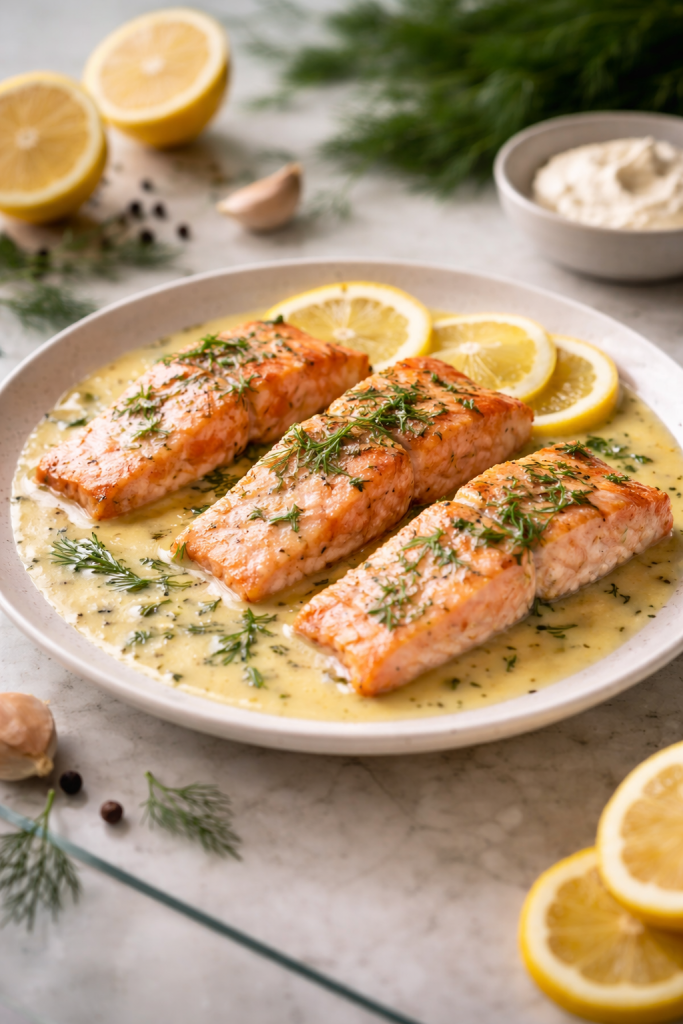
This sauce is about balance, not sharpness.

Leave a Reply