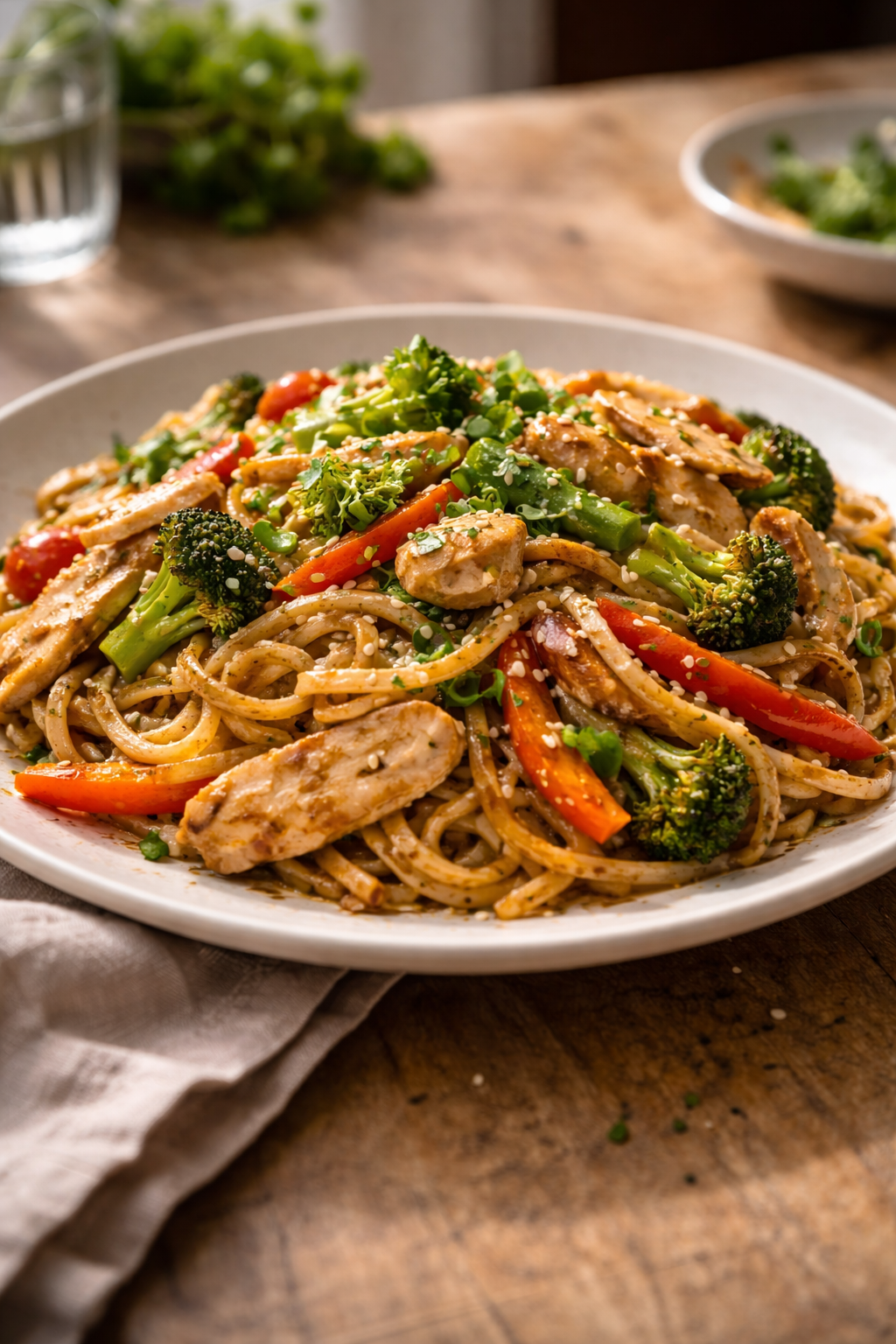
This quick vegetable noodle stir fry is one of those dinners you end up making on repeat. It’s fast, flexible, and comes together with whatever you have in the fridge. The sauce is simple but glossy and full of flavor, and everything cooks in minutes.
Difficulty: Easy
Prep Time: 15 minutes
Cook Time: 10 minutes
Total Time: 25 minutes
Servings: 4
More ideas: Easy Shrimp Stir Fry for a No-Effort Dinner
Hot Honey Chicken Sandwich (Crispy, Sticky & A Little Messy)
Easy Shrimp Donburi Bowl with Ginger Soy Drizzle
Ingredients
Ingredient Notes & Substitutions
- no rice noodles → use spaghetti or udon
- no oyster sauce → use extra soy sauce plus a pinch of sugar
- no broccoli → swap in snap peas or zucchini
- want it spicy → add chili flakes or sriracha to the sauce
Instructions
- Cook the noodles according to package directions, then drain and set aside.
- Whisk soy sauce, oyster sauce, honey, vinegar, sesame oil, water, and cornstarch in a small bowl.
- Heat oil in a large pan or wok over medium-high heat.
- Add chicken (or tofu) and cook until lightly browned and cooked through.
- Add garlic and ginger and cook for about 30 seconds, just until fragrant.
- Tip: Keep everything moving so the garlic doesn’t burn — it happens fast here.
- Add carrots, bell pepper, and broccoli, stirring for 3–4 minutes until crisp-tender.
- Toss in the cooked noodles and mix gently.
- Pour the sauce over everything and stir until it thickens and coats the noodles.
- Cook for another minute until glossy and well combined.
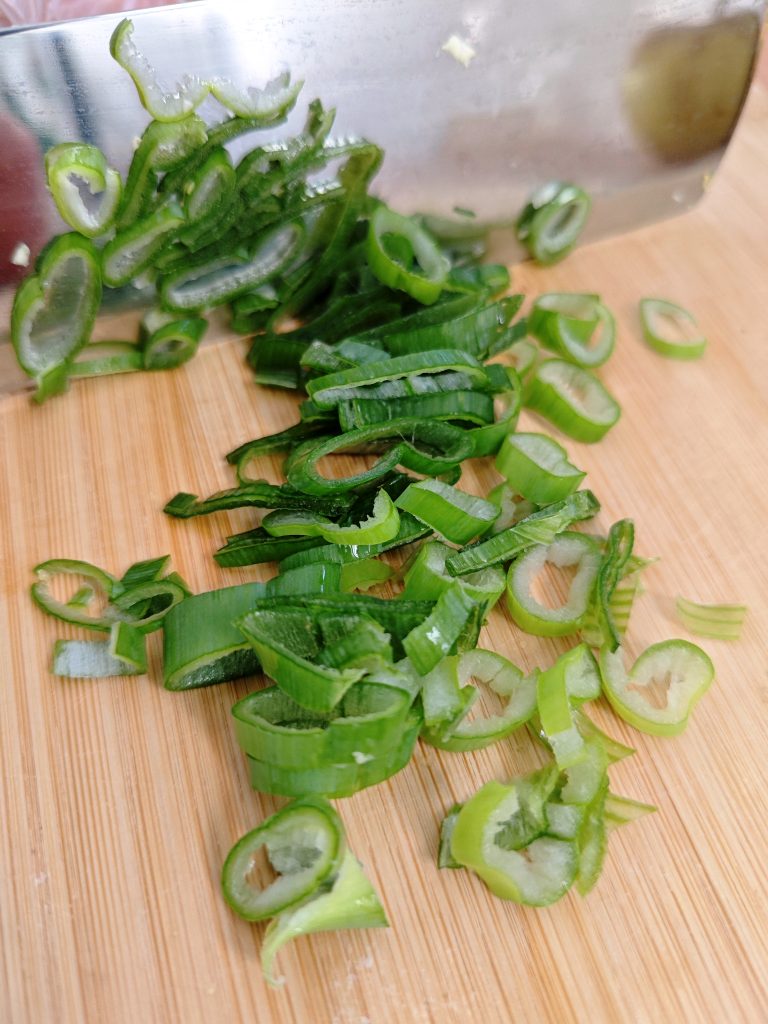
- Sprinkle with green onions, sesame seeds, cilantro, and black pepper.
- Tip: If the noodles look dry, add a splash of water to loosen the sauce.
- Serve immediately while hot and fresh.
A few things that make it better
The biggest thing here is heat — if the pan isn’t hot enough, everything starts steaming instead of stir-frying. You want that quick, high heat so the vegetables stay crisp and the noodles don’t turn soft.
If the noodles stick together, just loosen them with a splash of water or toss them gently before adding the sauce.
This recipe is really flexible. You can swap the protein, change the vegetables, or even use different noodles — it still works as long as you keep the balance between sauce, heat, and texture.
It’s best right after cooking, when everything is still glossy and the vegetables have a bit of bite.
It’s best right after cooking, when everything is still glossy and the vegetables have a bit of bite.
Also worth trying: Easy Thai Shrimp Soup at Home
Easy Salmon with Roasted Vegetables and Arugula Salsa
Leave a Reply