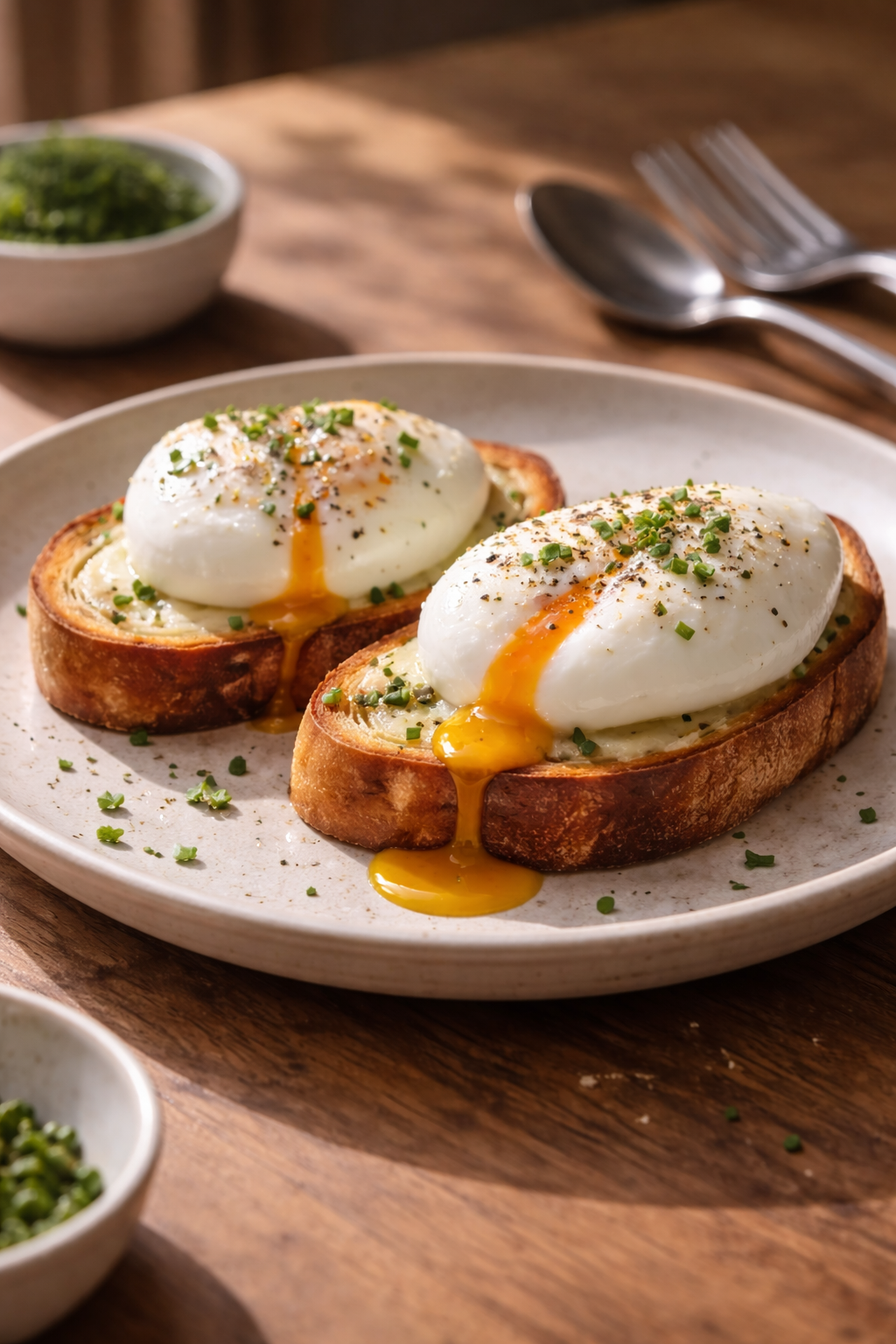
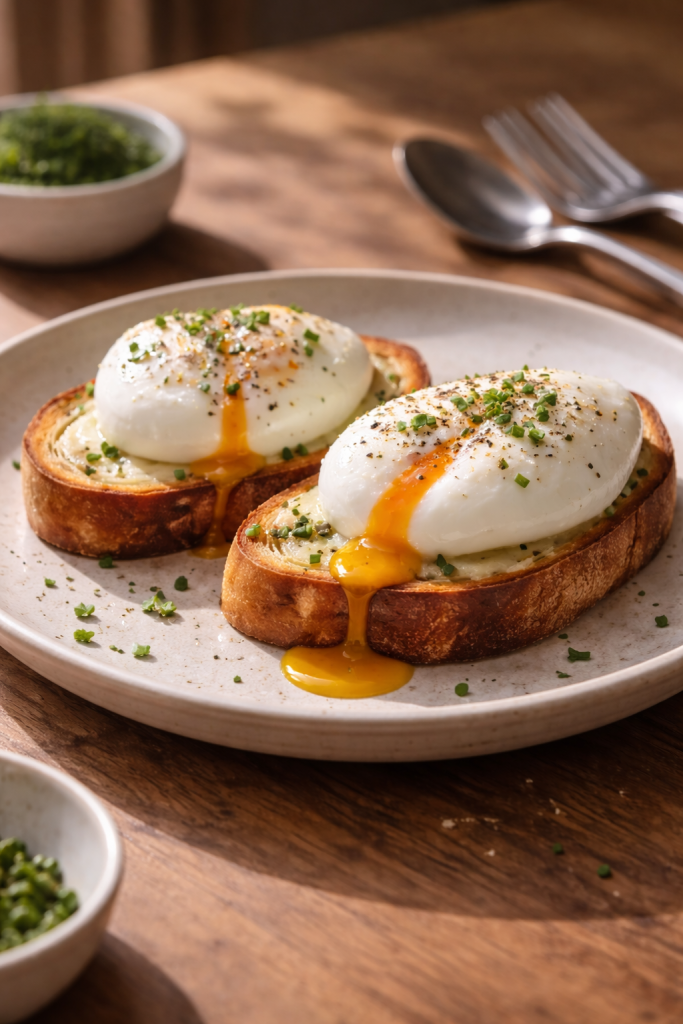
There’s a small moment right before you cut into the egg — when everything looks simple, almost too simple. Then the yolk breaks and slowly spreads, turning toast and butter into something much richer than it should be. This is less about ingredients and more about getting that timing exactly right.
Good to Know
- Difficulty: Easy
- Prep Time: 10 minutes
- Cook Time: 6 minutes
- Total Time: 16 minutes
- Servings: 2
Why Timing Matters Here
This dish depends on control rather than complexity. The goal is a fully set white with a soft, flowing yolk — and those two don’t cook at the same speed.
A gentle simmer (not a rolling boil) keeps the egg intact and prevents the whites from breaking apart. The vinegar helps the proteins in the egg white coagulate faster, which gives you a neater shape and better texture. Toasting the bread just enough creates contrast — crisp on the outside, but still soft enough to absorb the yolk without turning hard.
When everything is done at the right moment, the textures balance each other: crisp, soft, creamy.
Try this next: Three-Color Stuffed Eggs for a Quick Easter Table
Easy Crispy Air Fryer Baked Potatoes with Garlic Herb Butter
Baked Eggs in Ham Cups for a Fast, Low-Effort Dinner
Ingredients
Ingredient Notes (What Makes the Difference)
Eggs should be as fresh as possible. Fresher eggs hold their shape better in water, which makes poaching easier and cleaner.
Bread matters more than it seems — something with a bit of structure (like sourdough) holds the yolk better, while softer bread gives a more delicate bite.
Butter isn’t just for flavor; it creates a barrier that slows down how quickly the yolk soaks into the bread, keeping that contrast intact for longer.
Vinegar doesn’t affect taste much at this amount, but it significantly improves how the egg white sets.
Instructions
- Start by toasting the bread lightly. You’re aiming for a surface that’s crisp but not dry — it should still have a bit of give when pressed. This balance is important because the toast needs to support the egg while still absorbing some of the yolk later.
- At the same time, bring a small pot of water to a gentle simmer. You should see small bubbles rising, but not a strong boil. Add the vinegar — this helps the egg whites set quickly once they hit the water.
- Crack each egg into a small cup first. This gives you control and makes it easier to slide them into the water without breaking the yolks.
- Carefully lower each egg into the simmering water. Keep the heat steady — too much მოძრაობanie in the water can cause the whites to spread unevenly. Cook for about 3–4 minutes, or until the whites are just set and the yolk remains soft. The surface should look firm, but still slightly delicate.
- Remove the eggs gently with a slotted spoon and let any excess water drip off. This step matters — too much water can dilute the flavor and soften the toast too quickly.
- Butter the toast while it’s still warm so it melts evenly and soaks slightly into the surface.
- Place the eggs on top, then season with salt and black pepper. Finish with fresh herbs for a bit of brightness and contrast.
- Serve immediately. The final step — breaking the yolk — is part of the dish. It should flow slowly and coat the toast rather than spill out too quickly.
Common Mistakes
Using boiling water instead of a gentle simmer can break the eggs apart and create uneven whites.
Cooking the eggs too long removes the whole point of the dish — the yolk should stay soft and flowing.
Skipping the step of cracking eggs into a cup first often leads to broken yolks or uneven shapes.
Over-toasting the bread makes it too dry and less pleasant once the yolk is added.
Ingredient Swaps & Variations
You can use whole grain bread for a more textured, slightly nutty base.
A drizzle of olive oil instead of butter gives a lighter finish.
For extra richness, add a slice of ham or smoked salmon under the egg.
How to Serve It
Serve immediately while everything is warm. This dish doesn’t hold well — the texture is at its best right after assembling. It works as a quick breakfast, light lunch, or even a simple dinner when you want something satisfying without much effort.
FAQ
How do I know when the egg is ready?
The white should be set and opaque, while the yolk still feels soft when gently pressed.
Can I make more eggs at once?
Yes, but don’t overcrowd the pot — cook in batches if needed.
Why did my egg fall apart?
Most likely the water was boiling too hard or the egg wasn’t fresh.
Do I really need vinegar?
It helps with shape, but you can skip it if needed — just be extra gentle.
Try this next: Easy Mango Ginger Lime Soup
Savory Egg & Truffle Yogurt Rolls for a Quick Evening Meal
Arugula Salad with Warm Mozzarella and Bresaola
Leave a Reply