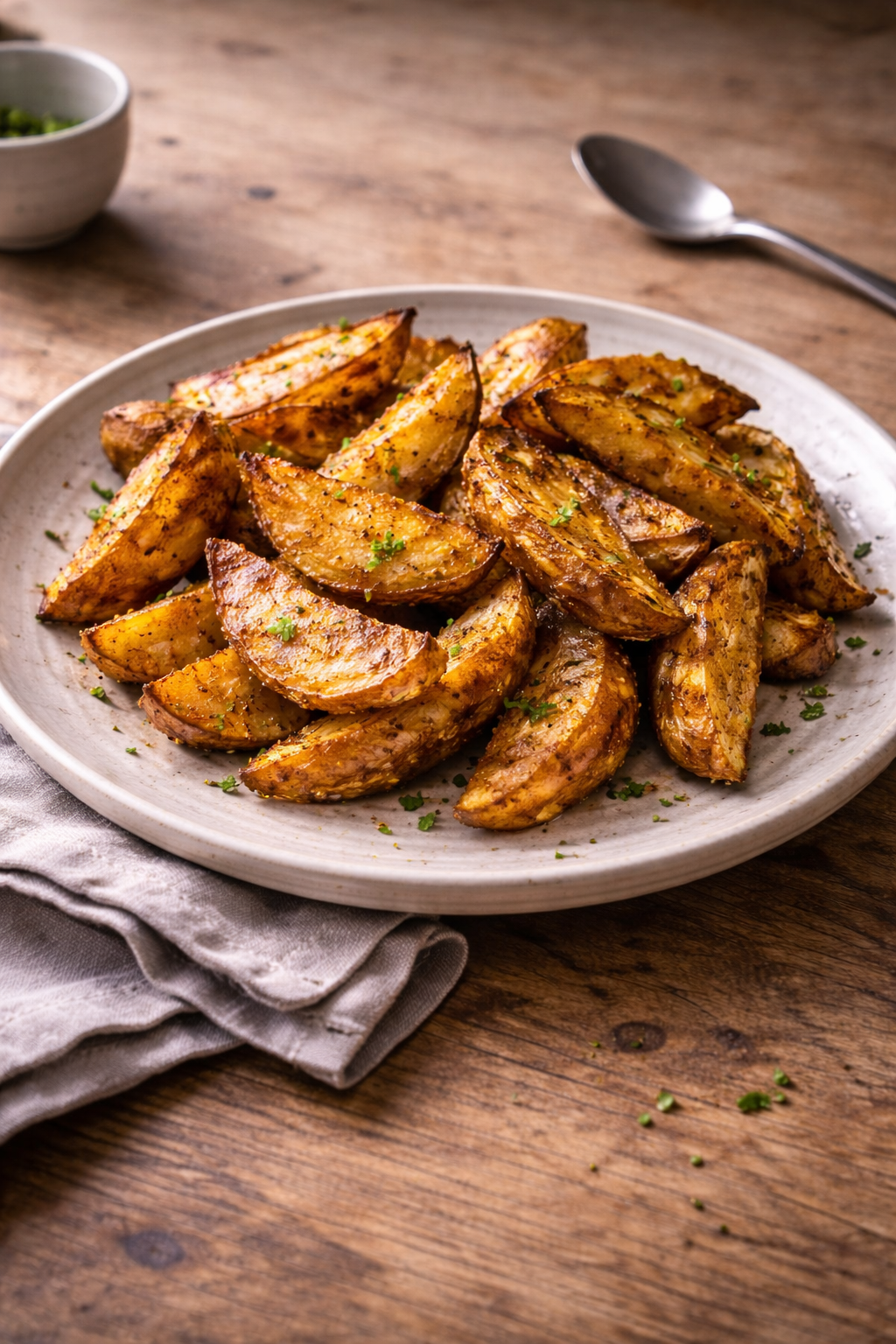
Some foods don’t need much introduction. Potato wedges are one of them — simple, filling, and always useful. But getting them properly crisp on the outside while staying soft inside takes a bit more attention than just “cut and cook.” This version keeps the ingredients minimal but focuses on the small details that actually make the difference.
Quick Overview
- Difficulty: Easy
- Prep Time: 8 minutes
- Cook Time: 16–20 minutes
- Total Time: About 30 minutes
- Servings: 2–3
Why These Wedges Turn Out Better
Potatoes are mostly starch and water. The goal is to remove just enough surface moisture to allow crisping, while keeping the inside soft.
Leaving the skin on helps structure — it holds the wedge together and adds texture. Cutting into thick, even pieces ensures the inside has time to soften before the outside overcooks.
The air fryer creates a dry, high-heat environment. That’s what gives you crisp edges without deep frying, but only if the wedges have space and aren’t coated in excess moisture.
Related recipes: Crispy Air Fryer Mozzarella Bites
Easy Air Fryer Stuffed Olives Snack
Fast Chocolate–Coconut Oatmeal for Busy Mornings
Ingredients
Texture & Doneness Guide
Knowing when they’re ready is more important than exact timing:
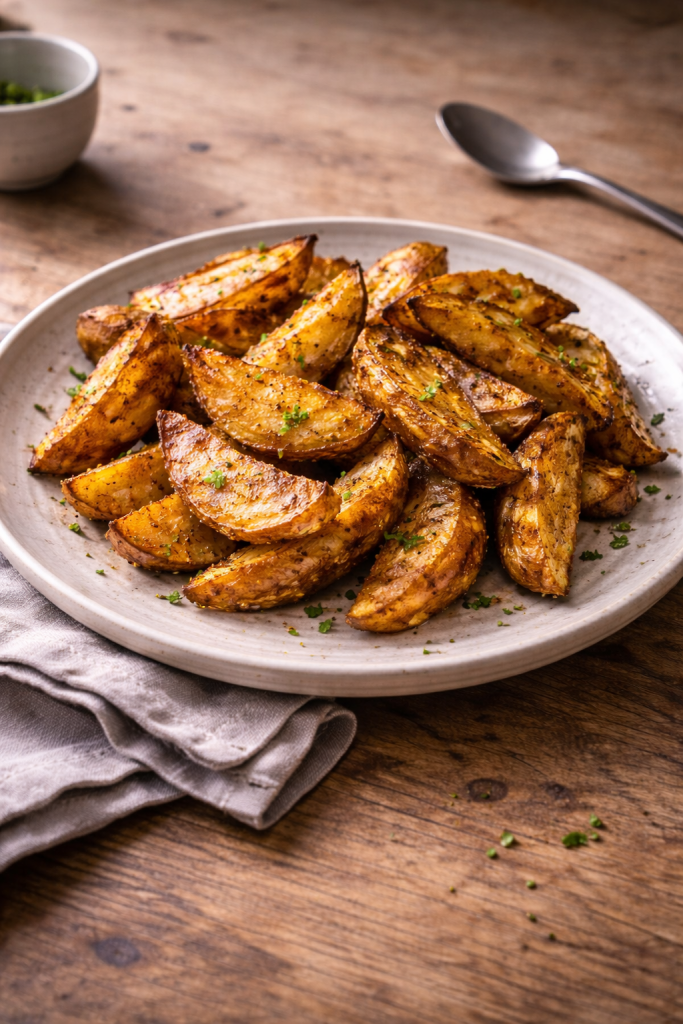
- Outside: lightly crisp, golden edges, slightly rough surface
- Inside: soft and fluffy, not firm or raw
- Color: golden, not pale and not deeply browned
If they’re pale → they needed more space or more time
If they’re too dark → pieces were too small or cooked too long
Ingredient Swaps & Variations
- Different potato types
Floury potatoes (like russets) give a fluffier inside and crisp edges. Waxy potatoes (like Yukon Gold) hold shape better but may be slightly less crisp. Both work — just adjust expectations. - Add garlic flavor
Use garlic powder instead of fresh garlic. Fresh garlic can burn at high heat and turn bitter. - Spice variations
Swap smoked paprika for chili powder, curry powder, or a seasoning blend. Dry spices work best — avoid wet marinades, which add moisture. - Extra crisp version
Toss wedges with 1–2 teaspoons of cornstarch before cooking. This creates a drier surface that crisps more aggressively. - Herb finish
Add fresh herbs (like parsley or thyme) after cooking for a fresher flavor without burning.
Step-by-Step
- Wash the potatoes thoroughly and scrub off any dirt. Keeping the skin on adds texture and helps the wedges hold their shape.
- Cut each potato into thick wedges. Aim for similar sizes so they cook evenly — uneven pieces lead to some burning while others stay undercooked.
- Place the wedges in a bowl and add the oil. Toss until every piece is lightly coated. You’re aiming for a thin layer, not excess oil.
- Sprinkle over the salt, smoked paprika, and black pepper. Toss again, focusing on coating the cut sides — that’s where most crisping happens.
- Preheat the air fryer to 200°C / 390°F for a couple of minutes. Starting hot helps the edges begin crisping immediately.
- Arrange the wedges in a single layer in the basket. Leave small gaps between them — airflow is what creates crispness.
- Cook for 10 minutes. At this stage, the surface will start to firm up and dry slightly.
- Shake the basket or turn the wedges. This exposes new surfaces to heat and prevents uneven browning.
- Cook for another 6–10 minutes. The wedges should be golden on the edges, slightly crisp outside, and soft inside.
- Check one before removing. It should feel crisp on the outside and easily pierced inside without resistance.
- Serve immediately while hot — this is when the texture is at its best.
Common Mistakes to Avoid
- Overcrowding the basket
When wedges overlap, they trap steam. This prevents crisping and results in soft, uneven potatoes. Always cook in batches if needed. - Cutting uneven sizes
Smaller wedges cook faster and can burn before larger ones are done. Consistency is key for even results. - Skipping preheating
Starting in a cold air fryer delays crisping. The wedges soften first instead of developing a crust. - Using too much oil
Excess oil makes the surface greasy rather than crisp. A light coating is enough. - Not turning halfway
Air circulation isn’t perfectly even. Turning ensures all sides get exposure to heat.
Storage & Reheating
- Best fresh:
These are best right after cooking when the edges are crisp. - Refrigeration:
Store leftovers for up to 2 days. Expect some loss of crispness. - Reheating:
Reheat in the air fryer at 180–190°C for a few minutes. This helps restore texture better than microwaving. - Freezing:
Not ideal after cooking — texture becomes softer. Better to cook fresh.
When This Works Best
These wedges are especially useful when:
- you need a quick side without planning
- you want something filling but simple
- you’re pairing with meat, burgers, or dips
- you need a snack that feels like real food
FAQ
Why aren’t my wedges crispy?
Most likely overcrowding or too much moisture. Give them space and make sure they’re well coated but not wet.
Do I need to soak the potatoes?
Not necessary for wedges. Soaking helps fries more than thicker cuts like this.
Can I peel them?
Yes, but you’ll lose some texture. The skin helps with structure and crispness.
Can I make them ahead?
They’re best fresh, but you can reheat them in the air fryer to bring back some crispness.
Which potatoes are best?
Floury potatoes give the crispiest results, but most types work with this method.
Also worth trying: Easy Pistachio Skyr Pancakes
One-Bowl Air Fryer Shrimp with Garlic and Lemon
Leave a Reply