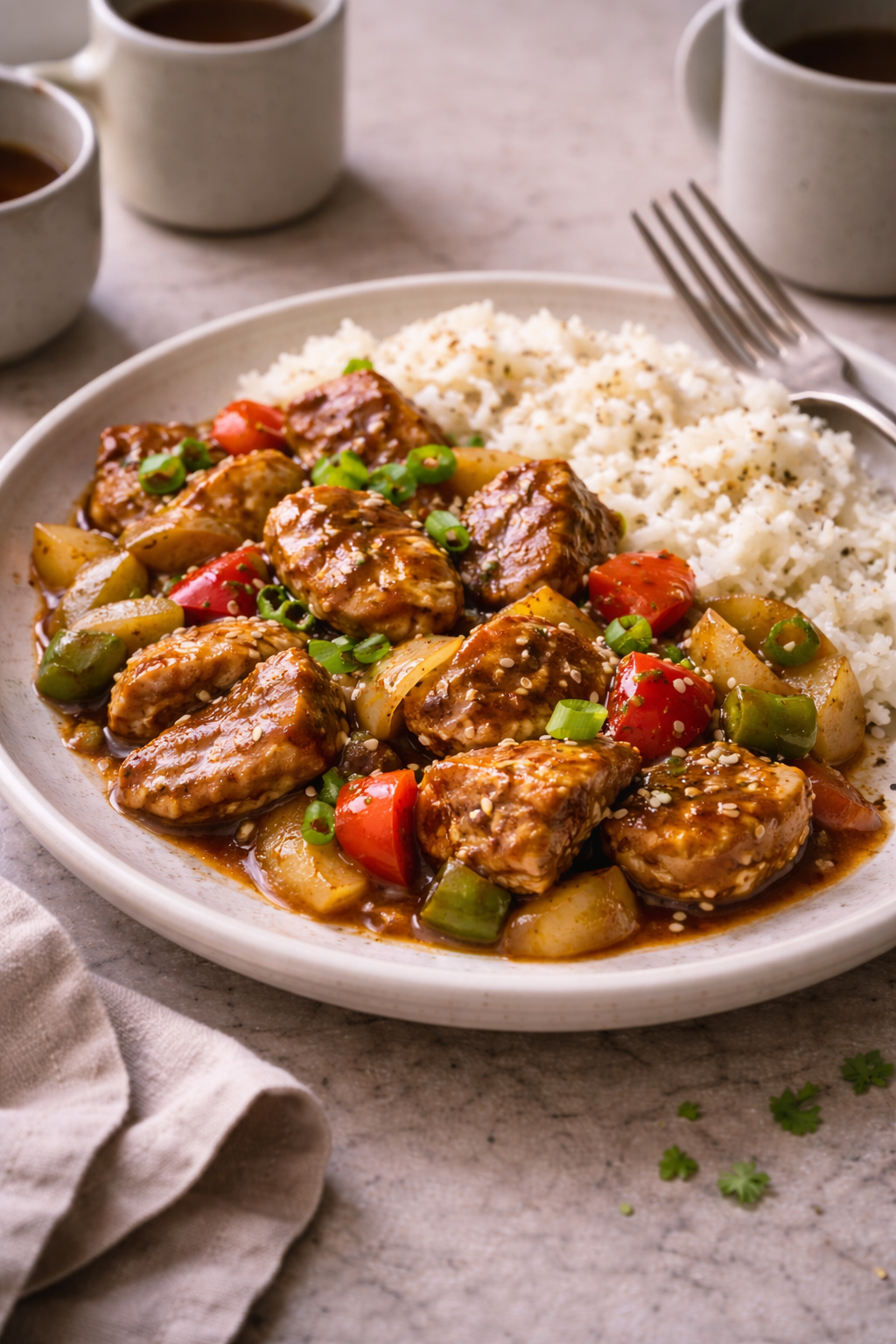
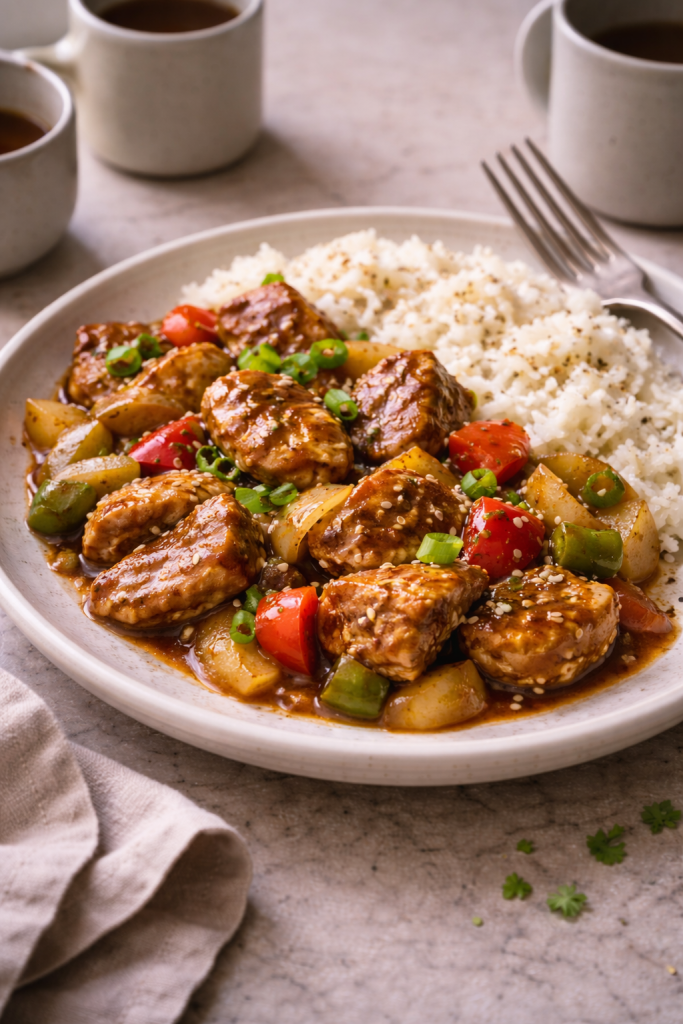
This is the kind of dinner I make when I want something fast but full of energy. The pan gets hot, the sauce comes together quickly, and everything finishes with that glossy, takeout-style look that makes the whole dish feel instantly satisfying. What I like most here is the balance—savory, sweet, tangy, and a little spicy, all layered into one quick meal. It feels bold without being complicated, and once you make it, it’s easy to come back to again and again.
Ingredients Overview
This stir-fry uses a small group of strong ingredients that each do a clear job. Pork shoulder or pork neck brings enough richness to stay juicy in a hot pan. Soy sauce builds the salty base, while vinegar and honey create that familiar sweet-sour contrast. Garlic and ginger bring quick aroma, and peppers with onion add freshness and crunch. A spoon of ketchup or hoisin-style sauce rounds everything out and helps create that shiny, clingy finish.
Ingredient Notes & Substitutions
Spring onions and sesame seeds: These are finishing ingredients, but they do add freshness and texture right at the end
Pork shoulder or pork neck: These cuts have enough fat to stay tender during high-heat cooking. If using leaner pork, cook it even more briefly to avoid dryness
Soy sauce: Regular soy sauce gives stronger saltiness, while low-sodium gives you more control over the final balance
Rice vinegar or apple cider vinegar: Rice vinegar tastes lighter and cleaner; apple cider vinegar is slightly sharper but still works well
Honey or brown sugar: Honey melts quickly into the sauce, while brown sugar gives a slightly deeper flavor
Ketchup or hoisin-style sauce: Ketchup adds tang and sweetness; hoisin-style sauce makes the sauce richer and more rounded
Bell peppers: Red or yellow peppers bring more sweetness, while green peppers keep the flavor more savory
Garlic and ginger: Fresh works best here because both ingredients are key to the overall flavor
Ingredients
- Pork shoulder or pork neck, sliced thinly
- Neutral oil
- Salt and black pepper
For the sauce
- Soy sauce
- Rice vinegar or apple cider vinegar
- Honey or brown sugar
- A spoon of ketchup or hoisin-style sauce
- A splash of water
Vegetables
- Bell peppers, cut into chunks
- Onion, sliced
- Garlic, finely chopped
- Fresh ginger, grated
To finish
- Spring onions
- Sesame seeds
- Optional: chili flakes or fresh chili
Why This Recipe Works
This dish works because everything is cooked in the right order and at the right speed. The pork goes into a very hot pan first, so it sears instead of steaming. Garlic and ginger go in after that, giving flavor to the oil without burning. The vegetables cook quickly, which helps them stay a little crisp and keeps the stir-fry from turning soft or watery. Then the sauce reduces just enough to coat everything instead of pooling at the bottom of the pan. The result is a dinner that feels bold and glossy, but still quick and balanced.
Tips for Best Results
- Slice the pork thinly and as evenly as possible so it cooks fast without turning chewy
- Let the pan get properly hot before adding the meat—this is what gives the pork color and better flavor
- Cook the pork in batches if needed, especially if your pan is small, so you don’t lose the high heat
- Prep the sauce ingredients and vegetables before you start cooking because the stir-fry moves quickly once the pan is hot
- Keep the vegetables slightly underdone before adding the pork back in, since they will continue cooking in the sauce
- Turn off the heat as soon as the sauce looks glossy and lightly thickened to keep the flavor sharp and balanced
Instructions
- Start hot. Heat oil in a wide pan or wok until very hot.
- Cook the pork first. Add the pork in a single layer and let it sear without stirring. Turn once, then remove from the pan.
- Build aroma. In the same pan, add garlic and ginger and cook briefly until fragrant.
- Add vegetables. Toss in peppers and onion and cook quickly so they stay slightly crisp.
- Create the explosion. Add soy sauce, vinegar, honey, ketchup, and water straight into the pan—no bowl, no measuring cups.
- Bring it together. Return the pork and stir until everything is coated and glossy.
- Finish fast. Let the sauce reduce just enough to cling, then turn off the heat.
- Serve immediately, while the flavors are still sharp and alive.
Related recipes: Cranberry & Pistachio Cheese Roll, Air Fryer Hasselback Potatoes with Smoked Cheese Dip & Crispy Bacon
Common Mistakes to Avoid
- If the pork turns pale instead of browned: the pan was crowded or not hot enough → cook in a single layer and give it time to sear before moving it
- If the stir-fry tastes flat: the sauce reduced too long → stop cooking once it clings lightly, not when it becomes heavy
- If the vegetables go soft: they stayed in the pan too long → stir-fry them quickly over high heat and keep some bite
- If the dish tastes too salty: too much soy sauce or too little balancing sweetness → add a splash of water and a small drizzle of honey
- If the sauce seems watery: too much liquid was added → let it bubble briefly at the end, but don’t reduce it for too long
Substitutions & Variations
- Use chicken thighs instead of pork for a lighter but still juicy version
- Add mushrooms, snap peas, or shredded carrots for more vegetable texture
- Stir in chili flakes or fresh sliced chili if you want a sharper heat
- Swap honey for brown sugar if you want a slightly deeper, more caramel-like sweetness
- Use hoisin-style sauce instead of ketchup for a darker, richer finish
- Add a small drizzle of toasted sesame oil at the end for extra aroma
Storage & Leftovers
- Store leftovers in an airtight container in the fridge for up to 3 days
- Reheat in a hot pan for the best texture, adding a small splash of water if the sauce has tightened too much
- The microwave works too, but the vegetables will soften more
- If making ahead, keep the spring onions and sesame seeds for the end so the final dish still feels fresh
- This stir-fry works well for next-day lunch served over rice or noodles because the sauce keeps the pork flavorful
FAQ
What cut of pork is best for stir-fry?
Pork shoulder or pork neck works especially well because both have enough fat to stay tender in a hot pan. Lean cuts cook faster but can dry out more easily.
Can I make this without a wok?
Yes. A wide frying pan works well as long as it gets hot enough and you don’t overcrowd it.
How do I keep stir-fry pork tender?
Slice it thinly, cook it quickly, and avoid leaving it in the pan too long after the sauce is added.
Is this recipe very spicy?
Not by default. The heat is optional, so you can keep it mild or add chili to taste.
What should I serve with this?
Steamed rice is the easiest choice, but noodles also work well if you want a more takeout-style dinner.
Leave a Reply