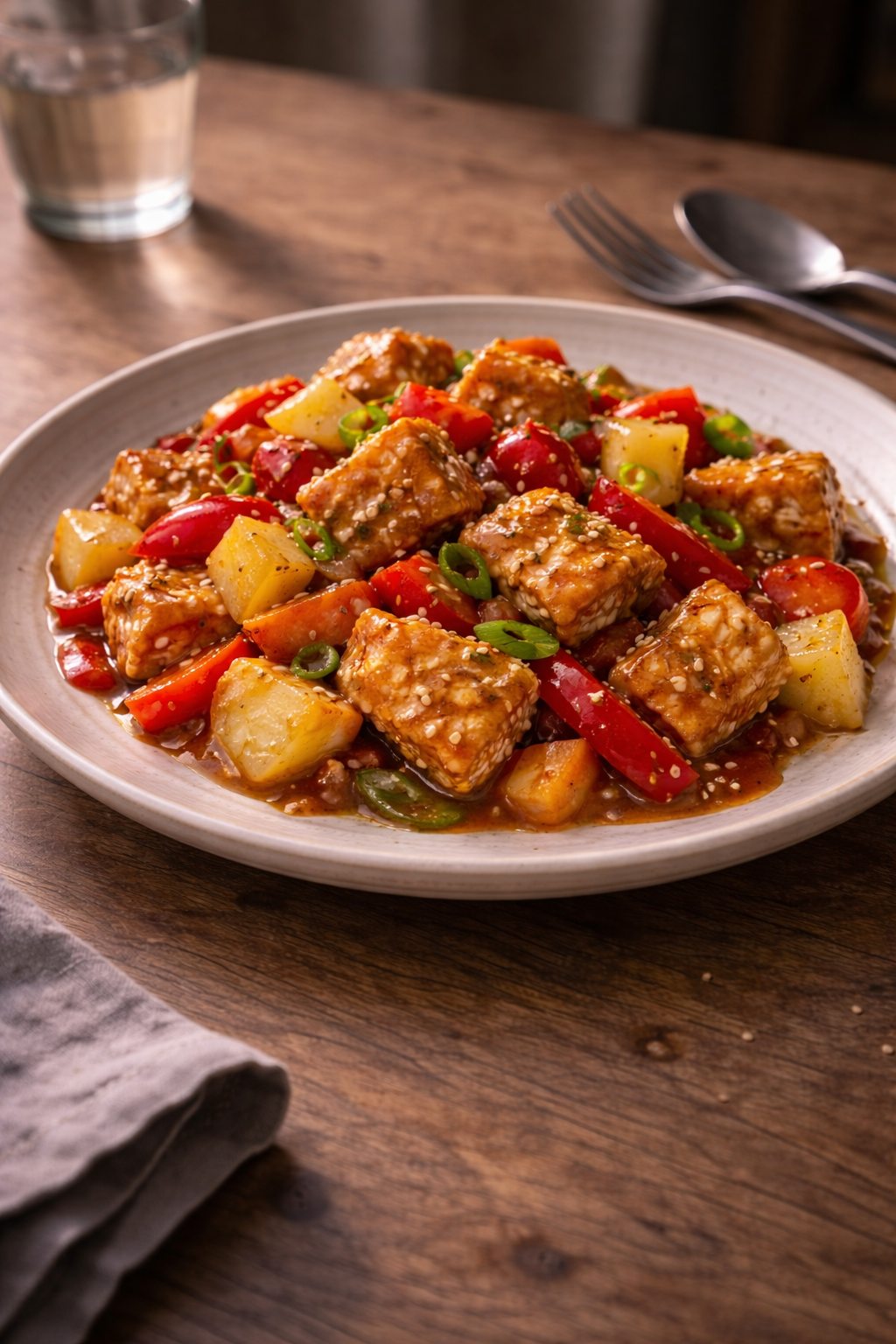
Some meals look like they should feel heavy — golden, crisp, glossy sauce — but surprise you by staying light. This is one of those. You get crunchy fish, juicy bursts of pineapple, and vegetables that still have a bit of bite. It’s quick, balanced, and hits that sweet-salty contrast without turning into a sticky overload. Perfect when you want something warm and satisfying, but not weighed down.
Quick Info
- Difficulty: Easy
- Prep Time: 15 minutes
- Cook Time: 10 minutes
- Total Time: About 25 minutes
- Servings: 2
Flavor Logic (Why It Works)
This dish plays on contrast, but it’s controlled:
- Crispy fish = texture + mild base that absorbs flavor
- Pineapple = natural sweetness + acidity (cuts through oil)
- Soy + vinegar = salt + sharpness → keeps it from tasting flat
- Quick cooking = vegetables stay fresh, not soft
As the sauce heats, the honey and pineapple juices reduce slightly, coating everything in a light glaze rather than a heavy sauce.
Also worth trying: Sweet and Sour Salmon with Bold Flavours
Air Fryer Halloumi Sticks
Few-Ingredient Air Fryer Salmon with Crispy Potatoes
Ingredients
Ingredient Breakdown (What Each One Does)
- White fish → neutral, flaky base that crisps easily without overpowering
- Cornstarch → creates a thin, dry coating that turns crisp quickly in hot oil
- Pineapple → adds sweetness and acidity, which balances the fried element
- Soy sauce → deepens flavor (umami + salt in one)
- Vinegar → sharpens and brightens the sauce
- Honey → helps the sauce cling and lightly caramelize
- Vegetables → bring texture contrast and freshness
Instructions
- Cut the fish into medium-sized chunks and pat them very dry with paper towels. This step matters — moisture prevents crisping and can make the coating slide off.
- Toss the fish with cornstarch, salt, and pepper until lightly coated. You’re aiming for a thin, even layer — not thick or clumpy. The starch will form a delicate crust once it hits the hot oil.
- Heat the oil in a wide pan over medium-high heat. It should be hot enough that the fish sizzles immediately on contact.
- Add the fish pieces in a single layer, leaving space between them. Crowding traps steam, which softens the coating instead of crisping it.
- Cook for a few minutes, turning occasionally, until all sides are golden and lightly crisp. The surface should feel slightly firm and dry. Remove the fish and set aside — this keeps it from overcooking later.
- In the same pan, add the pineapple, bell pepper, and carrot. Cook briefly, just a few minutes. You want them slightly softened but still vibrant and crisp — overcooking will make everything feel flat and watery.
- Stir together the soy sauce, rice vinegar, honey, and water, then pour it into the pan. Let it bubble gently for a minute. As it heats, the liquid reduces slightly and becomes glossy.
- Return the fish to the pan and gently turn everything together. Do this carefully — the coating is delicate. The goal is to coat the fish, not break it.
- Remove from heat as soon as everything is combined. The fish should stay crisp on the edges with a light glaze.
What Actually Matters
- Dry fish = crisp result → moisture ruins texture
- Hot pan + space → ensures browning instead of steaming
- Short vegetable cooking time → keeps contrast and freshness
- Add fish at the end → prevents sogginess
Ingredient Swaps (Realistic Options)
- No pineapple? → use mango or even orange segments (slightly different acidity)
- No rice vinegar? → use apple cider vinegar or lime juice
- No honey? → brown sugar works (dissolve it well in sauce)
- No cornstarch? → potato starch or even flour (less crisp, but works)
- No bell pepper? → zucchini, snap peas, or green beans
Common Mistakes (And Why They Happen)
- Fish not crispy
→ usually caused by moisture or overcrowding - Soggy coating after mixing
→ sauce added too early or fish left too long in pan - Flat flavor
→ not enough acid (vinegar/lime balances sweetness) - Overcooked vegetables
→ release water and dilute the sauce
Storage & Reheating
- Fridge: store up to 2 days in a sealed container
- Reheating: best in a pan, not microwave — helps bring back some texture
- Keep in mind: the coating will soften over time (that’s normal with this type of dish)
Serving Ideas
- Serve over rice to absorb the sauce
- Add fresh herbs (like coriander) for extra freshness
- Sprinkle with sesame seeds for a slight crunch
FAQ
Can I use frozen fish?
Yes, but thaw completely and dry very well before coating.
Can I bake instead of fry?
You can, but it won’t be as crispy. High heat (220°C) helps a bit.
Is this very sweet?
No — it’s balanced. You can reduce honey if you prefer it sharper.
How do I keep it crispy longer?
Serve immediately and avoid letting it sit in sauce too long.
You may also like: Light Salmon Salad with Apple and Beetroot
Air Fryer Cheese and Chorizo Quesadillas
Leave a Reply