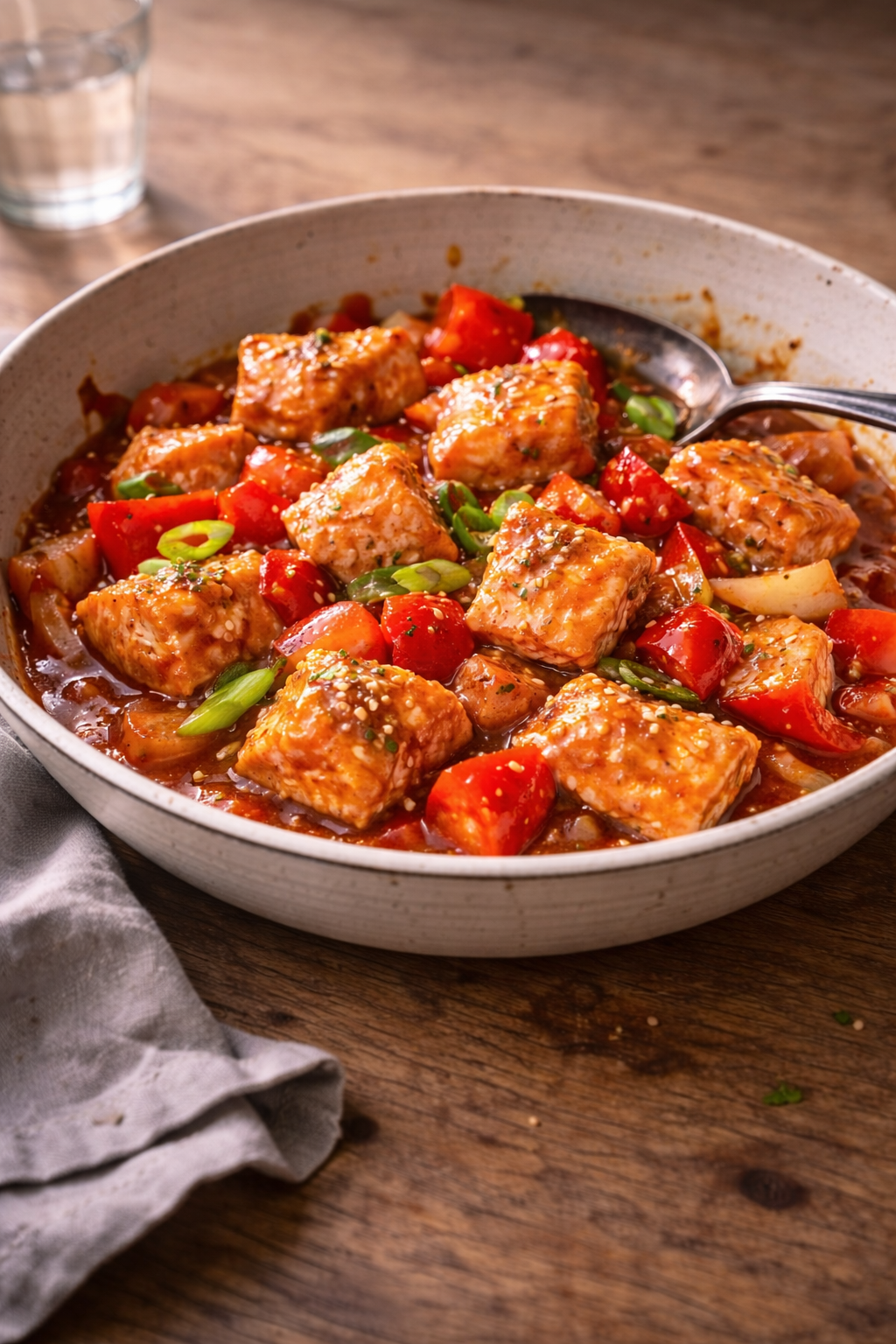
This is one of those dishes where a simple pan sauce completely changes the mood of dinner. The salmon stays soft and delicate, while the sauce builds in layers — sweet at first, then sharper, with a slight tang that keeps you going back for another bite. It’s quick, but it tastes like something more thought-out, mostly because of how the flavors are balanced and how little it’s actually cooked.
Before You Start
- Difficulty: Easy
- Prep Time: 15 minutes
- Cook Time: 8–10 minutes
- Total Time: About 25 minutes
- Servings: 2
Why This Tastes So Balanced
This sauce works because it hits multiple points at once:
- Pineapple juice + honey → sweetness and slight fruitiness
- Rice vinegar → sharp acidity that cuts through richness
- Soy sauce → salt and depth (umami)
- Cornstarch → gives that glossy, restaurant-style coating
As the sauce heats, the starch absorbs liquid and thickens, while sugars concentrate slightly — that’s what creates the smooth, clingy glaze instead of a watery sauce.
You may also like: Crispy Air Fryer Mozzarella Bites
Air Fryer Whole Roast Chicken (Minimal Prep, Juicy Result)
Crispy Air Fryer Brussels Sprouts (5 Ingredients, No Fuss)
Ingredients
Ingredient Breakdown (Quick but Useful)
- Salmon → rich, soft texture that contrasts with sharp sauce
- Pineapple juice → sweet + slightly acidic base
- Vinegar → essential for that “sour” edge
- Soy sauce → balances sweetness and deepens flavor
- Cornstarch → transforms liquid into a glossy coating
- Ginger + garlic → aromatic layer that makes it smell as good as it tastes
Instructions
- Cut the salmon into large bite-sized cubes and set aside. Keep the pieces fairly big — smaller ones cook too quickly and can fall apart when mixed with the sauce.
- In a small bowl, stir together the pineapple juice, rice vinegar, soy sauce, honey, cornstarch, and water. Mix until completely smooth, especially making sure the starch is fully dissolved — otherwise the sauce can turn lumpy later.
- Heat the oil in a wide pan over medium-high heat. Once hot, add the salmon pieces, spacing them slightly apart. Let them sear briefly on each side until lightly coloured. You’re not cooking them through yet — just building a bit of surface texture.
- Remove the salmon from the pan and keep it nearby. This step prevents overcooking and keeps the fish tender.
- In the same pan, add the onion, bell pepper, garlic, and ginger. Cook for a couple of minutes. The goal here is quick softening while keeping some bite — this adds texture contrast later. The garlic and ginger should smell fragrant but not browned.
- Give the sauce a quick stir again (cornstarch settles fast), then pour it into the pan. Let it bubble gently. Within a minute or so, it will start to thicken — you’ll see it turn glossy and slightly translucent.
- Return the salmon to the pan and gently turn it through the sauce. Do this carefully — the fish is delicate and can break if stirred too aggressively.
- Cook for about a minute more, just until everything is coated and the salmon is fully cooked but still soft inside. Remove from heat immediately — residual heat will finish the job.
What Actually Matters
- Don’t fully cook salmon at first → finishing in sauce keeps it juicy
- Stir sauce before adding → prevents uneven thickening
- Short cooking time after adding salmon → avoids dryness
Ingredient Swaps (Flexible Options That Still Work)
- No pineapple juice? → use orange juice + a squeeze of lemon
- No rice vinegar? → apple cider vinegar or lime juice
- No honey? → brown sugar (dissolve well in sauce)
- No fresh ginger? → ½ teaspoon ground ginger
- No bell pepper? → zucchini, snap peas, or even broccoli
Common Mistakes (And Why They Happen)
- Sauce too thin
→ not enough heat or not enough time for starch to activate - Lumpy sauce
→ cornstarch wasn’t mixed properly before cooking - Dry salmon
→ overcooked or left too long in sauce - Overpowering sweetness
→ not enough acid — vinegar balances everything
Storage & Reheating
- Fridge: up to 2 days in a sealed container
- Reheat: gently in a pan with a splash of water to loosen the sauce
- The sauce may thicken more in the fridge — this is normal due to starch
Serving Ideas
- Serve with rice or noodles to catch the sauce
- Add fresh herbs or sesame seeds on top
- Pair with lightly steamed greens for balance
FAQ
Can I make this ahead?
Best fresh, but you can reheat gently — just don’t overcook the salmon.
How thick should the sauce be?
It should lightly coat the back of a spoon — not too thick or sticky.
Can I make it spicier?
Yes — add chili flakes or fresh chili when cooking vegetables.
Why remove salmon first?
It prevents overcooking and keeps the texture soft.
Also worth trying: Air Fryer Sweet Potato Fries That Actually Get Crispy
Easy Air Fryer Chicken Nuggets Kids Actually Like


Leave a Reply