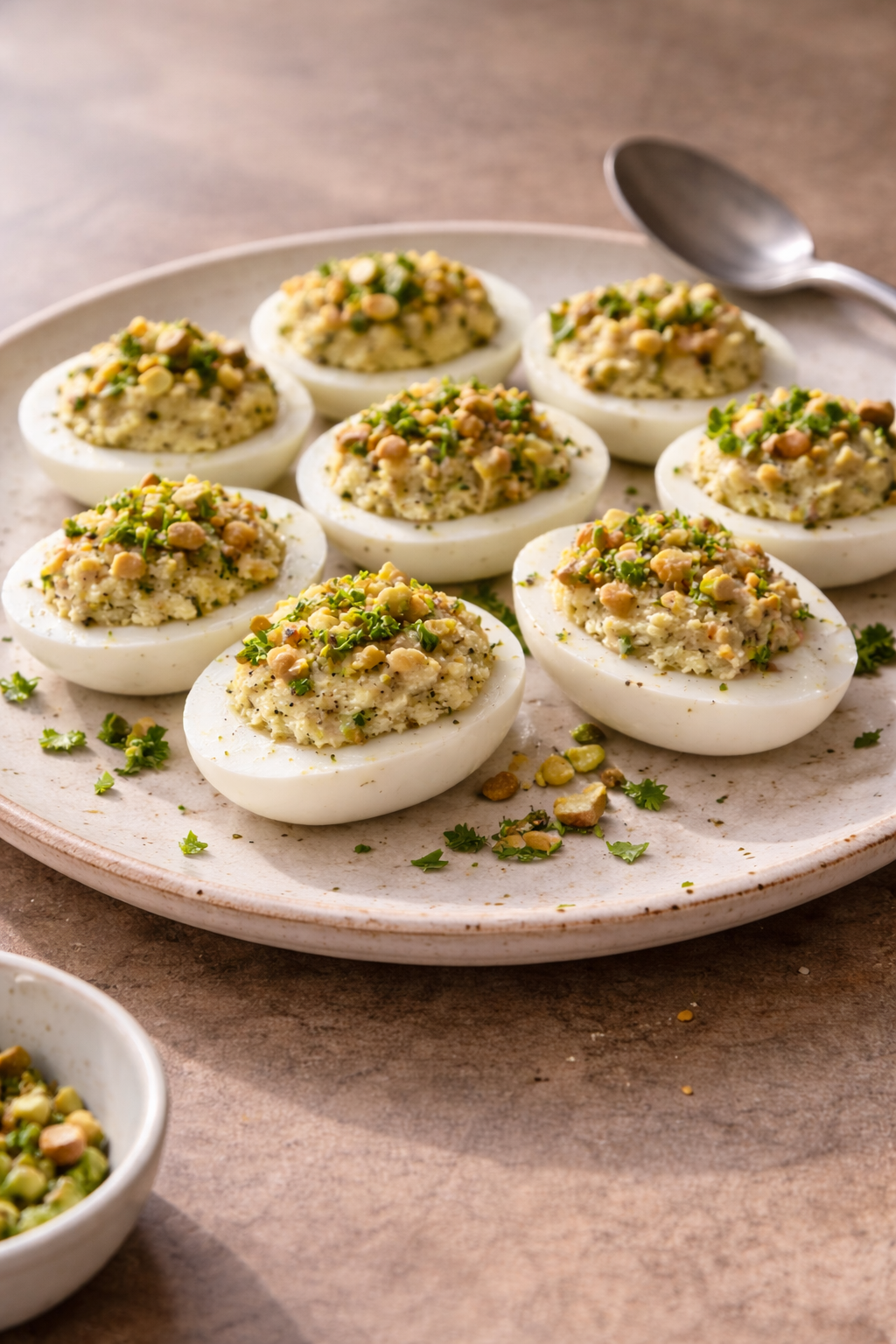
There’s always that moment before everyone sits down, when the table looks almost ready but feels like it’s missing something small. Not a main dish — just a detail. These eggs fit right into that space. Familiar, but with just enough texture and brightness to make people reach for one without thinking twice.
The Basics
- Difficulty: Easy
- Prep Time: 20 minutes
- Cook Time: 10 minutes
- Total Time: 30 minutes
- Servings: 6 (12 halves)
Why This Version Works
Stuffed eggs are simple, but small details change everything. The filling here is built to be smooth and creamy first, then lightly broken up with texture from pistachios.
Mayonnaise adds richness, while Dijon mustard sharpens the flavor just enough so it doesn’t feel flat. Lemon juice cuts through that richness, keeping the filling balanced instead of heavy. Pistachios bring a gentle crunch and a slightly nutty sweetness, which contrasts with the soft yolk mixture.
It’s a combination that feels a bit more interesting, without making the recipe complicated.
Also worth trying: Air Fryer Cheese and Chorizo Quesadillas
Easy Crispy Air Fryer Baked Potatoes with Garlic Herb Butter
Easy Easter Eggs with Creamy Beet Salad (No Fuss, Make-Ahead)
Ingredients
Ingredient Breakdown
Eggs are the foundation, so how they’re cooked matters. Fully set whites with creamy (not dry) yolks give you the best texture for the filling.
Mayonnaise creates the smooth base — if you use too little, the mixture can feel crumbly instead of creamy.
Dijon mustard isn’t just for flavor; it slightly sharpens and lifts the whole filling, preventing it from tasting too mild.
Pistachios should be finely chopped, not ground. You want small pieces that add texture, not a paste that disappears into the mixture.
Lemon juice might seem minor, but it balances everything — without it, the filling can feel heavy.
Instructions
- Start by boiling the eggs until fully set. This usually takes about 9–10 minutes once the water reaches a gentle boil. Avoid overcooking — if the yolks turn very pale and crumbly or develop a greenish ring, they’ve gone too far and will be harder to work with.
- Cool the eggs completely before peeling. This helps the shells come off cleanly and keeps the whites smooth. Once peeled, slice them in half lengthwise and carefully remove the yolks.
- Place the yolks in a bowl and mash them until fine and crumbly. At this stage, breaking them down well makes a big difference — it’s what allows the filling to become smooth later instead of slightly grainy.
- Add the mayonnaise and Dijon mustard, then mix until the texture becomes creamy and cohesive. You’re looking for a soft, spreadable consistency — not too stiff, not too loose.
- Stir in most of the chopped pistachios, reserving a small portion for topping. This way, you get texture inside while keeping a fresh crunch on top.
- Add lemon juice, salt, and black pepper. Taste at this point — this is where the balance comes together. It should be slightly tangy, lightly savory, and smooth.
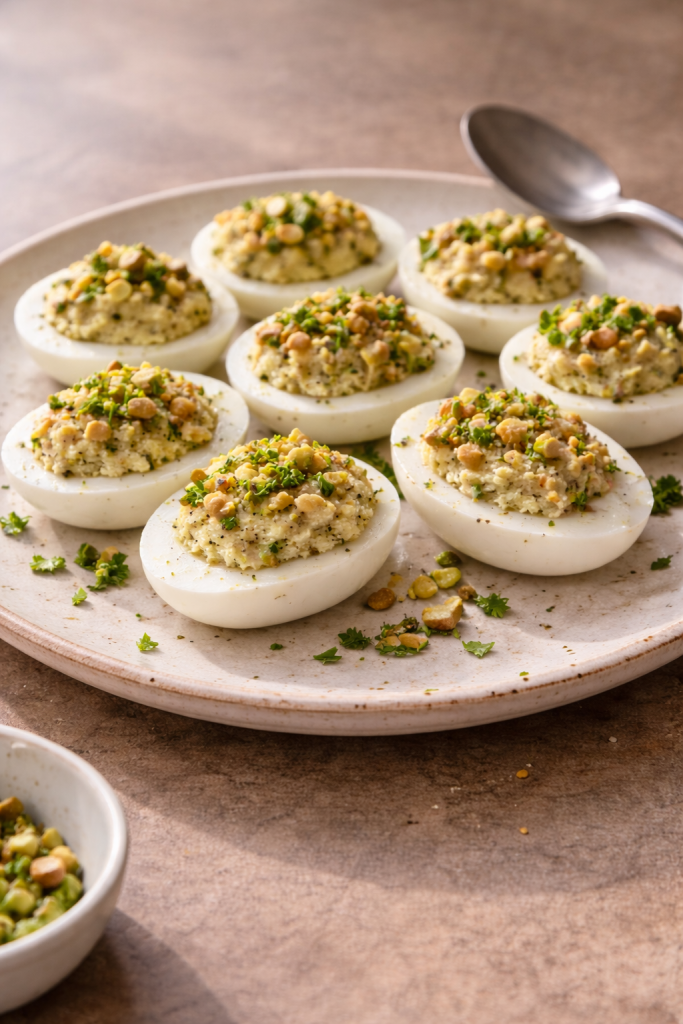
- Spoon or pipe the filling back into the egg whites. Don’t press it flat — a slightly rounded, soft shape looks more natural and appealing.
- Finish by sprinkling the remaining pistachios and fresh herbs over the top. The herbs add freshness, while the pistachios give a final contrast in texture.
Common Mistakes
Overcooking the eggs is the most common issue — it makes the yolks dry and harder to mix into a creamy filling.
Not mashing the yolks enough can leave the filling slightly grainy instead of smooth.
Adding all pistachios inside the filling removes that contrast on top — keeping some for finishing makes a visible and textural difference.
Skipping the acid (lemon juice) can make the filling feel heavy and flat.
Ingredient Swaps & Variations
You can replace pistachios with finely chopped walnuts or almonds if needed — just keep the texture similar.
Greek yogurt can replace part of the mayonnaise for a lighter version, though the filling will be slightly less rich.
A pinch of smoked paprika on top adds a subtle depth without changing the character too much.
How to Serve Them
These eggs work best slightly chilled or at room temperature. Too cold, and the filling firms up; too warm, and it can lose structure. Arrange them just before serving for the freshest look and texture.
They fit naturally on an Easter table but also work as a quick appetizer or light snack.
FAQ
Can I make them ahead of time?
Yes — prepare them a few hours in advance and keep refrigerated. Add toppings just before serving.
Why is my filling too thick?
It likely needs a bit more mayonnaise or a small splash of lemon juice to loosen it.
Can I use salted pistachios?
Yes, but reduce the added salt to avoid over-seasoning.
What’s the best way to fill the eggs?
A spoon works fine, but piping gives a cleaner, more even look.
Also worth trying: Rice and Tuna Salad with Lemon and Crunchy Veg – Easy Pantry Lunch
Baked Pork Loin on Bread with Creamy Béchamel

Leave a Reply